Bering Air 445: the stall crash in Alaska explained
Original title: How Long Had This Been GOING ON?! | The Shocking Story Of Bering Air 445
Mentour Pilot · 34:32 · 7 Nov 2026 · Watch on YouTube

Mentour Pilot recounts the 2025 crash of Bering Air flight 445, a Cessna Caravan that stalled and crashed in Alaska due to a combination of factors.

What the video covers

Written in our own words. It only describes what the video shows and says.

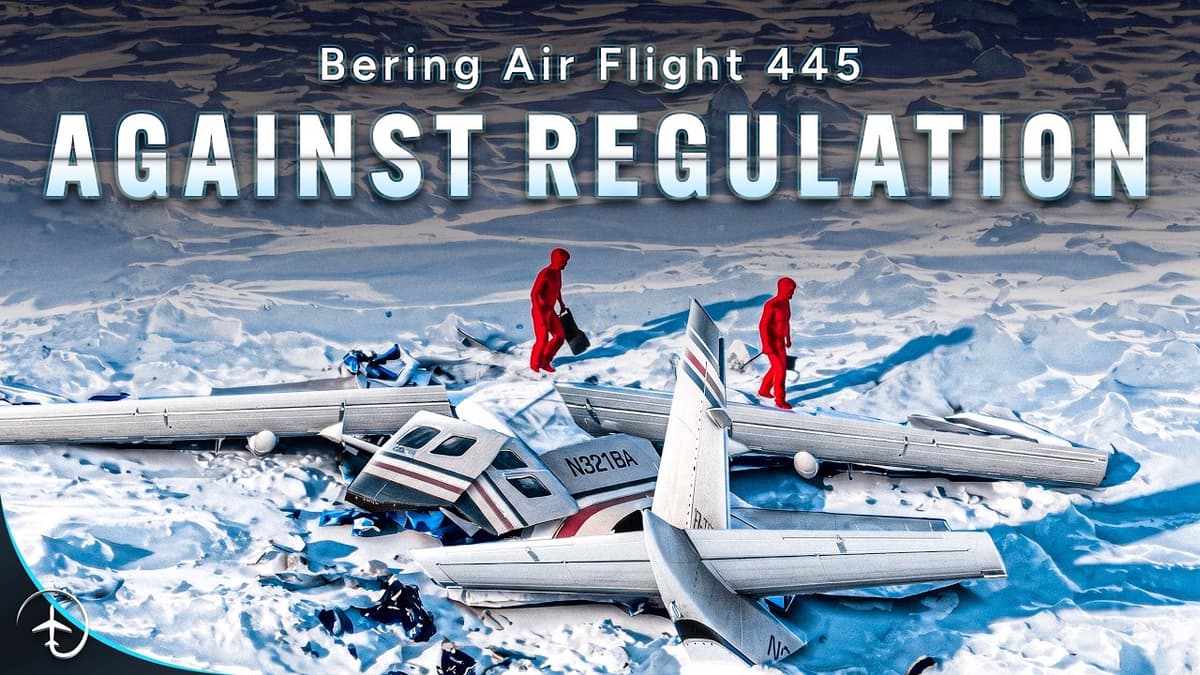
Mentour Pilot details the accident involving Bering Air flight 445, a Cessna 208 Bravo Grand Caravan, on 6 February 2025. The flight was scheduled from Unalakleet to Nome, Alaska. The pilot, who was qualified and current, found himself with more passengers than initially planned after another carrier cancelled its flight. This led to a significant discrepancy in the aircraft's weight and balance calculations before departure.

Weight and Balance Issues

Investigators later determined that the aeroplane's actual takeoff weight was approximately 9,798 pounds, over 750 pounds more than the 9,044 pounds declared on the paperwork signed by the pilot. Both figures were above the maximum approved weight of 8,807 pounds for flight in known icing conditions. The video explains this overload was partly due to the aircraft carrying extra fuel from earlier, cancelled flights. When six unexpected passengers were added, the pilot did not offload cargo to compensate. Instead, the fuel weight on the manifest was understated to make the numbers appear within limits. The NTSB found that data from the Garmin G1000 avionics suite showed similar discrepancies on previous flights, suggesting this had become a practice at the airline which had gone undetected by the company or the FAA during a period of major expansion.

Severe Icing and System Management

After taking off, the flight climbed to 8,000 feet and encountered icing conditions over Norton Sound that were more severe than forecast. The video explains the phenomenon of supercooled large droplets (SLD), which can cause ice to form rapidly and in areas behind the protected leading edges of the wings. The Caravan was equipped with a TKS fluid-based ice protection system, which pumps a glycol fluid through porous panels to prevent and remove ice. Mentour Pilot notes that in serious icing, pilots were trained to maintain a minimum speed of 120 knots. During the descent towards Nome, an air traffic controller, unaware of the icing severity, suggested the pilot slow down to accommodate runway clearing operations. The pilot complied, reducing power and allowing the airspeed to drop below the 120-knot minimum.

Autopilot Use and Loss of Control

With the autopilot engaged in altitude hold mode at 4,000 feet, the reduction in power caused the airspeed to decay. To maintain altitude, the autopilot continuously increased the aeroplane's pitch, raising the angle of attack. This created a deceptively stable situation that masked the deteriorating performance and eroding stall margin. The video highlights that this specific danger with the Caravan's autopilot in icing was well-known, leading to the implementation of a Low Airspeed Awareness (LAA) system. As the airspeed fell below 99 knots, the LAA system activated, sounding an alarm and automatically disconnecting the autopilot. The pilot reacted to the descent by pulling back on the controls. This action exceeded the wing's critical angle of attack, inducing a stall from which there was not enough altitude to recover. The aeroplane rolled sharply and crashed into the pack ice below.


Statements in the video

5:14The aeroplane's actual takeoff weight was more than 750 pounds heavier than what the pilot had recorded on the weight and balance sheet.Mentour Pilot states this when explaining the findings of investigators who reconstructed the flight's actual weight versus its filed paperwork.
26:23The Low Airspeed Awareness system automatically disconnected the autopilot when the aeroplane's indicated airspeed fell below a threshold of 99 knots.This is explained by Mentour Pilot as a built-in safety feature designed to force the pilot to take manual control when the energy state becomes dangerously low.
32:09The NTSB considered the aeroplane's excess weight to be a cause of the accident.Mentour Pilot relays this information while summarising the NTSB's formal conclusions on the factors that led to the crash.

Moments from the video

0:00“On the afternoon of February 6th, 2025, a sturdy Cessna 208 Bravo Grand Caravan was sitting on the ramp at Unalakleet Airport,”4:23“When he had arrived, only three passengers had been expected to travel with him home on the return leg, but as it turns out, another carrier had since cancelled their own flight to Nome, leaving several people stranded in Unalakleet.”12:01“So, before we go any further here, we need to talk a little bit more about icing and specifically, a phenomenon known as super cooled droplets.”18:35“This is where that minimum 120 knot figure that I mentioned earlier becomes especially important, along with using the appropriate TKS setting and leaving the hazardous icing as quickly as is humanly possible.”23:06“When doing this, the airplane then would continue to appear relatively stable until it was already approaching a much more dangerous condition, a full aerodynamic stall.”28:37“So, flight 445 was now heavier than it should have been, It was encountering icing more severe than forecasted, its speed had fallen below where the pilot wanted it, and the autopilot had gradually brought the wing closer to its critical angle of attack.”33:43“And that shows us that in aviation, safety is rarely about avoiding one enormous mistake. It's all about protecting the margins that keeps ordinary problems from becoming unrecoverable ones.”

Bering Air 445: the stall crash in Alaska explained

Original title: How Long Had This Been GOING ON?! | The Shocking Story Of Bering Air 445
Mentour Pilot · 34:32 · 7 Nov 2026 · Watch on YouTube

Mentour Pilot recounts the 2025 crash of Bering Air flight 445, a Cessna Caravan that stalled and crashed in Alaska due to a combination of factors.

IN THIS VIDEO
  1. 0:00A Routine Flight in Alaska
  2. 5:14Weight and Balance Discrepancies
  3. 12:01Encountering Severe Icing
  4. 20:50The Autopilot's Deceptive Stability
  5. 29:04Stall and Loss of Control

What the video covers

Written in our own words. It only describes what the video shows and says.

Mentour Pilot details the accident involving Bering Air flight 445, a Cessna 208 Bravo Grand Caravan, on 6 February 2025. The flight was scheduled from Unalakleet to Nome, Alaska. The pilot, who was qualified and current, found himself with more passengers than initially planned after another carrier cancelled its flight. This led to a significant discrepancy in the aircraft's weight and balance calculations before departure.

Weight and Balance Issues

Investigators later determined that the aeroplane's actual takeoff weight was approximately 9,798 pounds, over 750 pounds more than the 9,044 pounds declared on the paperwork signed by the pilot. Both figures were above the maximum approved weight of 8,807 pounds for flight in known icing conditions. The video explains this overload was partly due to the aircraft carrying extra fuel from earlier, cancelled flights. When six unexpected passengers were added, the pilot did not offload cargo to compensate. Instead, the fuel weight on the manifest was understated to make the numbers appear within limits. The NTSB found that data from the Garmin G1000 avionics suite showed similar discrepancies on previous flights, suggesting this had become a practice at the airline which had gone undetected by the company or the FAA during a period of major expansion.

Severe Icing and System Management

After taking off, the flight climbed to 8,000 feet and encountered icing conditions over Norton Sound that were more severe than forecast. The video explains the phenomenon of supercooled large droplets (SLD), which can cause ice to form rapidly and in areas behind the protected leading edges of the wings. The Caravan was equipped with a TKS fluid-based ice protection system, which pumps a glycol fluid through porous panels to prevent and remove ice. Mentour Pilot notes that in serious icing, pilots were trained to maintain a minimum speed of 120 knots. During the descent towards Nome, an air traffic controller, unaware of the icing severity, suggested the pilot slow down to accommodate runway clearing operations. The pilot complied, reducing power and allowing the airspeed to drop below the 120-knot minimum.

Autopilot Use and Loss of Control

With the autopilot engaged in altitude hold mode at 4,000 feet, the reduction in power caused the airspeed to decay. To maintain altitude, the autopilot continuously increased the aeroplane's pitch, raising the angle of attack. This created a deceptively stable situation that masked the deteriorating performance and eroding stall margin. The video highlights that this specific danger with the Caravan's autopilot in icing was well-known, leading to the implementation of a Low Airspeed Awareness (LAA) system. As the airspeed fell below 99 knots, the LAA system activated, sounding an alarm and automatically disconnecting the autopilot. The pilot reacted to the descent by pulling back on the controls. This action exceeded the wing's critical angle of attack, inducing a stall from which there was not enough altitude to recover. The aeroplane rolled sharply and crashed into the pack ice below.
Statements in the video

5:14The aeroplane's actual takeoff weight was more than 750 pounds heavier than what the pilot had recorded on the weight and balance sheet.Mentour Pilot states this when explaining the findings of investigators who reconstructed the flight's actual weight versus its filed paperwork.
26:23The Low Airspeed Awareness system automatically disconnected the autopilot when the aeroplane's indicated airspeed fell below a threshold of 99 knots.This is explained by Mentour Pilot as a built-in safety feature designed to force the pilot to take manual control when the energy state becomes dangerously low.
32:09The NTSB considered the aeroplane's excess weight to be a cause of the accident.Mentour Pilot relays this information while summarising the NTSB's formal conclusions on the factors that led to the crash.

Moments from the video

0:00“On the afternoon of February 6th, 2025, a sturdy Cessna 208 Bravo Grand Caravan was sitting on the ramp at Unalakleet Airport,”4:23“When he had arrived, only three passengers had been expected to travel with him home on the return leg, but as it turns out, another carrier had since cancelled their own flight to Nome, leaving several people stranded in Unalakleet.”12:01“So, before we go any further here, we need to talk a little bit more about icing and specifically, a phenomenon known as super cooled droplets.”18:35“This is where that minimum 120 knot figure that I mentioned earlier becomes especially important, along with using the appropriate TKS setting and leaving the hazardous icing as quickly as is humanly possible.”23:06“When doing this, the airplane then would continue to appear relatively stable until it was already approaching a much more dangerous condition, a full aerodynamic stall.”28:37“So, flight 445 was now heavier than it should have been, It was encountering icing more severe than forecasted, its speed had fallen below where the pilot wanted it, and the autopilot had gradually brought the wing closer to its critical angle of attack.”33:43“And that shows us that in aviation, safety is rarely about avoiding one enormous mistake. It's all about protecting the margins that keeps ordinary problems from becoming unrecoverable ones.”
PREPARE FOR SELECTIONPreparing for an Airline Selection?
Academy · Alongside your ground school

Practise All 14 Subjects

ATPL theory (EASA) · a practice set per subject, then timed final exams
KNOWLEDGE BASEAsk the knowledge baseAnswers on training, selections and careers, with sources
READ MORE ON PILOTINQ
US: Pilot killed in Van's RV-6 crash near Hamilton, MontanaUS: Learjet 60 crew reported ice at FL350 and minus 47 degrees before Florida crash, NTSB investigation under wayUnited States: FAA open to a way back for single-pilot flying in older Cessna Citations
UP NEXT
26:29
Ajet A321neo: Cockpit flight from Bodrum to IstanbulJust Planes · 26:29

More Like This