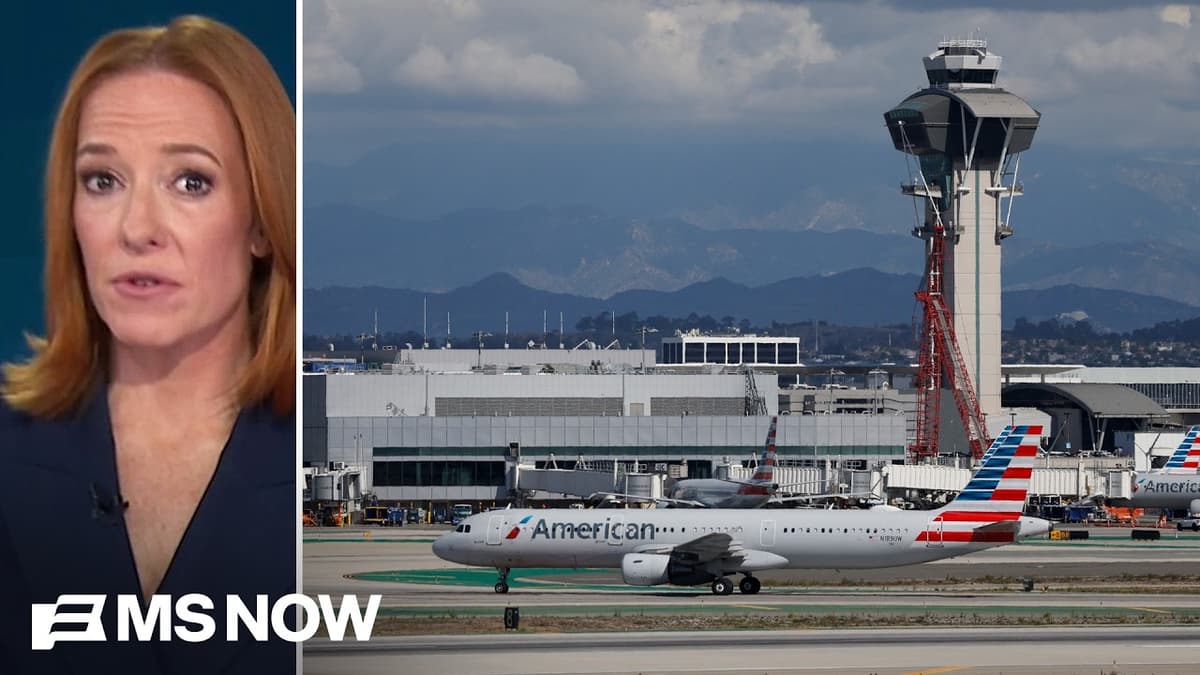
Jen and Keith Wolzinger discuss a nationwide ground stop and cancelled flights. They cover crew limits and the time needed to restore operations.
What the video covers
Written in our own words. It only describes what the video shows and says.Jen says a nationwide ground stop has caused thousands of flight cancellations, and the FAA has announced it has been lifted. She plays radio traffic in which an aircraft is told about a national ground stop, with an update unknown, and another crew member says it will be at least eight hours. Jen asks Keith Wolzinger to explain what happens inside an aircraft and at airports when departures are stopped.
Ground stop and radio traffic
The radio excerpt includes confusion as the ground stop spreads through air traffic control. Southwest 2179 asks whether the stop applies to the whole country, and the reply refers to enroute facilities having communication issues. Another crew member asks for an update and says the situation is going to be at least eight hours.
Gate blockage and crew limits
Keith Wolzinger says pilots have little control in such a situation. They relay limited information from their airline and explain it to passengers. He says planes are prevented from departing, so gates are occupied by aircraft waiting to leave. At the same time, aircraft that are already airborne land but may not have a gate available to unload passengers. He links this to the tarmac delay rule, under which passengers must be offered the opportunity to get off after a certain amount of time on the ground, with fines by the Department of Transportation possible. He also says crews on domestic flights are limited to a duty day of around 14 hours. If they have been sitting at an airport for several hours and still need to fly, they can reach that limit and must take a rest period of between 10 and 12 hours, usually at a hotel, before they are legal to fly again. Sometimes fresh crews can replace them, but sometimes not, and an aircraft may need an extra night before departure.
Recovery and taxi fuel
Asked about the timeline, Keith Wolzinger says that on a national scale it could take at least a full day to organise crews, aircraft and passengers so aircraft can move again. He says aircraft parked at gates overnight may leave in the morning, while aircraft elsewhere on the airport need to be repositioned to gates for loading, fresh crews and passengers. He mentions that pilot unions, flight attendant unions and mechanics unions will work around the clock. He also says he would have liked to hear from the FAA administrator and the chief of the air traffic organisation at the FAA, which oversees air traffic control, but no such representative appeared. He says a timeline would have been useful. He explains that if an aircraft pushes back and waits in line for takeoff, it can burn enough fuel in taxi that there is not enough left to complete the flight. In that case it must return to the gate, get more fuel and get back in line. He says the waiting time on the taxiway was futile for some aircraft, and that hundreds of passengers and crews may need overnight accommodation.