U.S. airspace reopening after ground stop: disruption recap
Original title: US airspace reopening after rare shutdown | BBC News
BBC News · 12:56 · 14 Nov 2026 · Watch on YouTube

Carl opens with the reopening of U.S. airspace after a ground stop. Sumi Somaskanda and John Pistole discuss passenger disruption and unanswered causes.

What the video covers

Written in our own words. It only describes what the video shows and says.

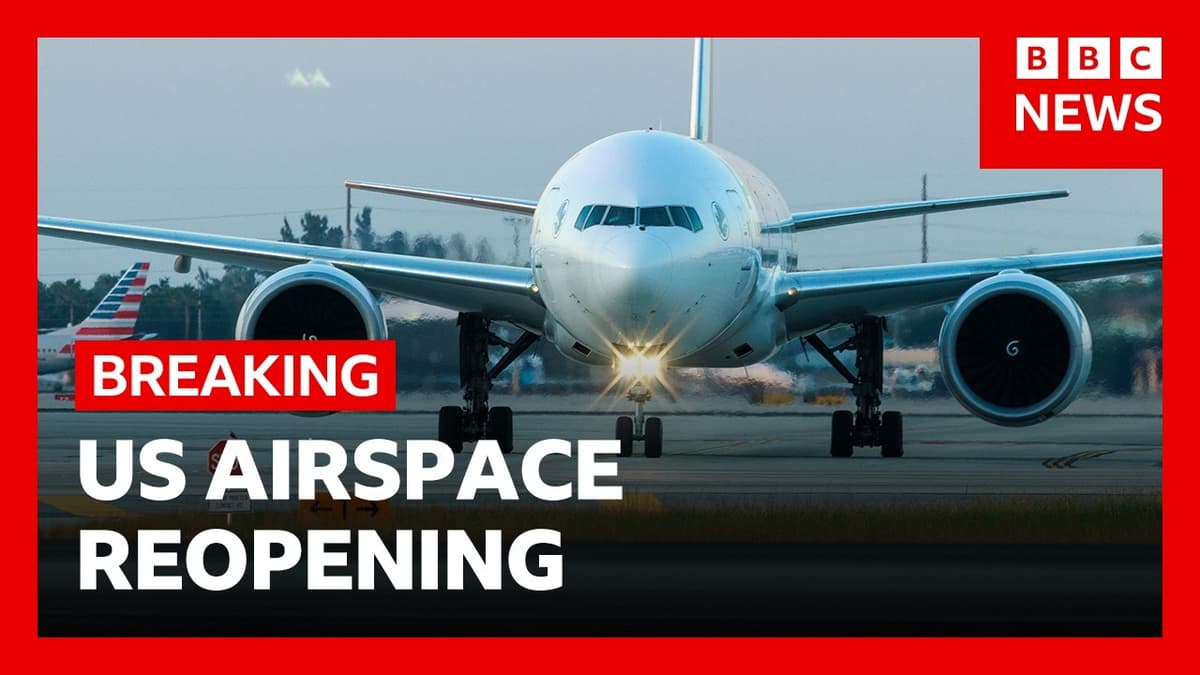
Carl begins by saying that U.S. airspace has reopened after a ground stop halted all flights for a number of hours on Friday. He says more than seven and a half thousand flights were cancelled and thousands more were delayed after the Federal Aviation Administration ordered flights to halt. He says Homeland Security Secretary Markwayne Mullin said there was zero evidence at this point of a cyber attack, and Transportation Secretary Sean Duffy said the problem was caused by the system becoming overloaded.

Radar and communication instability

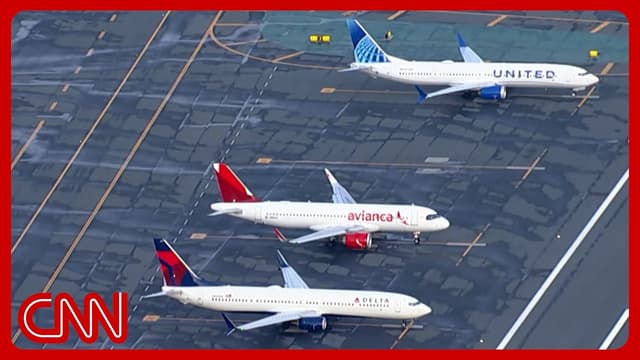
Sean Duffy says that at 3.36 p.m. there was instability for radar, communications, centres and TRACONs across the country. He explains that airports have towers, then TRACONs, then en route centres, and that inconsistency began in radar data and communication with aircraft. He says procedures were used, pilots and air traffic controllers were well trained, and a ground stop was issued. He says there were over 3,500 airplanes in the air, and that the number in the airspace fell to less than 400 as aircraft came in to land. He says critical movements, including medevac, cargo and critical medicines, were allowed to continue during the shutdown.

Passenger disruption in Denver

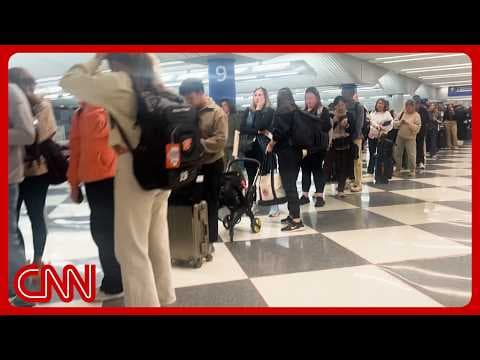
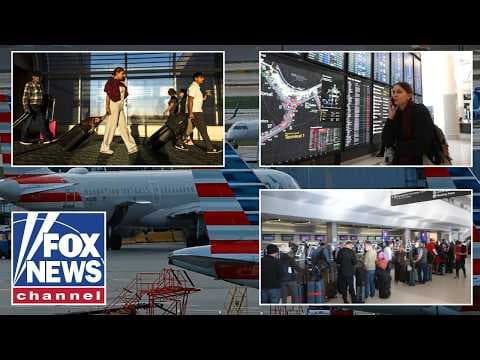
Sumi Somaskanda reports from Denver International Airport and says the board shows many cancellations and severely delayed flights. She says passengers are trying to rebook and that the disruption will take time to resolve. She speaks with Divya, who says her family is travelling from Costa Rica to Edmonton, sees Tuesday as the next available flight in the app, and heard from staff that no meal vouchers or accommodation are being provided. Sumi Somaskanda says there has been little communication from airlines about overnight stays and that the backlog at one airport will take hours and days to clear. She says a flight that has not taken off from Denver also did not land where it was expected, which adds to the reshuffling needed across the system.

Security recovery and unanswered questions

John Pistole, who served as TSA administrator from 2010 to 2014 and is a former deputy director of the FBI, says he would not be optimistic that people in the eastern United States will get out on flights the same night, while those further west have better opportunities. He says screening depends on TSA officers being present, that people in the sterile area may not need to be screened again, but bags may have been offloaded and may need rescreening. He asks why the FAA system failed on that afternoon rather than on the busiest travel day, when nearly 3 million people travel within the United States. He says the equipment is antiquated and needs to be replaced, but questions the timing and asks what caused the failure. He says he has no information that a bad actor caused the outage, but would not rule that out until there is 100 per cent certainty. He agrees that it is a national security issue until external causes are ruled out and the problem is fixed.
Statements in the video

0:48The problem was caused by the system becoming overloaded.Sean Duffy says this while giving the cause of the ground stop.
1:28There were over 3,500 airplanes in the air.Sean Duffy says this while describing the aircraft already in the air when the ground stop was issued.
8:05On the busiest travel day, nearly 3 million people travel within the United States.John Pistole says this while noting that the busiest travel day is in two weeks, around Thanksgiving.

Moments from the video

0:00“We begin right here in the U.S. where airspace has now reopened. That's after a ground stop halted all flights for a number of hours on Friday.”0:42“He said that there was zero evidence at this point of a cyber attack.”1:30“We had over 3,500 airplanes in the air.”2:25“Sumi, that is likely welcome news for travelers there. Airspace now reopened. What's the latest?”5:59“And remember, Carl, if a flight hasn't taken off from here, that means that plane didn't land in another airport where it was expected.”8:56“Well, yeah, clearly it's antiquated equipment and it needs to be replaced.”11:54“I have no information that it was something caused by a bad actor, but I wouldn't rule that out until there's 100% certainty.”

U.S. airspace reopening after ground stop: disruption recap

Original title: US airspace reopening after rare shutdown | BBC News
BBC News · 12:56 · 14 Nov 2026 · Watch on YouTube

Carl opens with the reopening of U.S. airspace after a ground stop. Sumi Somaskanda and John Pistole discuss passenger disruption and unanswered causes.

IN THIS VIDEO
  1. 0:00Airspace reopens after ground stop
  2. 0:55Radar and communication instability
  3. 2:25Passengers wait in Denver
  4. 6:27Security and delay recovery
  5. 10:17Questions over cause and investigation

What the video covers

Written in our own words. It only describes what the video shows and says.

Carl begins by saying that U.S. airspace has reopened after a ground stop halted all flights for a number of hours on Friday. He says more than seven and a half thousand flights were cancelled and thousands more were delayed after the Federal Aviation Administration ordered flights to halt. He says Homeland Security Secretary Markwayne Mullin said there was zero evidence at this point of a cyber attack, and Transportation Secretary Sean Duffy said the problem was caused by the system becoming overloaded.

Radar and communication instability

Sean Duffy says that at 3.36 p.m. there was instability for radar, communications, centres and TRACONs across the country. He explains that airports have towers, then TRACONs, then en route centres, and that inconsistency began in radar data and communication with aircraft. He says procedures were used, pilots and air traffic controllers were well trained, and a ground stop was issued. He says there were over 3,500 airplanes in the air, and that the number in the airspace fell to less than 400 as aircraft came in to land. He says critical movements, including medevac, cargo and critical medicines, were allowed to continue during the shutdown.

Passenger disruption in Denver

Sumi Somaskanda reports from Denver International Airport and says the board shows many cancellations and severely delayed flights. She says passengers are trying to rebook and that the disruption will take time to resolve. She speaks with Divya, who says her family is travelling from Costa Rica to Edmonton, sees Tuesday as the next available flight in the app, and heard from staff that no meal vouchers or accommodation are being provided. Sumi Somaskanda says there has been little communication from airlines about overnight stays and that the backlog at one airport will take hours and days to clear. She says a flight that has not taken off from Denver also did not land where it was expected, which adds to the reshuffling needed across the system.

Security recovery and unanswered questions

John Pistole, who served as TSA administrator from 2010 to 2014 and is a former deputy director of the FBI, says he would not be optimistic that people in the eastern United States will get out on flights the same night, while those further west have better opportunities. He says screening depends on TSA officers being present, that people in the sterile area may not need to be screened again, but bags may have been offloaded and may need rescreening. He asks why the FAA system failed on that afternoon rather than on the busiest travel day, when nearly 3 million people travel within the United States. He says the equipment is antiquated and needs to be replaced, but questions the timing and asks what caused the failure. He says he has no information that a bad actor caused the outage, but would not rule that out until there is 100 per cent certainty. He agrees that it is a national security issue until external causes are ruled out and the problem is fixed.
Statements in the video

0:48The problem was caused by the system becoming overloaded.Sean Duffy says this while giving the cause of the ground stop.
1:28There were over 3,500 airplanes in the air.Sean Duffy says this while describing the aircraft already in the air when the ground stop was issued.
8:05On the busiest travel day, nearly 3 million people travel within the United States.John Pistole says this while noting that the busiest travel day is in two weeks, around Thanksgiving.

Moments from the video

0:00“We begin right here in the U.S. where airspace has now reopened. That's after a ground stop halted all flights for a number of hours on Friday.”0:42“He said that there was zero evidence at this point of a cyber attack.”1:30“We had over 3,500 airplanes in the air.”2:25“Sumi, that is likely welcome news for travelers there. Airspace now reopened. What's the latest?”5:59“And remember, Carl, if a flight hasn't taken off from here, that means that plane didn't land in another airport where it was expected.”8:56“Well, yeah, clearly it's antiquated equipment and it needs to be replaced.”11:54“I have no information that it was something caused by a bad actor, but I wouldn't rule that out until there's 100% certainty.”
PREPARE FOR SELECTIONPreparing for an Airline Selection?
Academy · Alongside your ground school

Practise All 14 Subjects

ATPL theory (EASA) · a practice set per subject, then timed final exams
KNOWLEDGE BASEAsk the knowledge baseAnswers on training, selections and careers, with sources
READ MORE ON PILOTINQ
United States: FAA lifts nationwide ground stop after hours-long communications failureUnited States: Student Pilot on First Solo Cross-Country Caught Airborne in Nationwide Ground Stop
UP NEXT
1:07
Nationwide ground stop: student pilot lands solo at HicksCNN · 1:07

More Like This