United States: Cessna 172 flipped behind departing United 737 MAX at John Wayne Airport

A training Cessna with an instructor and a student overturned at John Wayne Airport while taxiing behind United Flight 2611, the FAA says. ADS-B data puts it in line behind the jet as it started to move. The airport first blamed high winds.

PQ
By the PilotinQ editorial team · based on 17 sources
Published 9 Nov 2026, 11:11 UTCUpdated 10 Nov 20265 min read
A United Airlines Boeing 737 MAX 8 on final approach with its landing gear down against a clear blue sky
A United Airlines Boeing 737 MAX 8 on approach to John Wayne Airport (archive image, not the aircraft involved). Sewageboy via Wikimedia Commons · CC BY-SA 4.0
IN SHORT
  • A Cessna 172 with an instructor and a student overturned at John Wayne Airport on 7 November. Airport officials said nobody was injured.18
  • The FAA says it was blown over while taxiing behind United Flight 2611, a Boeing 737 MAX 8 to Chicago.14
  • ADS-B data shows the Cessna almost directly in line behind the 737 as the jet started to move and turned onto the runway.23
  • The airport first blamed high winds, but its weather station recorded 5 to 9 knots with gusts to 15.610

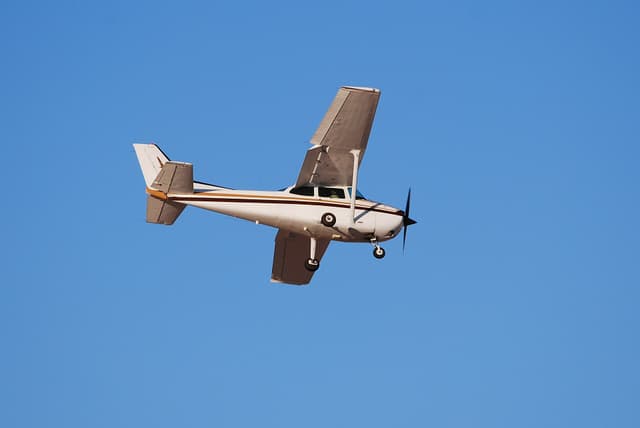
A Cessna 172 with an instructor and a student on board ended up on its roof at John Wayne Airport in Santa Ana, California, on Saturday 7 November. The FAA says the aircraft was blown over while taxiing behind United Airlines Flight 2611 at around 14:30 local time1. Airport officials said neither occupant was injured810. The FAA will investigate1. No cause has been formally established. The case is a useful study in who is responsible for what on the ground and where a jet's exhaust stops being a hazard.

What the FAA statement and ADS-B data show

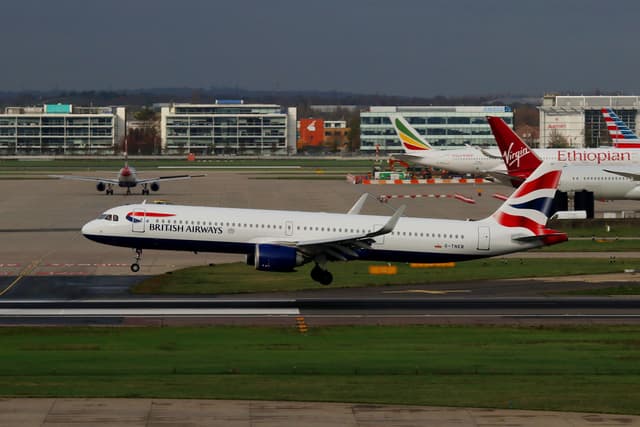
United 2611 was a Boeing 737 MAX 8 departing John Wayne for Chicago O'Hare. It left the gate at 14:14 local time and took off at 14:384. ADS-B data from adsb.lol identifies the aircraft as N47291. It began taxiing towards the runway at about 14:28 and held short for about half a minute from just before 14:363. The Cessna, registered N57BM, had landed at about 14:31 and then taxied along the same part of the airfield behind the 7372. The registration was also reported by Simple Flying12. The FAA register lists N57BM as a 1973 Cessna 172M5.

At about 14:36:30 the Cessna was roughly 50 metres from the point the 737 was reporting as its position, almost directly in line behind it23. At that moment the 737 started to move and turned right onto the runway. Until 14:36:48 the Cessna stayed in line behind the jet as the distance grew to about 100 metres. After that adsb.lol received no further signal from the Cessna2. The data shows where both aircraft were. It does not show how much thrust the 737 used or exactly when the Cessna overturned.

Wind or jet blast

The airport first attributed the overturn to high winds1011. According to CBS Los Angeles, the airport and the fire authority initially also said nobody was on board and that the aircraft was parked, before the airport confirmed two occupants8. The airport's weather station recorded a one-minute mean wind of 5 to 9 knots from the west between 14:15 and 14:50, with gusts up to 15 knots6. The 14:53 observation gave 260 degrees at 6 knots7. A Red Flag Warning for gusty winds had been issued for parts of Southern California for that weekend10.

The operator, Orange County Flight Center, told CBS Los Angeles that the aircraft was flipped by jet blast from a departing United or Southwest jet8. A pilot taxiing behind the Cessna reported on frequency that it had been blasted by a United 737, according to Simple Flying12. In the CBS Los Angeles video below, the school says the instructor and the student were taxiing to a parking area when a Boeing powered up to move onto the runway. The school blames ongoing construction at the airport, which it says pushed the Cessna too close to the jet9. Neither the airport nor the FAA has confirmed that account18.

Who is responsible on the ground

Responsibility on the ground is shared but not split evenly. Under 14 CFR 91.3 the pilot in command is directly responsible for the operation of the aircraft and is its final authority17. That applies to the pilot in command of the Cessna as much as to the captain of the 737. On the movement area, the runways and taxiways, aircraft need approval from ATC at a towered airport. The FAA definition of that area excludes loading ramps and parking areas15. The airport says the Cessna overturned on the ACI Jet ramp, a general aviation FBO area811. Ramps fall outside the movement area, so the ATC approval required there does not apply on the ramp itself15. ATC sequences traffic on the taxiways, but the AIM puts the jet blast question with pilots: they should consider the effects of jet blast, prop wash and rotor wash on aircraft, vehicles and equipment during ground operations14.

The jet crew has a part too. The FAA recommends that air carriers keep their rotating beacon on whenever an engine is running, because prop and jet blast from large aircraft has overturned or damaged several smaller aircraft taxiing behind them14. The programme is voluntary, so the FAA adds that pilots should not rely on the beacon alone as a sign that engines are running14. A crew starting to move from a standstill, or turning onto a runway, swings its exhaust across whatever is behind it. Boeing notes that exhaust contours behind a moving or turning aircraft differ from the static figures13, which is why holding in trail behind a jet about to move typically carries the most exposure.

Where the jet blast ends

There is no fixed regulatory distance for a light aircraft behind a jet. Boeing publishes exhaust velocity contours for airport planning13. For the 737 MAX 8 the 35 mph (56 km/h) contour ends about 70 feet, around 20 metres, behind the aircraft at idle. At breakaway thrust, the power needed to start rolling, it reaches about 75 feet with both engines running but roughly 170 to 220 feet (50 to 67 metres) when the aircraft breaks away on one engine. At takeoff thrust the 35 mph contour extends to about 1,102 feet (336 metres) and the 50 mph contour to about 742 feet (226 metres)13.

Boeing stresses that these are steady-state values for a stationary aircraft with no wind. Wind does not simply add to the jet wake. It carries the whole envelope in the direction of the wind and a crosswind can carry the wake far to the side at larger distances13. Boeing also notes that a moving or turning aircraft produces transient contours that are hard to model13. Whether the 737 was taxiing on one or both engines and how much thrust it used is not known. For a light aircraft crew the practical rule follows: do not hold in line with the tail of a jet that is about to move, hold off the extended centreline, leave room and ask ATC to wait or for another route if needed.

Accident or incident

The classification will depend on the damage. Under 49 CFR 830.2 an occurrence counts as an aircraft accident if the aircraft receives substantial damage, meaning damage that affects structural strength, performance or flight characteristics and would normally need major repair16. The extent of the damage to N57BM has not been released8. The FAA has said it will investigate. Whether the NTSB opens its own investigation has not been announced.

For more on pilot authority and the word "unable", read our analysis of the United 471 storm routing. Another light-aircraft accident at an airport is covered in the Ardmore hangar case. Training paths start with the PPL and for instructors with preparing to become a flight instructor.

Update, 10 November: the instructor reports a sudden jet blast. Read our follow-up on the overturn.

Timeline

  1. 7 Nov 2026
    N57BM lands at John Wayne at about 22:31 UTC and taxis behind United 2611.2
  2. 7 Nov 2026
    United 2611 starts to move at about 22:36:30 UTC; the last Cessna signal is at 22:36:48.3
  3. 7 Nov 2026
    United 2611 takes off for Chicago at 22:38 UTC.4
  4. 7 Nov 2026
    The FAA says the Cessna was blown over while taxiing behind United 2611 and will investigate.1
About:SafetyUnited AirlinesJohn Wayne AirportFederal Aviation Administration
KEEP READINGAIRLINEUnited AirlinesAsk your own pilot question

Sources

  1. 1FAA · FAA Statements on Aviation Accidents and Incidents, General Aviation / Santa Ana, California, 7 November 20267 Nov 2026
  2. 2adsb.lol · ADS-B trace Cessna 172 N57BM (ICAO A74C35), 7 November 20267 Nov 2026
  3. 3adsb.lol · ADS-B trace Boeing 737 MAX 8 N47291 (ICAO A5CC35), callsign UAL2611, 7 November 20267 Nov 2026
  4. 4FlightAware · UAL2611 flight log, John Wayne to Chicago O'Hare, 7 November 20267 Nov 2026
  5. 5FAA Aircraft Registry · N-number inquiry N57BM
  6. 6Iowa Environmental Mesonet · ASOS one-minute wind data KSNA, 7 November 2026, 22:15 to 22:50 UTC7 Nov 2026
  7. 7Iowa Environmental Mesonet · METAR archive KSNA, 7 November 20267 Nov 2026
  8. 8CBS Los Angeles · FAA investigating after small plane flips over on John Wayne Airport runway due to jet blast8 Nov 2026
  9. 9CBS LA on YouTube · Video shows small plane getting flipped by jet blast at John Wayne Airport in Orange County9 Nov 2026
  10. 10NBC Los Angeles · Wild winds cause small aircraft to overturn at John Wayne Airport8 Nov 2026
  11. 11MyNewsLA (City News Service) · Strong Winds Force Small Plane To Flip Over at John Wayne Airport8 Nov 2026
  12. 12Simple Flying · United 737 Jet Blast Reportedly Flips Cessna At John Wayne Airport, But Officials Blame Wind8 Nov 2026
  13. 13Boeing · 737 MAX Airplane Characteristics for Airport Planning, D6-38A004 Rev K, section 6.1 jet engine exhaust velocities1 Jul 2025
  14. 14FAA · Aeronautical Information Manual, chapter 4 section 3 (4-3-18 Taxiing, 4-3-24 Use of Aircraft Lights)
  15. 15FAA · Pilot/Controller Glossary, letter M (movement area)
  16. 16Cornell Legal Information Institute · 49 CFR 830.2, Definitions (aircraft accident, substantial damage)
  17. 17Cornell Legal Information Institute · 14 CFR 91.3, Responsibility and authority of the pilot in command
CHANGES10 Nov 2026, 21:15 UTC · Updated: Added a link to our follow-up: the instructor reports a sudden jet blast.9 Nov 2026, 11:11 UTC · PublishedSpotted an error? Tell us, corrections are noted under the article.Every fact is checked against the sources listed above. How we work

United States: Cessna 172 flipped behind departing United 737 MAX at John Wayne Airport

A training Cessna with an instructor and a student overturned at John Wayne Airport while taxiing behind United Flight 2611, the FAA says. ADS-B data puts it in line behind the jet as it started to move. The airport first blamed high winds.

PQ
By the PilotinQ editorial team · based on 17 sources
Published 9 Nov 2026, 11:11 UTCUpdated 10 Nov 20265 min read
A United Airlines Boeing 737 MAX 8 on final approach with its landing gear down against a clear blue sky
A United Airlines Boeing 737 MAX 8 on approach to John Wayne Airport (archive image, not the aircraft involved). Sewageboy via Wikimedia Commons · CC BY-SA 4.0
IN SHORT
  • A Cessna 172 with an instructor and a student overturned at John Wayne Airport on 7 November. Airport officials said nobody was injured.18
  • The FAA says it was blown over while taxiing behind United Flight 2611, a Boeing 737 MAX 8 to Chicago.14
  • ADS-B data shows the Cessna almost directly in line behind the 737 as the jet started to move and turned onto the runway.23
  • The airport first blamed high winds, but its weather station recorded 5 to 9 knots with gusts to 15.610

A Cessna 172 with an instructor and a student on board ended up on its roof at John Wayne Airport in Santa Ana, California, on Saturday 7 November. The FAA says the aircraft was blown over while taxiing behind United Airlines Flight 2611 at around 14:30 local time1. Airport officials said neither occupant was injured810. The FAA will investigate1. No cause has been formally established. The case is a useful study in who is responsible for what on the ground and where a jet's exhaust stops being a hazard.

What the FAA statement and ADS-B data show

United 2611 was a Boeing 737 MAX 8 departing John Wayne for Chicago O'Hare. It left the gate at 14:14 local time and took off at 14:384. ADS-B data from adsb.lol identifies the aircraft as N47291. It began taxiing towards the runway at about 14:28 and held short for about half a minute from just before 14:363. The Cessna, registered N57BM, had landed at about 14:31 and then taxied along the same part of the airfield behind the 7372. The registration was also reported by Simple Flying12. The FAA register lists N57BM as a 1973 Cessna 172M5.

Academy · Alongside your ground school

Practise All 14 Subjects

ATPL theory (EASA) · a practice set per subject, then timed final exams

At about 14:36:30 the Cessna was roughly 50 metres from the point the 737 was reporting as its position, almost directly in line behind it23. At that moment the 737 started to move and turned right onto the runway. Until 14:36:48 the Cessna stayed in line behind the jet as the distance grew to about 100 metres. After that adsb.lol received no further signal from the Cessna2. The data shows where both aircraft were. It does not show how much thrust the 737 used or exactly when the Cessna overturned.

Wind or jet blast

The airport first attributed the overturn to high winds1011. According to CBS Los Angeles, the airport and the fire authority initially also said nobody was on board and that the aircraft was parked, before the airport confirmed two occupants8. The airport's weather station recorded a one-minute mean wind of 5 to 9 knots from the west between 14:15 and 14:50, with gusts up to 15 knots6. The 14:53 observation gave 260 degrees at 6 knots7. A Red Flag Warning for gusty winds had been issued for parts of Southern California for that weekend10.

The operator, Orange County Flight Center, told CBS Los Angeles that the aircraft was flipped by jet blast from a departing United or Southwest jet8. A pilot taxiing behind the Cessna reported on frequency that it had been blasted by a United 737, according to Simple Flying12. In the CBS Los Angeles video below, the school says the instructor and the student were taxiing to a parking area when a Boeing powered up to move onto the runway. The school blames ongoing construction at the airport, which it says pushed the Cessna too close to the jet9. Neither the airport nor the FAA has confirmed that account18.

Who is responsible on the ground

Responsibility on the ground is shared but not split evenly. Under 14 CFR 91.3 the pilot in command is directly responsible for the operation of the aircraft and is its final authority17. That applies to the pilot in command of the Cessna as much as to the captain of the 737. On the movement area, the runways and taxiways, aircraft need approval from ATC at a towered airport. The FAA definition of that area excludes loading ramps and parking areas15. The airport says the Cessna overturned on the ACI Jet ramp, a general aviation FBO area811. Ramps fall outside the movement area, so the ATC approval required there does not apply on the ramp itself15. ATC sequences traffic on the taxiways, but the AIM puts the jet blast question with pilots: they should consider the effects of jet blast, prop wash and rotor wash on aircraft, vehicles and equipment during ground operations14.

The jet crew has a part too. The FAA recommends that air carriers keep their rotating beacon on whenever an engine is running, because prop and jet blast from large aircraft has overturned or damaged several smaller aircraft taxiing behind them14. The programme is voluntary, so the FAA adds that pilots should not rely on the beacon alone as a sign that engines are running14. A crew starting to move from a standstill, or turning onto a runway, swings its exhaust across whatever is behind it. Boeing notes that exhaust contours behind a moving or turning aircraft differ from the static figures13, which is why holding in trail behind a jet about to move typically carries the most exposure.

Where the jet blast ends

There is no fixed regulatory distance for a light aircraft behind a jet. Boeing publishes exhaust velocity contours for airport planning13. For the 737 MAX 8 the 35 mph (56 km/h) contour ends about 70 feet, around 20 metres, behind the aircraft at idle. At breakaway thrust, the power needed to start rolling, it reaches about 75 feet with both engines running but roughly 170 to 220 feet (50 to 67 metres) when the aircraft breaks away on one engine. At takeoff thrust the 35 mph contour extends to about 1,102 feet (336 metres) and the 50 mph contour to about 742 feet (226 metres)13.

Boeing stresses that these are steady-state values for a stationary aircraft with no wind. Wind does not simply add to the jet wake. It carries the whole envelope in the direction of the wind and a crosswind can carry the wake far to the side at larger distances13. Boeing also notes that a moving or turning aircraft produces transient contours that are hard to model13. Whether the 737 was taxiing on one or both engines and how much thrust it used is not known. For a light aircraft crew the practical rule follows: do not hold in line with the tail of a jet that is about to move, hold off the extended centreline, leave room and ask ATC to wait or for another route if needed.

Accident or incident

The classification will depend on the damage. Under 49 CFR 830.2 an occurrence counts as an aircraft accident if the aircraft receives substantial damage, meaning damage that affects structural strength, performance or flight characteristics and would normally need major repair16. The extent of the damage to N57BM has not been released8. The FAA has said it will investigate. Whether the NTSB opens its own investigation has not been announced.

For more on pilot authority and the word "unable", read our analysis of the United 471 storm routing. Another light-aircraft accident at an airport is covered in the Ardmore hangar case. Training paths start with the PPL and for instructors with preparing to become a flight instructor.

Update, 10 November: the instructor reports a sudden jet blast. Read our follow-up on the overturn.

Timeline

  1. 7 Nov 2026
    N57BM lands at John Wayne at about 22:31 UTC and taxis behind United 2611.2
  2. 7 Nov 2026
    United 2611 starts to move at about 22:36:30 UTC; the last Cessna signal is at 22:36:48.3
  3. 7 Nov 2026
    United 2611 takes off for Chicago at 22:38 UTC.4
  4. 7 Nov 2026
    The FAA says the Cessna was blown over while taxiing behind United 2611 and will investigate.1
About:SafetyUnited AirlinesJohn Wayne AirportFederal Aviation Administration
KEEP READINGAIRLINEUnited AirlinesAsk your own pilot question

Prepare for selection

Sources

  1. 1FAA · FAA Statements on Aviation Accidents and Incidents, General Aviation / Santa Ana, California, 7 November 20267 Nov 2026
  2. 2adsb.lol · ADS-B trace Cessna 172 N57BM (ICAO A74C35), 7 November 20267 Nov 2026
  3. 3adsb.lol · ADS-B trace Boeing 737 MAX 8 N47291 (ICAO A5CC35), callsign UAL2611, 7 November 20267 Nov 2026
  4. 4FlightAware · UAL2611 flight log, John Wayne to Chicago O'Hare, 7 November 20267 Nov 2026
  5. 5FAA Aircraft Registry · N-number inquiry N57BM
  6. 6Iowa Environmental Mesonet · ASOS one-minute wind data KSNA, 7 November 2026, 22:15 to 22:50 UTC7 Nov 2026
  7. 7Iowa Environmental Mesonet · METAR archive KSNA, 7 November 20267 Nov 2026
  8. 8CBS Los Angeles · FAA investigating after small plane flips over on John Wayne Airport runway due to jet blast8 Nov 2026
  9. 9CBS LA on YouTube · Video shows small plane getting flipped by jet blast at John Wayne Airport in Orange County9 Nov 2026
  10. 10NBC Los Angeles · Wild winds cause small aircraft to overturn at John Wayne Airport8 Nov 2026
  11. 11MyNewsLA (City News Service) · Strong Winds Force Small Plane To Flip Over at John Wayne Airport8 Nov 2026
  12. 12Simple Flying · United 737 Jet Blast Reportedly Flips Cessna At John Wayne Airport, But Officials Blame Wind8 Nov 2026
  13. 13Boeing · 737 MAX Airplane Characteristics for Airport Planning, D6-38A004 Rev K, section 6.1 jet engine exhaust velocities1 Jul 2025
  14. 14FAA · Aeronautical Information Manual, chapter 4 section 3 (4-3-18 Taxiing, 4-3-24 Use of Aircraft Lights)
  15. 15FAA · Pilot/Controller Glossary, letter M (movement area)
  16. 16Cornell Legal Information Institute · 49 CFR 830.2, Definitions (aircraft accident, substantial damage)
  17. 17Cornell Legal Information Institute · 14 CFR 91.3, Responsibility and authority of the pilot in command
CHANGES10 Nov 2026, 21:15 UTC · Updated: Added a link to our follow-up: the instructor reports a sudden jet blast.9 Nov 2026, 11:11 UTC · PublishedSpotted an error? Tell us, corrections are noted under the article.Every fact is checked against the sources listed above. How we work
Keep reading

More on Safety