United States: United 471 storm routing report and what "unable" means on the radio

A United crew at San Antonio reportedly turned down a routing through a severe storm. Here is what the record shows, what the rules say about declining a clearance and how weather deviations work on the frequency.

By the PilotinQ editorial team · based on 15 sourcesPublished 8 Nov 2026, 11:44 UTC · 5 min read
LinkedInXWhatsAppFacebook
A United Airlines Boeing 737-700 seen from below in flight against a clear blue sky
A United Airlines Boeing 737-700 climbing out of Boston (archive image). 4300streetcar via Wikimedia Commons · CC BY 4.0
IN SHORT
  • The crew of United 471, San Antonio to Dulles, reportedly declined a routing through a severe storm and flew another route.1
  • If the reported Friday was 6 November, the flight log shows an on-time departure and an arrival 24 minutes early.2
  • Under 14 CFR 91.3 the pilot in command is the final authority. A clearance that would endanger the aircraft should be met with a request to amend it.69
  • The embedded video shows a separate case: JetBlue 1971 on 3 September, where the crew declared an emergency to avoid weather.1315

The crew of United Airlines flight 471 from San Antonio to Washington Dulles reportedly turned down a routing that they said would have taken their Boeing 737-700 through a severe thunderstorm, then spoke to company dispatch before leaving on another route1. The account comes from a recording shared on social media and reported by Simple Flying, which says United confirmed the flight landed safely1. It raises three practical questions: what a crew can decline, how it does so on the radio and why storm days make that conversation harder.

What has been reported about United 471

According to Simple Flying, the exchange took place as the aircraft pushed back and taxied, so on the ground rather than in cruise1. The report says air traffic control had rerouted the flight to go south around the weather and that the crew asked for that routing back when a later proposal would have led through the storm. It adds that dispatch agreed with them1. It attributes to the pilot the view that the proposed route meant up to four hours of challenging weather and almost an hour of extra flying1. The date is given as a Friday and the outlet says it has not confirmed that1.

What the public record shows for 6 November

If that Friday was 6 November, the flight log shows no sign of a long delay. UAL471, listed as a Boeing 737-700, left the gate at 12:57 UTC against a schedule of 13:00, took off at 13:06, landed at 15:44 and reached the gate at Dulles at 15:49, 24 minutes ahead of schedule2. The filed route in the log runs via Lufkin in east Texas and Charleston, West Virginia2. That is the same route filed on 5 November and the aircraft took off nine minutes after leaving the gate, so the log does not show the reported change of route2.

Thunderstorms were active that morning, although the record does not settle where the proposed routing would have gone. The Storm Prediction Center placed a marginal risk of severe storms over parts of the Carolinas and the mid-Atlantic coast4. Convective SIGMETs in force at 11:55 UTC covered embedded thunderstorms from New England to the Carolinas and over south Texas and its coastal waters, with tops to FL450 and in one area, which included Maryland, above FL4503. No tornado, hail or wind reports were logged nationwide for that day5.

Under 14 CFR 91.3, the pilot in command is "directly responsible" for the operation of the aircraft and is its "final authority"6. That authority sits alongside a duty to follow clearances: 14 CFR 91.123 says no pilot in command may deviate from a clearance once obtained unless an amended clearance is obtained, an emergency exists or the pilot is responding to a TCAS resolution advisory7. The two rules fit together through the amended clearance. The FAA Aeronautical Information Manual says that if a clearance would, in the pilot's opinion, place the aircraft in jeopardy, it is the pilot's responsibility to request an amended one9.

The word for that is in the FAA glossary. "Unable" indicates inability to comply with a specific instruction, request or clearance11. Simple Flying does not report whether the word was used on United 471. On the ground, before departure, the crew has time and options. At a US airline, dispatch is part of that decision too: under 14 CFR 121.533 the pilot in command and the dispatcher are jointly responsible for preflight planning, delay and dispatch release8.

How a weather deviation works on the frequency

The same manual asks pilots to request a deviation early and to include the point where the detour will start, the route and extent of the detour and the point where the original route will be resumed10. It also advises avoiding by at least 20 miles any thunderstorm identified as severe or giving an intense radar echo10. A call might run: callsign, unable that heading due weather, then the heading or deviation the crew can accept.

Controllers have their own script. When a deviation is approved the phraseology is "deviation approved, advise clear of weather" with any restrictions added. When traffic prevents it, FAA Order JO 7110.65 requires an alternative that gives positive control and satisfies the pilot's need to avoid weather, with the phrase "unable requested deviation, fly heading"12. So "unable" is used in both directions on the frequency.

Why the frequency gets harder on storm days

The manual is direct about the workload. Separation workload is generally greater than normal when weather disrupts the flow of traffic. It also warns that radar limitations and frequency congestion can limit how much extra service a controller can give10. Radar shows precipitation rather than turbulence. The manual adds that turbulence near storms can be markedly worse than the precipitation intensity suggests10. A crew looking at its own radar and a controller looking at a sector display may therefore describe the same area differently, with neither of them being careless.

When a crew goes further: JetBlue 1971

The video below is a different flight, in which the controller said "unable" and the crew then declared an emergency. On 3 September 2026, JetBlue 1971, an Airbus A320 from Fort Lauderdale to Austin, was told "unable" when it asked for a heading of 250 or 24013. The controller cited traffic and assigned 27013. Asked by the pilot whether the crew was being sent through a severe thunderstorm, the controller said she was showing light precipitation. The pilot replied: "Not from here, ma'am. So we declare an emergency, making a left turn heading two-six-zero for severe weather avoidance"13. The aircraft landed in Austin with no injuries or damage reported14.
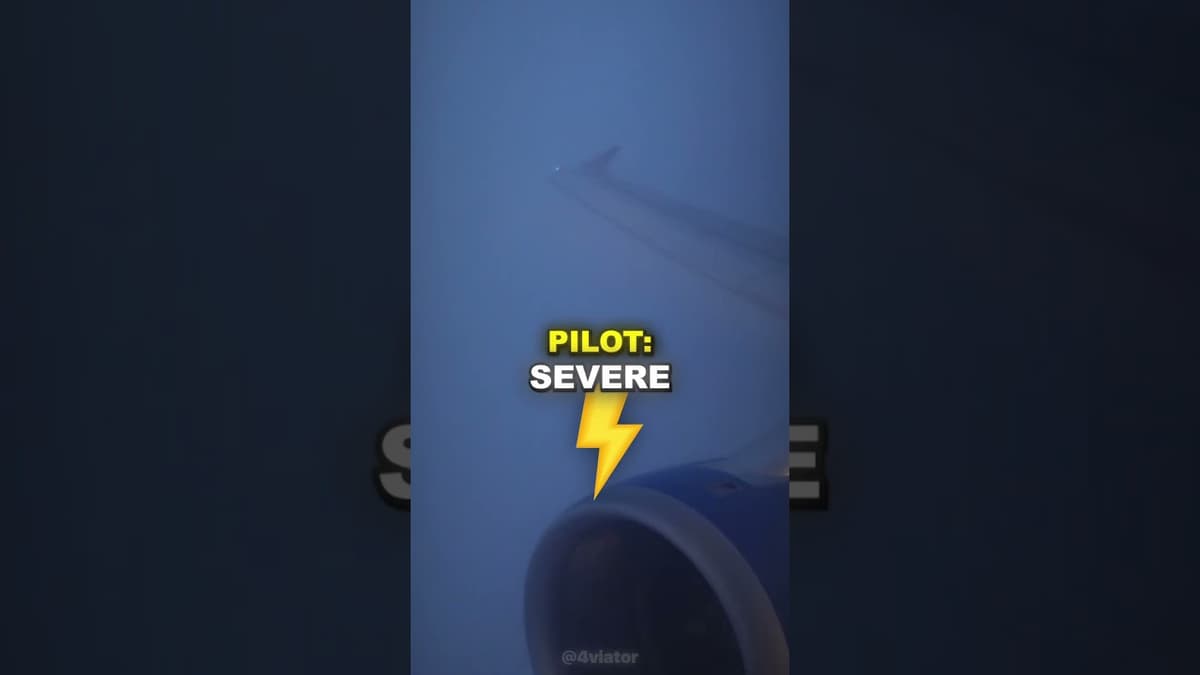
The rule that covers such a step is 14 CFR 91.3(b), which lets the pilot in command deviate from the rules to the extent required to meet an in-flight emergency requiring immediate action6. Under 91.123(c), a pilot who deviates from a clearance in an emergency must notify ATC as soon as possible7. The United 471 report describes no emergency, only another route1. For trainee pilots the order of steps matters: ask early, say "unable" clearly, offer what you can accept, involve dispatch while you still can and keep emergency authority for when the time to negotiate has run out.

Timeline

  1. 3 Sep 2026
    JetBlue 1971 declares an emergency to avoid severe weather on a flight to Austin.13
  2. 6 Nov 2026
    Convective SIGMETs cover parts of the Carolinas, Virginia and Maryland; UAL471 lands at Dulles at 15:44 UTC.3
  3. 7 Nov 2026
    Simple Flying reports the United 471 routing dispute.1
About:SafetyUnited AirlinesJetBlueFederal Aviation Administration
KEEP READINGAIRLINEUnited AirlinesAIRLINEJetBlueAsk your own pilot question

Sources

  1. 1Simple Flying · United Airlines pilots defy ATC orders to fly through the worst part of a severe thunderstorm7 Nov 2026
  2. 2FlightAware · UAL471 flight log, San Antonio to Washington Dulles, 6 November 20266 Nov 2026
  3. 3Iowa Environmental Mesonet · Archive of Convective SIGMETs issued 11:00 to 17:00 UTC, 6 November 20266 Nov 2026
  4. 4NOAA Storm Prediction Center · Day 1 Convective Outlook, valid from 12:00 UTC on 6 November 20266 Nov 2026
  5. 5NOAA Storm Prediction Center · Storm reports for 6 November 20266 Nov 2026
  6. 6Cornell Legal Information Institute · 14 CFR 91.3, Responsibility and authority of the pilot in command
  7. 7Cornell Legal Information Institute · 14 CFR 91.123, Compliance with ATC clearances and instructions
  8. 8Cornell Legal Information Institute · 14 CFR 121.533, Responsibility for operational control: domestic operations
  9. 9FAA · Aeronautical Information Manual, chapter 4 section 4, ATC clearances and aircraft separation
  10. 10FAA · Aeronautical Information Manual, chapter 7 section 1, Meteorology
  11. 11FAA · Pilot/Controller Glossary, letter U
  12. 12FAA · Order JO 7110.65BB Change 2, Air Traffic Control22 Jan 2026
  13. 13View from the Wing · JetBlue pilot refuses air traffic control instruction, declares emergency4 Sep 2026
  14. 14InsideFlyer · JetBlue pilot declares emergency to avoid storm4 Sep 2026
  15. 154viator on YouTube · Short with the JetBlue 1971 radio exchange6 Nov 2026
CHANGES8 Nov 2026, 11:44 UTC · PublishedSpotted an error? Tell us, corrections are noted under the article.Every fact is checked against the sources listed above. How we work

More on safety

Sign in

United States: United 471 storm routing report and what "unable" means on the radio

A United crew at San Antonio reportedly turned down a routing through a severe storm. Here is what the record shows, what the rules say about declining a clearance and how weather deviations work on the frequency.

By the PilotinQ editorial team · based on 15 sourcesPublished 8 Nov 2026, 11:44 UTC · 5 min read
A United Airlines Boeing 737-700 seen from below in flight against a clear blue sky
A United Airlines Boeing 737-700 climbing out of Boston (archive image). 4300streetcar via Wikimedia Commons · CC BY 4.0
IN SHORT
  • The crew of United 471, San Antonio to Dulles, reportedly declined a routing through a severe storm and flew another route.1
  • If the reported Friday was 6 November, the flight log shows an on-time departure and an arrival 24 minutes early.2
  • Under 14 CFR 91.3 the pilot in command is the final authority. A clearance that would endanger the aircraft should be met with a request to amend it.69
  • The embedded video shows a separate case: JetBlue 1971 on 3 September, where the crew declared an emergency to avoid weather.1315

The crew of United Airlines flight 471 from San Antonio to Washington Dulles reportedly turned down a routing that they said would have taken their Boeing 737-700 through a severe thunderstorm, then spoke to company dispatch before leaving on another route1. The account comes from a recording shared on social media and reported by Simple Flying, which says United confirmed the flight landed safely1. It raises three practical questions: what a crew can decline, how it does so on the radio and why storm days make that conversation harder.

What has been reported about United 471

According to Simple Flying, the exchange took place as the aircraft pushed back and taxied, so on the ground rather than in cruise1. The report says air traffic control had rerouted the flight to go south around the weather and that the crew asked for that routing back when a later proposal would have led through the storm. It adds that dispatch agreed with them1. It attributes to the pilot the view that the proposed route meant up to four hours of challenging weather and almost an hour of extra flying1. The date is given as a Friday and the outlet says it has not confirmed that1.

What the public record shows for 6 November

If that Friday was 6 November, the flight log shows no sign of a long delay. UAL471, listed as a Boeing 737-700, left the gate at 12:57 UTC against a schedule of 13:00, took off at 13:06, landed at 15:44 and reached the gate at Dulles at 15:49, 24 minutes ahead of schedule2. The filed route in the log runs via Lufkin in east Texas and Charleston, West Virginia2. That is the same route filed on 5 November and the aircraft took off nine minutes after leaving the gate, so the log does not show the reported change of route2.

Thunderstorms were active that morning, although the record does not settle where the proposed routing would have gone. The Storm Prediction Center placed a marginal risk of severe storms over parts of the Carolinas and the mid-Atlantic coast4. Convective SIGMETs in force at 11:55 UTC covered embedded thunderstorms from New England to the Carolinas and over south Texas and its coastal waters, with tops to FL450 and in one area, which included Maryland, above FL4503. No tornado, hail or wind reports were logged nationwide for that day5.

Under 14 CFR 91.3, the pilot in command is "directly responsible" for the operation of the aircraft and is its "final authority"6. That authority sits alongside a duty to follow clearances: 14 CFR 91.123 says no pilot in command may deviate from a clearance once obtained unless an amended clearance is obtained, an emergency exists or the pilot is responding to a TCAS resolution advisory7. The two rules fit together through the amended clearance. The FAA Aeronautical Information Manual says that if a clearance would, in the pilot's opinion, place the aircraft in jeopardy, it is the pilot's responsibility to request an amended one9.

The word for that is in the FAA glossary. "Unable" indicates inability to comply with a specific instruction, request or clearance11. Simple Flying does not report whether the word was used on United 471. On the ground, before departure, the crew has time and options. At a US airline, dispatch is part of that decision too: under 14 CFR 121.533 the pilot in command and the dispatcher are jointly responsible for preflight planning, delay and dispatch release8.

How a weather deviation works on the frequency

The same manual asks pilots to request a deviation early and to include the point where the detour will start, the route and extent of the detour and the point where the original route will be resumed10. It also advises avoiding by at least 20 miles any thunderstorm identified as severe or giving an intense radar echo10. A call might run: callsign, unable that heading due weather, then the heading or deviation the crew can accept.

Controllers have their own script. When a deviation is approved the phraseology is "deviation approved, advise clear of weather" with any restrictions added. When traffic prevents it, FAA Order JO 7110.65 requires an alternative that gives positive control and satisfies the pilot's need to avoid weather, with the phrase "unable requested deviation, fly heading"12. So "unable" is used in both directions on the frequency.

Why the frequency gets harder on storm days

The manual is direct about the workload. Separation workload is generally greater than normal when weather disrupts the flow of traffic. It also warns that radar limitations and frequency congestion can limit how much extra service a controller can give10. Radar shows precipitation rather than turbulence. The manual adds that turbulence near storms can be markedly worse than the precipitation intensity suggests10. A crew looking at its own radar and a controller looking at a sector display may therefore describe the same area differently, with neither of them being careless.

When a crew goes further: JetBlue 1971

The video below is a different flight, in which the controller said "unable" and the crew then declared an emergency. On 3 September 2026, JetBlue 1971, an Airbus A320 from Fort Lauderdale to Austin, was told "unable" when it asked for a heading of 250 or 24013. The controller cited traffic and assigned 27013. Asked by the pilot whether the crew was being sent through a severe thunderstorm, the controller said she was showing light precipitation. The pilot replied: "Not from here, ma'am. So we declare an emergency, making a left turn heading two-six-zero for severe weather avoidance"13. The aircraft landed in Austin with no injuries or damage reported14.

The rule that covers such a step is 14 CFR 91.3(b), which lets the pilot in command deviate from the rules to the extent required to meet an in-flight emergency requiring immediate action6. Under 91.123(c), a pilot who deviates from a clearance in an emergency must notify ATC as soon as possible7. The United 471 report describes no emergency, only another route1. For trainee pilots the order of steps matters: ask early, say "unable" clearly, offer what you can accept, involve dispatch while you still can and keep emergency authority for when the time to negotiate has run out.

Timeline

  1. 3 Sep 2026
    JetBlue 1971 declares an emergency to avoid severe weather on a flight to Austin.13
  2. 6 Nov 2026
    Convective SIGMETs cover parts of the Carolinas, Virginia and Maryland; UAL471 lands at Dulles at 15:44 UTC.3
  3. 7 Nov 2026
    Simple Flying reports the United 471 routing dispute.1
About:SafetyUnited AirlinesJetBlueFederal Aviation Administration
KEEP READINGAIRLINEUnited AirlinesAIRLINEJetBlueAsk your own pilot question

Sources

  1. 1Simple Flying · United Airlines pilots defy ATC orders to fly through the worst part of a severe thunderstorm7 Nov 2026
  2. 2FlightAware · UAL471 flight log, San Antonio to Washington Dulles, 6 November 20266 Nov 2026
  3. 3Iowa Environmental Mesonet · Archive of Convective SIGMETs issued 11:00 to 17:00 UTC, 6 November 20266 Nov 2026
  4. 4NOAA Storm Prediction Center · Day 1 Convective Outlook, valid from 12:00 UTC on 6 November 20266 Nov 2026
  5. 5NOAA Storm Prediction Center · Storm reports for 6 November 20266 Nov 2026
  6. 6Cornell Legal Information Institute · 14 CFR 91.3, Responsibility and authority of the pilot in command
  7. 7Cornell Legal Information Institute · 14 CFR 91.123, Compliance with ATC clearances and instructions
  8. 8Cornell Legal Information Institute · 14 CFR 121.533, Responsibility for operational control: domestic operations
  9. 9FAA · Aeronautical Information Manual, chapter 4 section 4, ATC clearances and aircraft separation
  10. 10FAA · Aeronautical Information Manual, chapter 7 section 1, Meteorology
  11. 11FAA · Pilot/Controller Glossary, letter U
  12. 12FAA · Order JO 7110.65BB Change 2, Air Traffic Control22 Jan 2026
  13. 13View from the Wing · JetBlue pilot refuses air traffic control instruction, declares emergency4 Sep 2026
  14. 14InsideFlyer · JetBlue pilot declares emergency to avoid storm4 Sep 2026
  15. 154viator on YouTube · Short with the JetBlue 1971 radio exchange6 Nov 2026
CHANGES8 Nov 2026, 11:44 UTC · PublishedSpotted an error? Tell us, corrections are noted under the article.Every fact is checked against the sources listed above. How we work

More on safety

SAFETYFrance: Transavia 737 squawks 7700 on Madrid to Orly flight and diverts to Bordeaux8 Nov 2026 · 3 min
SAFETYUnited States: what Frontier 4345 at Denver shows about perimeter security8 Nov 2026 · 4 min
SAFETYIndia: hijack threat note sends IndiGo flight back to Bengaluru8 Nov 2026 · 5 min