
KnowledgeTRAINING AND LICENCES
How to prepare to become a flight instructor
By the PilotinQ editorial teamUpdated 11 Oct 2026
THE ANSWER90 sec read

Prepare by logging sufficient flight experience, holding the required licences and medical certificate, and practising your teaching skills.123

Was this useful?
Updated 11 Oct 2026All 13 sources →

How do you prepare for the flight instructor course?

Many flight schools require at least 200 total flight hours, of which 150 hours as Pilot in Command (PIC), and candidates must hold a PPL with CPL theory or a CPL. The Flight Instructor (FI) course includes 125 hours of theory and 30 hours of practical training. The flight instructor course also requires a valid Class 1 or Class 2 medical, depending on the type of instruction you want to give. Some flight schools use an assessment of competence or a pre-entry flight test to establish the candidate's starting level for the flight instructor course. Entry to the flight instructor course may also require at least 10 hours of instrument flight instruction, of which no more than 5 hours in an FSTD, and 20 hours of VFR cross-country flying as PIC may be a requirement. According to a staff member in 2005, a trial lesson at a flight school with a regular instructor can help you prepare for licence training, and during such a lesson it is advisable to make your interest known. One flight instructor advises preparing every lesson thoroughly, as understanding aerodynamics and manoeuvres well beforehand allows you to learn considerably faster in the air. This instructor used about 1 hour of ground instruction per flight hour, which can help save expensive flight hours. One pitfall for aspiring flight instructors is not mastering the teaching skills needed to instruct effectively, rather than just being able to fly well yourself. Flight instructors can fall into the trap of communicating without enough clarity and brevity, which is essential when passing on knowledge to students, and a possible pitfall is being unable to adapt teaching methods to the different learning styles and pace of individual students. Simply memorising the Fundamentals of Instruction (FOI) without applying them in practical teaching scenarios is a pitfall for the trainee flight instructor.12345678

What are the opportunities in Europe and Canada?

For helicopter pilots in Canada, instructing is not an entry-level job, as it is mainly done by very experienced pilots at higher rates. For helicopter pilots, it is not only the number of hours that counts, but also the quality of the flying experience. Instructing or banner towing is mainly day VFR in a small area, and after about two years as an instructor on an F-1 visa this adds little. A flight instructor rating (FI) can be a way to build paid hours, especially to bridge a period without a flying job while holding a frozen ATPL. This is one of the options alongside applying to airlines across Europe that hire cadets or low-hours pilots. In 2022 one pilot warned that working as a flight instructor after training is usually not full-time and does not pay enough to cover the bills. In 2021 a student completed the integrated course at a flight school with CPL(A) ME/IR, FI(A) and MCC APS on the 737-800, but despite many applications had not yet found a cockpit job.3910

What are the next steps in the US?

A relatively affordable and reliable route is training at a US helicopter school that can issue an F-1 visa, followed by a year of working as a flight instructor in the US. With an F-1 visa, after helicopter training in the US you can work for about a year as a flight instructor and build some 1,000 hours (according to pilot discussions in 2018). In 2018 one pilot advised anyone aiming for a first job as a helicopter instructor in the US to take only helicopter lessons from the start, because a minimum number of helicopter hours is required. After training, the F-1 route in the US gives you about 1,500 hours instead of 250, which can open more doors worldwide. With a US F-1 student visa it is possible to work after training through Curricular Practical Training (CPT) and Optional Practical Training (OPT), but you need a job offer for this. Not all flight schools are keen to hire F-1 holders as instructors, and usually you first work for the school that sponsors the visa. In the US, instructing is an entry-level job. A helicopter pilot in the US (2011) saw America as the only realistic route to a first job and the first 1,000 hours or so, because the instructor workforce there turns over almost entirely every two years. He recommended Bristow Academy for its F-1 visa, the FAA/JAA route, the good weather in Florida and its contacts. A helicopter pilot said in 2011 that after gaining his CFI certificate he was called about a job before he had sent out 150 applications, and he stressed the importance of a large school's network. In 2013 Bristow Academy in Titusville (Florida) said by phone that it had also hired dual-rated instructors with only 60 to 75 helicopter hours, all trained in-house, and that every student who gained their instructor rating there was given an interview. With 500 to 1,000 hours of piston experience, you can then return to Europe (according to pilot discussions in 2013). However, a recent graduate reported in 2011 that after helicopter training there is little left but building hours yourself or hoping for a job where you get to fly now and then, and that the idea of getting your CFI and building hours as an instructor is disappointing, even for pilots with 500 or 900 hours. According to a former student in 2011, the chance of becoming an instructor at Bristow Academy after your training is so small that you should not count on it.3111213
ALSO ASKED AS
How do I prepare to become a flight instructor?
VIDEOS ON THIS TOPIC
28:22
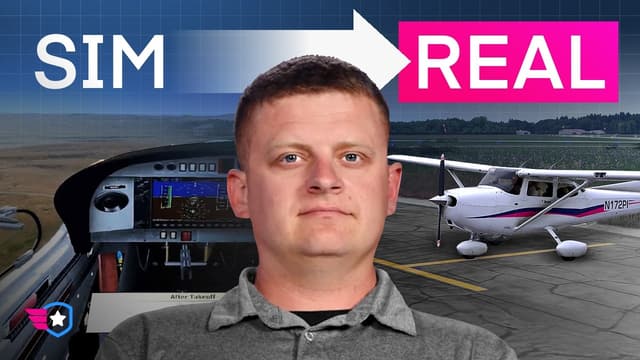
DA40 first flight: from simulator to real aircraft
Sign in
TRAINING AND LICENCES

How to prepare to become a flight instructor

By the PilotinQ editorial teamUpdated 11 Oct 2026
THE ANSWER90 sec read

Prepare by logging sufficient flight experience, holding the required licences and medical certificate, and practising your teaching skills.123

Was this useful?
Updated 11 Oct 2026All 13 sources →

How do you prepare for the flight instructor course?

Many flight schools require at least 200 total flight hours, of which 150 hours as Pilot in Command (PIC), and candidates must hold a PPL with CPL theory or a CPL. The Flight Instructor (FI) course includes 125 hours of theory and 30 hours of practical training. The flight instructor course also requires a valid Class 1 or Class 2 medical, depending on the type of instruction you want to give. Some flight schools use an assessment of competence or a pre-entry flight test to establish the candidate's starting level for the flight instructor course. Entry to the flight instructor course may also require at least 10 hours of instrument flight instruction, of which no more than 5 hours in an FSTD, and 20 hours of VFR cross-country flying as PIC may be a requirement. According to a staff member in 2005, a trial lesson at a flight school with a regular instructor can help you prepare for licence training, and during such a lesson it is advisable to make your interest known. One flight instructor advises preparing every lesson thoroughly, as understanding aerodynamics and manoeuvres well beforehand allows you to learn considerably faster in the air. This instructor used about 1 hour of ground instruction per flight hour, which can help save expensive flight hours. One pitfall for aspiring flight instructors is not mastering the teaching skills needed to instruct effectively, rather than just being able to fly well yourself. Flight instructors can fall into the trap of communicating without enough clarity and brevity, which is essential when passing on knowledge to students, and a possible pitfall is being unable to adapt teaching methods to the different learning styles and pace of individual students. Simply memorising the Fundamentals of Instruction (FOI) without applying them in practical teaching scenarios is a pitfall for the trainee flight instructor.12345678

What are the opportunities in Europe and Canada?

For helicopter pilots in Canada, instructing is not an entry-level job, as it is mainly done by very experienced pilots at higher rates. For helicopter pilots, it is not only the number of hours that counts, but also the quality of the flying experience. Instructing or banner towing is mainly day VFR in a small area, and after about two years as an instructor on an F-1 visa this adds little. A flight instructor rating (FI) can be a way to build paid hours, especially to bridge a period without a flying job while holding a frozen ATPL. This is one of the options alongside applying to airlines across Europe that hire cadets or low-hours pilots. In 2022 one pilot warned that working as a flight instructor after training is usually not full-time and does not pay enough to cover the bills. In 2021 a student completed the integrated course at a flight school with CPL(A) ME/IR, FI(A) and MCC APS on the 737-800, but despite many applications had not yet found a cockpit job.3910

What are the next steps in the US?

A relatively affordable and reliable route is training at a US helicopter school that can issue an F-1 visa, followed by a year of working as a flight instructor in the US. With an F-1 visa, after helicopter training in the US you can work for about a year as a flight instructor and build some 1,000 hours (according to pilot discussions in 2018). In 2018 one pilot advised anyone aiming for a first job as a helicopter instructor in the US to take only helicopter lessons from the start, because a minimum number of helicopter hours is required. After training, the F-1 route in the US gives you about 1,500 hours instead of 250, which can open more doors worldwide. With a US F-1 student visa it is possible to work after training through Curricular Practical Training (CPT) and Optional Practical Training (OPT), but you need a job offer for this. Not all flight schools are keen to hire F-1 holders as instructors, and usually you first work for the school that sponsors the visa. In the US, instructing is an entry-level job. A helicopter pilot in the US (2011) saw America as the only realistic route to a first job and the first 1,000 hours or so, because the instructor workforce there turns over almost entirely every two years. He recommended Bristow Academy for its F-1 visa, the FAA/JAA route, the good weather in Florida and its contacts. A helicopter pilot said in 2011 that after gaining his CFI certificate he was called about a job before he had sent out 150 applications, and he stressed the importance of a large school's network. In 2013 Bristow Academy in Titusville (Florida) said by phone that it had also hired dual-rated instructors with only 60 to 75 helicopter hours, all trained in-house, and that every student who gained their instructor rating there was given an interview. With 500 to 1,000 hours of piston experience, you can then return to Europe (according to pilot discussions in 2013). However, a recent graduate reported in 2011 that after helicopter training there is little left but building hours yourself or hoping for a job where you get to fly now and then, and that the idea of getting your CFI and building hours as an instructor is disappointing, even for pilots with 500 or 900 hours. According to a former student in 2011, the chance of becoming an instructor at Bristow Academy after your training is so small that you should not count on it.3111213
SOURCES
  1. 1Wings over Holland website2026
  2. 2Apply for an instructor certificate for aeroplane pilots | Human Environment and Transport Inspectorate (ILT)2026
  3. Pilot community experience7 discussions · 2005-2026
  4. 4Flight instructor training | Rotor & Wings2026
  5. 5AIS Flight Academy2026
  6. 7Tips for instructors in training | My CFI Book2026
  7. 8Why Most Flight Instructors Struggle to Teach (It's Not the FOI)2026
ALSO ASKED AS
How do I prepare to become a flight instructor?
VIDEOS ON THIS TOPIC
28:22
DA40 first flight: from simulator to real aircraft
READY TO START?Compare 4,712 flight schoolsPrices, intakes and pilot reviews side by side.Browse schools