VideosAIRCRAFT
Why carbon fibre airliners are hard to recycle
Original title: Aviation’s Next BIG Problem Is Already Here...
Mentour Now! · 22:51 · 19 Oct 2026 · Watch on YouTube

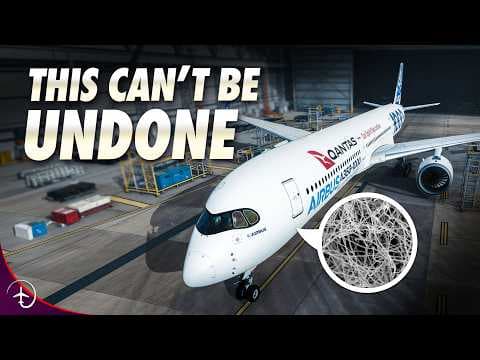
Mentour Now looks at aircraft dismantling and why the carbon fibre composites of the 787 and A350 are much harder to recycle than aluminium.

What the video covers

Written in our own words. It only describes what the video shows and says.

What happens to a retired airliner

Every year hundreds of commercial jets make their final flight, to storage sites in the deserts of Arizona and California or to dismantling facilities in Europe and elsewhere. The presenter, Ben Watts, explains that these aircraft graveyards are far more organised than the name suggests: a whole industry recovers the value that is left, with standards for the traceability of removed components and for recycling what remains. Aircraft are retired for many reasons, from age, fuel prices and maintenance costs to bankruptcies, collapsing demand or damage that is not worth repairing, and sometimes a young aircraft is worth more as a source of spares, as with some A320neos and A220s grounded by the Pratt and Whitney GTF issue. Specialists first remove the engines, landing gear, APU, avionics, flight controls and thousands of other parts, and drain fuel, oil, hydraulic fluid and other hazardous materials before the structure is cut up.

Aluminium can be recycled again and again

The structure of a conventional airliner is mostly aluminium, which can be recycled over and over. Recyclers sort it into alloy families, because different alloys are used throughout the airframe, then clean, shred and melt it so it re-enters the metals industry. Recycling needs far less energy than producing new aluminium from ore. The caveat is that the skin of an old 737 will not necessarily become the skin of a new one, since aerospace specifications are demanding and separating alloys is complex, so recycled aircraft aluminium often ends up in less demanding products such as soda cans.

The carbon fibre problem of the 787 and A350

In the Boeing 787 and Airbus A350, composites make up around half of the structural weight. Carbon fibre reinforced plastic combines layers of very thin carbon fibres with a polymer resin, cured under pressure in an autoclave, giving a light, stiff structure without the fatigue and corrosion issues of aluminium. That resin is a thermoset: once cured it cannot be melted down and reshaped, and with enough heat it decomposes instead. Cutting up a composite fuselage simply leaves smaller pieces of cured carbon fibre. Grinding gives short fibres for use as filler, a clear downgrade, while pyrolysis and solvolysis can recover better fibres at higher cost and complexity. Clean factory offcuts are already reused, for example for bicycle frames in France, but a retired airliner is covered in paint, adhesives, fasteners, lightning protection and repairs. The video points to wind turbine blades, also made of fibres in thermoset resin, many of which have been cut up and buried in landfill. With the 787 in service since 2011 and the A350 since 2015, the presenter says the open question is whether recycling can become economical in time, and whether replacements for the 737 and A320 might use thermoplastics that are easier to rework.

Statements in the video

1:26Around half of the structural weight of a Boeing 787 or Airbus A350 is composite material.Their wings and large parts of the fuselage are made of carbon fibre reinforced plastic.
13:47The resin in most major aerospace composite structures is a thermoset that cannot be melted down and reshaped.Once cured its structure has changed permanently, and enough heat makes it decompose instead of melt.
20:22Many retired wind turbine blades have been cut into sections and buried in landfill.More advanced thermal and chemical recycling exists, but its cost is hard to justify, particularly for lower grade composites.

Moments from the video

0:00“Is the aviation industry literally building a future problem? We all want aircraft that are as safe and as efficient as possible, but that quest for efficiency could be backfiring. Every year, hundreds of commercial jets make their final flights. Some are…”1:26“Today, around half of the structural weight of a Boeing 787 or Airbus A350 is made up of composite material. Their enormous wings and large portions of their fuselage are made from carbon fibre reinforced plastic, a material that's helped make these…”2:31“So to understand why all of this matters and why newer aircraft are a problem, we first need to see what happens when a conventional airliner reaches the end of its life. Because aircraft recycling doesn't really begin with recycling at all.”5:35“Aluminium or aluminum, depending on which side of the Atlantic you're on. Aluminium has been used in aircraft for over a century, and like most metals, it has a big advantage when an aircraft reaches the end of its life. Unlike many of the materials we're…”9:40“Now, let's get back to what happens when an aircraft reaches the end of its flying life. So, recyclers everywhere generally know what to do with an aircraft body once all of its parts and reusable components are gone, if it's made of aluminium. And the…”13:47“Well, in simple terms, the problem here involves one of the components in these composite materials. The resin used in most of these major aerospace composite structures is what's known as a thermoset, which basically means that once it's been cured during…”19:21“And that's wind turbines. You see, the bigger wind turbines get, the more efficient they can be. And their size is limited only by material length and the ability to transport them to remote places. Which basically means that as technology improves, wind…”20:22“As before, more sophisticated thermal and chemical recycling methods do exist. But again, their costs can be difficult to justify, particularly for lower grade composites. And as a result, many retired blades have simply been cut into sections and buried…”

More videos

All
Sign in
AIRCRAFT

Why carbon fibre airliners are hard to recycle

Original title: Aviation’s Next BIG Problem Is Already Here...
Mentour Now! · 22:51 · 19 Oct 2026 · Watch on YouTube

Mentour Now looks at aircraft dismantling and why the carbon fibre composites of the 787 and A350 are much harder to recycle than aluminium.

IN THIS VIDEO
  1. 0:00Where retired airliners end up
  2. 2:31How an airliner is taken apart
  3. 5:35Recycling aluminium again and again
  4. 9:40Carbon fibre in the 787 and A350
  5. 13:47Why thermoset resin is the problem
  6. 19:21Wind turbine blades and the road ahead

What the video covers

Written in our own words. It only describes what the video shows and says.

What happens to a retired airliner

Every year hundreds of commercial jets make their final flight, to storage sites in the deserts of Arizona and California or to dismantling facilities in Europe and elsewhere. The presenter, Ben Watts, explains that these aircraft graveyards are far more organised than the name suggests: a whole industry recovers the value that is left, with standards for the traceability of removed components and for recycling what remains. Aircraft are retired for many reasons, from age, fuel prices and maintenance costs to bankruptcies, collapsing demand or damage that is not worth repairing, and sometimes a young aircraft is worth more as a source of spares, as with some A320neos and A220s grounded by the Pratt and Whitney GTF issue. Specialists first remove the engines, landing gear, APU, avionics, flight controls and thousands of other parts, and drain fuel, oil, hydraulic fluid and other hazardous materials before the structure is cut up.

Aluminium can be recycled again and again

The structure of a conventional airliner is mostly aluminium, which can be recycled over and over. Recyclers sort it into alloy families, because different alloys are used throughout the airframe, then clean, shred and melt it so it re-enters the metals industry. Recycling needs far less energy than producing new aluminium from ore. The caveat is that the skin of an old 737 will not necessarily become the skin of a new one, since aerospace specifications are demanding and separating alloys is complex, so recycled aircraft aluminium often ends up in less demanding products such as soda cans.

The carbon fibre problem of the 787 and A350

In the Boeing 787 and Airbus A350, composites make up around half of the structural weight. Carbon fibre reinforced plastic combines layers of very thin carbon fibres with a polymer resin, cured under pressure in an autoclave, giving a light, stiff structure without the fatigue and corrosion issues of aluminium. That resin is a thermoset: once cured it cannot be melted down and reshaped, and with enough heat it decomposes instead. Cutting up a composite fuselage simply leaves smaller pieces of cured carbon fibre. Grinding gives short fibres for use as filler, a clear downgrade, while pyrolysis and solvolysis can recover better fibres at higher cost and complexity. Clean factory offcuts are already reused, for example for bicycle frames in France, but a retired airliner is covered in paint, adhesives, fasteners, lightning protection and repairs. The video points to wind turbine blades, also made of fibres in thermoset resin, many of which have been cut up and buried in landfill. With the 787 in service since 2011 and the A350 since 2015, the presenter says the open question is whether recycling can become economical in time, and whether replacements for the 737 and A320 might use thermoplastics that are easier to rework.

Statements in the video

1:26Around half of the structural weight of a Boeing 787 or Airbus A350 is composite material.Their wings and large parts of the fuselage are made of carbon fibre reinforced plastic.
13:47The resin in most major aerospace composite structures is a thermoset that cannot be melted down and reshaped.Once cured its structure has changed permanently, and enough heat makes it decompose instead of melt.
20:22Many retired wind turbine blades have been cut into sections and buried in landfill.More advanced thermal and chemical recycling exists, but its cost is hard to justify, particularly for lower grade composites.

Moments from the video

0:00“Is the aviation industry literally building a future problem? We all want aircraft that are as safe and as efficient as possible, but that quest for efficiency could be backfiring. Every year, hundreds of commercial jets make their final flights. Some are…”1:26“Today, around half of the structural weight of a Boeing 787 or Airbus A350 is made up of composite material. Their enormous wings and large portions of their fuselage are made from carbon fibre reinforced plastic, a material that's helped make these…”2:31“So to understand why all of this matters and why newer aircraft are a problem, we first need to see what happens when a conventional airliner reaches the end of its life. Because aircraft recycling doesn't really begin with recycling at all.”5:35“Aluminium or aluminum, depending on which side of the Atlantic you're on. Aluminium has been used in aircraft for over a century, and like most metals, it has a big advantage when an aircraft reaches the end of its life. Unlike many of the materials we're…”9:40“Now, let's get back to what happens when an aircraft reaches the end of its flying life. So, recyclers everywhere generally know what to do with an aircraft body once all of its parts and reusable components are gone, if it's made of aluminium. And the…”13:47“Well, in simple terms, the problem here involves one of the components in these composite materials. The resin used in most of these major aerospace composite structures is what's known as a thermoset, which basically means that once it's been cured during…”19:21“And that's wind turbines. You see, the bigger wind turbines get, the more efficient they can be. And their size is limited only by material length and the ability to transport them to remote places. Which basically means that as technology improves, wind…”20:22“As before, more sophisticated thermal and chemical recycling methods do exist. But again, their costs can be difficult to justify, particularly for lower grade composites. And as a result, many retired blades have simply been cut into sections and buried…”
READ MORE ON PILOTINQ
Lufthansa retires the 747-400: the jumbos that could land at Twente but not take off
Practise for your exams and airline selectionStart for free

More videos

Why carbon fibre airliners are hard to recycle | PilotinQ