VideosAIRCRAFT
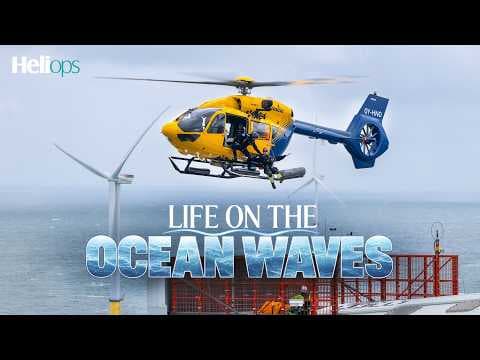
Avincis Denmark: H145 hoist work at offshore wind farms
Original title: Life on the Ocean Waves - Avincis Denmark
HeliOps Magazine Media · 8:52 · 28 Oct 2026 · Watch on YouTube

HeliOps Magazine visits Avincis Denmark in Esbjerg, where crews fly technicians and cargo to North Sea wind turbines in an Airbus H145.

What the video covers

Written in our own words. It only describes what the video shows and says.

Why wind farms use helicopters

HeliOps Magazine visits Avincis Denmark on the Danish west coast, where crews fly technicians and cargo to offshore wind turbines from Esbjerg. Martin Knudsen, pilot and head of crew training, explains the main reason for using a helicopter: when waves are too high for vessels to board a turbine or transfer technicians safely, the helicopter can still make the trip. The crew describe hoisting in winds of up to 45 or 50 knots at the turbines and in snow. Wind is not their biggest problem, because it is very laminar out at sea. The real limit is low visibility and low cloud. They can fly to and from the turbines under IFR, but if they cannot see the turbine, they cannot hoist.

A day of hoisting

Alex Dunn, hoist operator and instructor, starts a normal day by checking flight plans and weather and making sure personnel and cargo are ready. The aircraft is then brought out, refuelled and set up for hoisting. With up to four passengers on board, he drops three onto the platform while the fourth stays in the back to help move cargo out of the helicopter and hoist it down. He then hoists down the last person. Most of the wind farms lie west, southwest and northwest of Esbjerg in the North Sea, 20 to 45 minutes away. Dunn says he has had days with up to 100 hoist cycles. Crews can also stay out all day at a platform with a helipad, living quarters and a kitchen, where the helicopter can refuel and park between hoists. Loads include large bags of up to 200 kilograms, along with tools, fluids and equipment, and technicians are moved from one turbine to another as the customer requires.

Lasse Guldager Pedersen, head of flight operations and a pilot on the H135 and H145, says the company flies technicians for companies such as Ørsted, Vattenfall, Siemens and Vestas during scheduled maintenance on turbines and platforms. Denmark has about five to seven big wind parks that the crews visit regularly. The new aircraft, an H145 D3 in the Avincis paint scheme, had flown only 50 hours at the time of filming. Pedersen likes it for this work because it is agile, steady and not too big, with Garmin and Helionix avionics. Plans change often, sometimes with the weather but mostly with customer demands, so the crews need to stay flexible.

Hoist equipment and static electricity

Dunn then shows the equipment. The Goodrich hoist is fitted with a 50 metre cable, with a 90 metre cable as an option, and a hook takes both people and cargo. A quick release harness secures him in the cabin and still allows him to get out in an emergency. One of the biggest hazards is static electricity building up on the helicopter. A three metre static cable discharges it to the platform or the ground before anyone touches the hoist cable. The shock is painful and can damage sensitive electronics such as phones. Crew resource management matters here: Dunn runs the hoist from the back and helps the pilot with references to reach a safe hover. The film closes with the crew on the friendly team, the dynamic work and being part of renewable energy.

Statements in the video

1:33Helicopters take over when waves are too high for vessels to transfer technicians safely.Martin Knudsen gives this as one of the main reasons to fly technicians and cargo to wind turbines.
2:52Wind farms lie 20 to 45 minutes from Esbjerg, and some days bring up to 100 hoist cycles.Alex Dunn describes the distances into the North Sea and his busiest days.
7:11A three metre static cable discharges the helicopter before anyone touches the hoist cable.Alex Dunn calls static electricity one of the biggest hazards during hoist operations.

Moments from the video

0:05“So with rough weather, this aircraft can perform very well. We have hoisted up in some high winds, up to 45, 50 knot winds at the turbines. Most of the times it's really bad weather, so a really exciting job. We operate a lot of times where the technicians…”1:03“and low cloud. That's kind of our limitations. If we cannot see the wind turbines, then we cannot hoist them. My name is Martin Knudsen, pilot here in Avincis Denmark. We are located here down in Esbjerg. We are using the H145, the newest addition in the…”1:33“One of the main reasons to use a helicopter for transporting technicians and cargo to wind turbines is due to the harsh conditions that can be offshore, especially with the winds and the waves. So when the waves are too high for the vessels to board the…”2:01“Hi, my name is Alex Dunn. I am an instructor hoist operator here at Avincis Denmark. And this is the new helicopter that we use for hoisting operations at the wind parks here in Denmark. So a normal day here, we come here, we check the flight plans, the…”2:52“Here from Esbjerg we have wind farms located mostly to the west and southwest and northwest also in the North Sea. The flight distance is all from around 20 minutes to 45 minutes from Esbjerg. The number of turbines vary but it's around 40 to 50. Some days…”4:14“We fly with operators from some big companies, worldwide big companies like Ørsted, Vattenfall, Siemens, Vestas. We fly to the offshore wind parks in and around Denmark, where they need to make scheduled maintenance on the turbines, they make scheduled…”6:28“Right here is the Goodrich hoist. We have it installed with a 50 meter hoist cable, but we also have the option to use a 90 meter hoist cable as well. We use this hook to attach personnel and cargo and drop it off at the wind turbines. We have a few pieces…”7:11“This is a three meter cable that's used to dissipate the static electricity from the aircraft. One of the biggest hazards that we have during hoist operations is static electricity buildup from the helicopter. So we use this to discharge all that…”

More videos

All
Sign in
AIRCRAFT

Avincis Denmark: H145 hoist work at offshore wind farms

Original title: Life on the Ocean Waves - Avincis Denmark
HeliOps Magazine Media · 8:52 · 28 Oct 2026 · Watch on YouTube

HeliOps Magazine visits Avincis Denmark in Esbjerg, where crews fly technicians and cargo to North Sea wind turbines in an Airbus H145.

IN THIS VIDEO
  1. 0:05Weather limits for offshore hoisting
  2. 1:03The Esbjerg base and the H145 D3
  3. 2:01A normal day of hoist operations
  4. 4:14Customers, wind parks and the aircraft
  5. 6:28Hoist, harness and static cable
  6. 7:56Life in the crew

What the video covers

Written in our own words. It only describes what the video shows and says.

Why wind farms use helicopters

HeliOps Magazine visits Avincis Denmark on the Danish west coast, where crews fly technicians and cargo to offshore wind turbines from Esbjerg. Martin Knudsen, pilot and head of crew training, explains the main reason for using a helicopter: when waves are too high for vessels to board a turbine or transfer technicians safely, the helicopter can still make the trip. The crew describe hoisting in winds of up to 45 or 50 knots at the turbines and in snow. Wind is not their biggest problem, because it is very laminar out at sea. The real limit is low visibility and low cloud. They can fly to and from the turbines under IFR, but if they cannot see the turbine, they cannot hoist.

A day of hoisting

Alex Dunn, hoist operator and instructor, starts a normal day by checking flight plans and weather and making sure personnel and cargo are ready. The aircraft is then brought out, refuelled and set up for hoisting. With up to four passengers on board, he drops three onto the platform while the fourth stays in the back to help move cargo out of the helicopter and hoist it down. He then hoists down the last person. Most of the wind farms lie west, southwest and northwest of Esbjerg in the North Sea, 20 to 45 minutes away. Dunn says he has had days with up to 100 hoist cycles. Crews can also stay out all day at a platform with a helipad, living quarters and a kitchen, where the helicopter can refuel and park between hoists. Loads include large bags of up to 200 kilograms, along with tools, fluids and equipment, and technicians are moved from one turbine to another as the customer requires.

Lasse Guldager Pedersen, head of flight operations and a pilot on the H135 and H145, says the company flies technicians for companies such as Ørsted, Vattenfall, Siemens and Vestas during scheduled maintenance on turbines and platforms. Denmark has about five to seven big wind parks that the crews visit regularly. The new aircraft, an H145 D3 in the Avincis paint scheme, had flown only 50 hours at the time of filming. Pedersen likes it for this work because it is agile, steady and not too big, with Garmin and Helionix avionics. Plans change often, sometimes with the weather but mostly with customer demands, so the crews need to stay flexible.

Hoist equipment and static electricity

Dunn then shows the equipment. The Goodrich hoist is fitted with a 50 metre cable, with a 90 metre cable as an option, and a hook takes both people and cargo. A quick release harness secures him in the cabin and still allows him to get out in an emergency. One of the biggest hazards is static electricity building up on the helicopter. A three metre static cable discharges it to the platform or the ground before anyone touches the hoist cable. The shock is painful and can damage sensitive electronics such as phones. Crew resource management matters here: Dunn runs the hoist from the back and helps the pilot with references to reach a safe hover. The film closes with the crew on the friendly team, the dynamic work and being part of renewable energy.

Statements in the video

1:33Helicopters take over when waves are too high for vessels to transfer technicians safely.Martin Knudsen gives this as one of the main reasons to fly technicians and cargo to wind turbines.
2:52Wind farms lie 20 to 45 minutes from Esbjerg, and some days bring up to 100 hoist cycles.Alex Dunn describes the distances into the North Sea and his busiest days.
7:11A three metre static cable discharges the helicopter before anyone touches the hoist cable.Alex Dunn calls static electricity one of the biggest hazards during hoist operations.

Moments from the video

0:05“So with rough weather, this aircraft can perform very well. We have hoisted up in some high winds, up to 45, 50 knot winds at the turbines. Most of the times it's really bad weather, so a really exciting job. We operate a lot of times where the technicians…”1:03“and low cloud. That's kind of our limitations. If we cannot see the wind turbines, then we cannot hoist them. My name is Martin Knudsen, pilot here in Avincis Denmark. We are located here down in Esbjerg. We are using the H145, the newest addition in the…”1:33“One of the main reasons to use a helicopter for transporting technicians and cargo to wind turbines is due to the harsh conditions that can be offshore, especially with the winds and the waves. So when the waves are too high for the vessels to board the…”2:01“Hi, my name is Alex Dunn. I am an instructor hoist operator here at Avincis Denmark. And this is the new helicopter that we use for hoisting operations at the wind parks here in Denmark. So a normal day here, we come here, we check the flight plans, the…”2:52“Here from Esbjerg we have wind farms located mostly to the west and southwest and northwest also in the North Sea. The flight distance is all from around 20 minutes to 45 minutes from Esbjerg. The number of turbines vary but it's around 40 to 50. Some days…”4:14“We fly with operators from some big companies, worldwide big companies like Ørsted, Vattenfall, Siemens, Vestas. We fly to the offshore wind parks in and around Denmark, where they need to make scheduled maintenance on the turbines, they make scheduled…”6:28“Right here is the Goodrich hoist. We have it installed with a 50 meter hoist cable, but we also have the option to use a 90 meter hoist cable as well. We use this hook to attach personnel and cargo and drop it off at the wind turbines. We have a few pieces…”7:11“This is a three meter cable that's used to dissipate the static electricity from the aircraft. One of the biggest hazards that we have during hoist operations is static electricity buildup from the helicopter. So we use this to discharge all that…”
Practise for your exams and airline selectionStart for free

More videos