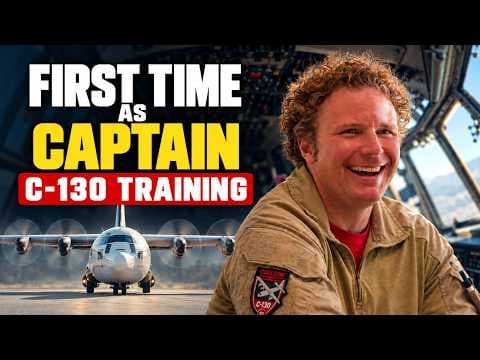
Kyle's first C-130 air tanker training flight at Coulson
Original title: First Time as a Tanker Captain | C-130 Training in Action
Coulson Aviation · 23:24 · 8 Nov 2026 · Watch on YouTube

Coulson first officer Kyle films his first C-130 air tanker training sortie, from risk assessment and brief to drops and debrief.

What the video covers

Written in our own words. It only describes what the video shows and says.

Brief and flight risk assessment

Kyle introduces himself as a first officer at Coulson Aviation who has been with the company for about two years. The video follows his very first flight as an air tanker pilot trainee during Coulson's RADS training in the off-season. He explains that the sorties are built on scenarios chosen by the instructors from their own experience, simulating real fires and real situations, followed by an honest debrief on what went right and what did not go as planned. Before flying, the crew fills in a flight risk assessment that takes the environment and crew experience into account to put a number on risk and threats.

In the brief, the instructor sets out the plan for the sortie. If the aircraft ends up in a configuration the crew does not like, they climb away from the ground and talk it through. Kyle is asked to make his blind calls at 12 miles before the initial point. The instructor recommends 130 knots on the base turn to control energy: many trainees fly faster on base and then find it hard to slow down and descend. Kyle should also tell the crew which way he would escape when pointed at terrain. The profile includes steep turns, two stalls with 50 and 100 flaps, at least one loaded go-around and a simulated emergency.

Takeoff and drops

The takeoff brief is for a rolling takeoff from the left seat at 145,000 pounds, with a go refusal speed of 112 knots and an actual refusal speed of 136 knots. The crew departs Palm Springs with a planned climb to 9,500 feet. Over the simulated fire area Kyle works behind a lead aircraft, flies a go-around and makes a split drop, keeping half of the tank for a second run. On the next pattern the instructor simulates a failure of the number one engine. The crew jettisons the load and simulates feathering the engine.

Debrief and reflections

In the debrief the instructor calls it a really good first sortie with the expected mistakes of a new pilot. The main trend was airspeed, often 10 to 15 knots low. To keep spacing behind the lead in a left hand pattern, he suggests small check turns to the right. In the emergency the order is to consider the load, deal with the problem and then communicate. He says the communication was good. Back on the ground the crew notes a missed five minute out call to the Palm Springs tanker base. Afterwards he says the flight went pretty well. He mentions situational awareness over the fire and teamwork with the lead plane as points to work on. He came in with some nerves, but the training started to kick in. He values the C-130 crew of two pilots and a flight engineer. He says this role is now his goal.
Statements in the video

0:00Kyle has been a first officer at Coulson for about two years and this is his first flight as an air tanker pilot trainee.Kyle says this when he introduces himself at the start of the video.
8:26The C-130 takes off at 145,000 pounds with a go refusal speed of 112 knots and an actual refusal speed of 136 knots.These figures come from the takeoff brief in the cockpit.
19:07Kyle flew 10 to 15 knots below the target airspeed for much of the sortie.This is the main trend his instructor names in the debrief.

Moments from the video

0:00“Morning, I'm Kyle. I'm a first officer at Coulson. I've been with Coulson for about two years, but today starts a fun new adventure. It's my very first flight as an air tanker pilot trainee. So I'm walking in for the first training brief. I'm gonna see how…”1:53“So part of the process when we're going to go fly is filling our flight risk assessments. And it's a good way that we can try to take into account what the environment is, what the crew experience is, find some way to kind of quantify what risk we might…”8:26“Since we just got a quick second here, you guys cool if I brief the takeoff? Sure. Just got a short run. Very cool. All right. This will be a left seat rolling takeoff, 145,000 pound plane, 970, and the TIT should give us 14.7 on the torque. Looking for a…”14:31“Looking for you to give me some good calls, quarter out, half left, quarter left, clear and empty. Going up and a show me, this dude is... He is, it's not his first time. 200 feet, or 150 feet. Alright crew, we're going to come in, looks like the road is…”18:53“What's up? Got a little essay for you. I do indeed. I'm listening. That was a really good sortie, dude. That was a nice first sortie. Made mistakes and all the expected new person mistakes were made. That's great. Nothing unusual.”19:07“Which was kind of, if I have anything trending for you today, it was airspeed. Okay. From anywhere from 10 to 15 low. Saw like 135 quite a bit. Okay. If you target 140 to slow down for separation, then if you're 5 slow, you're 135. Right? So now you're in…”21:40“We finished up. Training flight went pretty well. Big picture. We still have four engines, six wheels, two wings. It's always a good sign. Ended up having a few good debrief points there. Travis was able to kind of tell me a little bit about some…”

Kyle's first C-130 air tanker training flight at Coulson

Original title: First Time as a Tanker Captain | C-130 Training in Action
Coulson Aviation · 23:24 · 8 Nov 2026 · Watch on YouTube

Coulson first officer Kyle films his first C-130 air tanker training sortie, from risk assessment and brief to drops and debrief.

IN THIS VIDEO
  1. 0:00First day as an air tanker pilot trainee
  2. 1:53Flight risk assessment and sortie brief
  3. 8:26Takeoff brief and departure
  4. 14:31Drops, go-around and simulated engine failure
  5. 18:53Instructor debrief
  6. 21:40Reflections after the flight

What the video covers

Written in our own words. It only describes what the video shows and says.

Brief and flight risk assessment

Kyle introduces himself as a first officer at Coulson Aviation who has been with the company for about two years. The video follows his very first flight as an air tanker pilot trainee during Coulson's RADS training in the off-season. He explains that the sorties are built on scenarios chosen by the instructors from their own experience, simulating real fires and real situations, followed by an honest debrief on what went right and what did not go as planned. Before flying, the crew fills in a flight risk assessment that takes the environment and crew experience into account to put a number on risk and threats.

In the brief, the instructor sets out the plan for the sortie. If the aircraft ends up in a configuration the crew does not like, they climb away from the ground and talk it through. Kyle is asked to make his blind calls at 12 miles before the initial point. The instructor recommends 130 knots on the base turn to control energy: many trainees fly faster on base and then find it hard to slow down and descend. Kyle should also tell the crew which way he would escape when pointed at terrain. The profile includes steep turns, two stalls with 50 and 100 flaps, at least one loaded go-around and a simulated emergency.

Takeoff and drops

The takeoff brief is for a rolling takeoff from the left seat at 145,000 pounds, with a go refusal speed of 112 knots and an actual refusal speed of 136 knots. The crew departs Palm Springs with a planned climb to 9,500 feet. Over the simulated fire area Kyle works behind a lead aircraft, flies a go-around and makes a split drop, keeping half of the tank for a second run. On the next pattern the instructor simulates a failure of the number one engine. The crew jettisons the load and simulates feathering the engine.

Debrief and reflections

In the debrief the instructor calls it a really good first sortie with the expected mistakes of a new pilot. The main trend was airspeed, often 10 to 15 knots low. To keep spacing behind the lead in a left hand pattern, he suggests small check turns to the right. In the emergency the order is to consider the load, deal with the problem and then communicate. He says the communication was good. Back on the ground the crew notes a missed five minute out call to the Palm Springs tanker base. Afterwards he says the flight went pretty well. He mentions situational awareness over the fire and teamwork with the lead plane as points to work on. He came in with some nerves, but the training started to kick in. He values the C-130 crew of two pilots and a flight engineer. He says this role is now his goal.
Statements in the video

0:00Kyle has been a first officer at Coulson for about two years and this is his first flight as an air tanker pilot trainee.Kyle says this when he introduces himself at the start of the video.
8:26The C-130 takes off at 145,000 pounds with a go refusal speed of 112 knots and an actual refusal speed of 136 knots.These figures come from the takeoff brief in the cockpit.
19:07Kyle flew 10 to 15 knots below the target airspeed for much of the sortie.This is the main trend his instructor names in the debrief.

Moments from the video

0:00“Morning, I'm Kyle. I'm a first officer at Coulson. I've been with Coulson for about two years, but today starts a fun new adventure. It's my very first flight as an air tanker pilot trainee. So I'm walking in for the first training brief. I'm gonna see how…”1:53“So part of the process when we're going to go fly is filling our flight risk assessments. And it's a good way that we can try to take into account what the environment is, what the crew experience is, find some way to kind of quantify what risk we might…”8:26“Since we just got a quick second here, you guys cool if I brief the takeoff? Sure. Just got a short run. Very cool. All right. This will be a left seat rolling takeoff, 145,000 pound plane, 970, and the TIT should give us 14.7 on the torque. Looking for a…”14:31“Looking for you to give me some good calls, quarter out, half left, quarter left, clear and empty. Going up and a show me, this dude is... He is, it's not his first time. 200 feet, or 150 feet. Alright crew, we're going to come in, looks like the road is…”18:53“What's up? Got a little essay for you. I do indeed. I'm listening. That was a really good sortie, dude. That was a nice first sortie. Made mistakes and all the expected new person mistakes were made. That's great. Nothing unusual.”19:07“Which was kind of, if I have anything trending for you today, it was airspeed. Okay. From anywhere from 10 to 15 low. Saw like 135 quite a bit. Okay. If you target 140 to slow down for separation, then if you're 5 slow, you're 135. Right? So now you're in…”21:40“We finished up. Training flight went pretty well. Big picture. We still have four engines, six wheels, two wings. It's always a good sign. Ended up having a few good debrief points there. Travis was able to kind of tell me a little bit about some…”
PREPARE FOR SELECTIONPreparing for an Airline Selection?
Academy · Alongside your ground school

Practise All 14 Subjects

ATPL theory (EASA) · a practice set per subject, then timed final exams
KNOWLEDGE BASEAsk the knowledge baseAnswers on training, selections and careers, with sourcesUP NEXT
13:13
Pilot training plan: medical, school path, timeline, costsOlivier Lohman · 13:13

More Like This