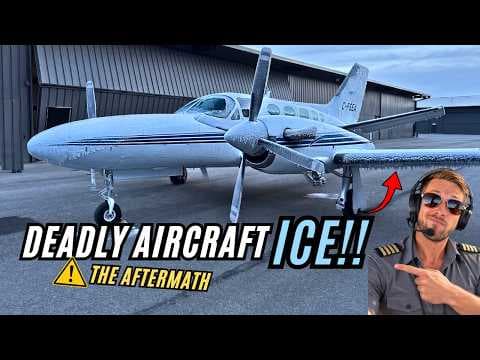
Aerostar flight: Gainesville to New York with Max
Original title: I Live in Florida. My Flight School Is in New York.
Mr Stick ‘N Rudder · 32:04 · 11 Nov 2026 · Watch on YouTube

Max flies an Aerostar from Gainesville to New York to visit the Aviator Institute. The video follows the flight plan, checklist, climb and arrival.

What the video covers

Written in our own words. It only describes what the video shows and says.

Gainesville departure preparation

Max opens the flight by saying his Aerostar 601P will depart Gainesville for New York and visit the Aviator Institute flight school. He says the route is GNV to KFRG and the filed altitude is 23,000 feet. He chooses economy cruise because he does not want to stop. He reviews the fuel state: 220 gallons are on board, about 160 gallons are needed, and 37 gallons are required for minimums. He reads the filed route: Gainesville, RADS and the SARDI arrival into Republic at 23,000 feet, one person on board, 49 gallons expected at landing and about three hours and 44 minutes in the air. He mentions a seven knot tailwind at 23,000 feet and weather to the south that he expects to miss.

Climb and en route cruise

Max completes a cockpit checklist before engine start, covering the door seal, gear selector, hydraulic shutoff, oxygen, magnetos, electrical switches, batteries, lights, oil, seat belts, seats, strobe, alternators, GPS, fuel gauges, circuit breakers, hydraulic pump, air conditioning, fuel selector, fuel pumps, synchro phases, spoilers and dump valve. He starts the right engine first, checks oil pressure, keeps the engine near 1,000 rpm, then starts the second engine and turns on the air conditioning. For N12PX, the clearance is to Republic (KFRG) as filed, maintain 3000, expect flight level 230 ten minutes after departure, departure frequency 118.17 and squawk 0766. Max completes a taxi checklist, sets pressurisation, trims the aircraft, checks pitot and windshield heat, sets the heading bug and performs the run up. Max receives taxi instructions for N12PX to runway 7, holds short of the 11 approach, and gives a takeoff brief covering normal takeoff, rotation, gear up, flaps up, autopilot engagement and engine failure procedures. After takeoff, N12PX is cleared to 10,000, then to flight level 230. He notes a setting of 29.22, 20 gallons per hour per side, 224 true airspeed and about three hours and 15 minutes remaining. He says Brian has been doing a great job, the CFIs have been strong, and the school may reach about a thousand hours that month. He says storm chasing is his main business and, for now, it pays for the flight schools.

Arrival at Republic

During descent, Max says the routing has changed and is better because it avoids a longer arrival and routes around some military airspace. He reports descending through 19.8 and gives a groundspeed of 272 knots. He praises VNAV and the glass panel, then says he is called a magenta line flyer but will use the Aerostar systems. New York Approach tells N12PX to expect a visual approach to runway 14 and asks for best forward speed. Max replies that the aircraft is doing 170 to 180 indicated. Max says the base to final turn was the hardest he has done in the Aerostar. He says he banked hard because he was moving quickly, doing about 165 knots on the turn, and he likes the speed brakes.

Statements in the video

0:34The aircraft has 220 gallons of fuel, about 160 gallons are needed for the flight, and 37 gallons are required for minimums.Max states this while reviewing the fuel before starting the Aerostar.
1:14The filed route is Gainesville, RADS and the SARDI arrival into Republic at 23,000 feet, with one person on board and 49 gallons expected at landing.Max states this while reviewing the filed flight plan before engine start.
17:25Storm chasing is Max's main business, and for now it pays for the flight schools.Max states this while talking about the flight school during the cruise.

Moments from the video

0:00“Welcome back to the channel. So today we're taking off from Gainesville.”0:34“Rudder YouTube channel. So we have about 220 gallons in the plane. We need about 160 to get”1:14“plan acknowledged. So we filed Gainesville RADS Sardi 1 arrival into Republic. 23,000”2:08“checklist november 1 2 papa x-ray door seal is good we already did our exterior”6:35“Good afternoon, Gainesville Ground, Aerostar 1 2 Papa X-ray, picking up IFR to Foxtrot Romeo Golf.”16:43“I'm excited. I haven't been to the school in a couple weeks.”17:25“my main business maybe one day a flight school will replace that but for right”20:29“we're on our descent we got a routing change I guess actually is better for us”

Aerostar flight: Gainesville to New York with Max

Original title: I Live in Florida. My Flight School Is in New York.
Mr Stick ‘N Rudder · 32:04 · 11 Nov 2026 · Watch on YouTube

Max flies an Aerostar from Gainesville to New York to visit the Aviator Institute. The video follows the flight plan, checklist, climb and arrival.

IN THIS VIDEO
  1. 0:00Gainesville departure brief
  2. 2:08Cockpit checklist
  3. 6:35IFR clearance and taxi
  4. 11:52Takeoff and climb
  5. 16:43En route school talk
  6. 20:29Descent and arrival

What the video covers

Written in our own words. It only describes what the video shows and says.

Gainesville departure preparation

Max opens the flight by saying his Aerostar 601P will depart Gainesville for New York and visit the Aviator Institute flight school. He says the route is GNV to KFRG and the filed altitude is 23,000 feet. He chooses economy cruise because he does not want to stop. He reviews the fuel state: 220 gallons are on board, about 160 gallons are needed, and 37 gallons are required for minimums. He reads the filed route: Gainesville, RADS and the SARDI arrival into Republic at 23,000 feet, one person on board, 49 gallons expected at landing and about three hours and 44 minutes in the air. He mentions a seven knot tailwind at 23,000 feet and weather to the south that he expects to miss.

Climb and en route cruise

Max completes a cockpit checklist before engine start, covering the door seal, gear selector, hydraulic shutoff, oxygen, magnetos, electrical switches, batteries, lights, oil, seat belts, seats, strobe, alternators, GPS, fuel gauges, circuit breakers, hydraulic pump, air conditioning, fuel selector, fuel pumps, synchro phases, spoilers and dump valve. He starts the right engine first, checks oil pressure, keeps the engine near 1,000 rpm, then starts the second engine and turns on the air conditioning. For N12PX, the clearance is to Republic (KFRG) as filed, maintain 3000, expect flight level 230 ten minutes after departure, departure frequency 118.17 and squawk 0766. Max completes a taxi checklist, sets pressurisation, trims the aircraft, checks pitot and windshield heat, sets the heading bug and performs the run up. Max receives taxi instructions for N12PX to runway 7, holds short of the 11 approach, and gives a takeoff brief covering normal takeoff, rotation, gear up, flaps up, autopilot engagement and engine failure procedures. After takeoff, N12PX is cleared to 10,000, then to flight level 230. He notes a setting of 29.22, 20 gallons per hour per side, 224 true airspeed and about three hours and 15 minutes remaining. He says Brian has been doing a great job, the CFIs have been strong, and the school may reach about a thousand hours that month. He says storm chasing is his main business and, for now, it pays for the flight schools.

Arrival at Republic

During descent, Max says the routing has changed and is better because it avoids a longer arrival and routes around some military airspace. He reports descending through 19.8 and gives a groundspeed of 272 knots. He praises VNAV and the glass panel, then says he is called a magenta line flyer but will use the Aerostar systems. New York Approach tells N12PX to expect a visual approach to runway 14 and asks for best forward speed. Max replies that the aircraft is doing 170 to 180 indicated. Max says the base to final turn was the hardest he has done in the Aerostar. He says he banked hard because he was moving quickly, doing about 165 knots on the turn, and he likes the speed brakes.
Statements in the video

0:34The aircraft has 220 gallons of fuel, about 160 gallons are needed for the flight, and 37 gallons are required for minimums.Max states this while reviewing the fuel before starting the Aerostar.
1:14The filed route is Gainesville, RADS and the SARDI arrival into Republic at 23,000 feet, with one person on board and 49 gallons expected at landing.Max states this while reviewing the filed flight plan before engine start.
17:25Storm chasing is Max's main business, and for now it pays for the flight schools.Max states this while talking about the flight school during the cruise.

Moments from the video

0:00“Welcome back to the channel. So today we're taking off from Gainesville.”0:34“Rudder YouTube channel. So we have about 220 gallons in the plane. We need about 160 to get”1:14“plan acknowledged. So we filed Gainesville RADS Sardi 1 arrival into Republic. 23,000”2:08“checklist november 1 2 papa x-ray door seal is good we already did our exterior”6:35“Good afternoon, Gainesville Ground, Aerostar 1 2 Papa X-ray, picking up IFR to Foxtrot Romeo Golf.”16:43“I'm excited. I haven't been to the school in a couple weeks.”17:25“my main business maybe one day a flight school will replace that but for right”20:29“we're on our descent we got a routing change I guess actually is better for us”
PREPARE FOR SELECTIONPreparing for an Airline Selection?
Academy · Alongside your ground school

Practise All 14 Subjects

ATPL theory (EASA) · a practice set per subject, then timed final exams
KNOWLEDGE BASEAsk the knowledge baseAnswers on training, selections and careers, with sourcesUP NEXT
1:39
Frontier flight 3566: water floods cabin, diverts to O'HareABC News · 1:39

More Like This