Jet blast flips small plane at John Wayne Airport
Original title: Video shows small plane getting flipped by jet blast at John Wayne Airport in Orange County
CBS LA · 0:48 · 9 Nov 2026 · Watch on YouTube

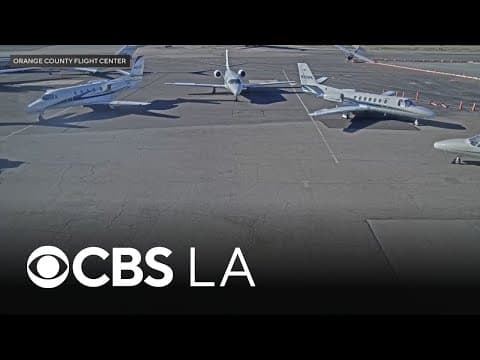
CBS LA footage shows jet blast from a Boeing flipping a small training aircraft at John Wayne Airport in Santa Ana, California.

What the video covers

Written in our own words. It only describes what the video shows and says.

CBS LA shows footage of a small aircraft being flipped onto its back by jet blast from a commercial airliner at John Wayne Airport in Santa Ana, Orange County. A flight school shared the video with the station. According to the flight school, an instructor and a student were taxiing to a parking area when a Boeing powered up to move onto the runway. The exhaust from the jet engine lifted the small aircraft and eventually turned it upside down. CBS LA says it will keep following the story while the investigation continues.

The flight school's account

The flight school blames ongoing construction at the airport. In its view, the works forced the training aircraft to get too close to the Boeing. The video does not give an official cause.

Jet blast during ground operations

The FAA Aeronautical Information Manual (paragraph 4-3-18) warns that jet blast, prop wash and rotor wash can cause damage and upsets during ground operations if encountered at close range. Paragraph 4-3-24 notes that prop and jet blast from large aircraft has overturned or damaged several smaller aircraft taxiing behind them. For that reason the FAA recommends that air carriers and commercial operators turn on their rotating beacons whenever the engines are running. A lit beacon therefore tells a pilot behind that aircraft that its engines are turning.

Thrust levels and airport layout

The FAA airport design circular AC 150/5300-13B (Appendix C) describes three thrust levels on the ground: idle, breakaway thrust (the thrust needed to get a stationary aircraft moving) and takeoff thrust. Breakaway thrust occurs on aprons, along taxiways and at runway ends. The same circular states that air velocities above 30 mph (48 km/h) can lift loose objects off the pavement. It recommends that airports keep light aircraft parking away from turbojets and separate jet aircraft from smaller aircraft.

Statements in the video

0:00A small aircraft was flipped over by jet blast from a commercial airliner at John Wayne Airport.This is how CBS LA presents the footage, which a flight school shared with the station.
0:20A Boeing powered up to move onto the runway while the training aircraft was taxiing nearby.This is the account of the flight school.
0:20Construction at the airport forced the training aircraft too close to the Boeing.This is what the flight school says. The video does not give an official cause.

Jet blast flips small plane at John Wayne Airport

Original title: Video shows small plane getting flipped by jet blast at John Wayne Airport in Orange County
CBS LA · 0:48 · 9 Nov 2026 · Watch on YouTube

CBS LA footage shows jet blast from a Boeing flipping a small training aircraft at John Wayne Airport in Santa Ana, California.

What the video covers

Written in our own words. It only describes what the video shows and says.

CBS LA shows footage of a small aircraft being flipped onto its back by jet blast from a commercial airliner at John Wayne Airport in Santa Ana, Orange County. A flight school shared the video with the station. According to the flight school, an instructor and a student were taxiing to a parking area when a Boeing powered up to move onto the runway. The exhaust from the jet engine lifted the small aircraft and eventually turned it upside down. CBS LA says it will keep following the story while the investigation continues.

The flight school's account

The flight school blames ongoing construction at the airport. In its view, the works forced the training aircraft to get too close to the Boeing. The video does not give an official cause.

Jet blast during ground operations

The FAA Aeronautical Information Manual (paragraph 4-3-18) warns that jet blast, prop wash and rotor wash can cause damage and upsets during ground operations if encountered at close range. Paragraph 4-3-24 notes that prop and jet blast from large aircraft has overturned or damaged several smaller aircraft taxiing behind them. For that reason the FAA recommends that air carriers and commercial operators turn on their rotating beacons whenever the engines are running. A lit beacon therefore tells a pilot behind that aircraft that its engines are turning.

Thrust levels and airport layout

The FAA airport design circular AC 150/5300-13B (Appendix C) describes three thrust levels on the ground: idle, breakaway thrust (the thrust needed to get a stationary aircraft moving) and takeoff thrust. Breakaway thrust occurs on aprons, along taxiways and at runway ends. The same circular states that air velocities above 30 mph (48 km/h) can lift loose objects off the pavement. It recommends that airports keep light aircraft parking away from turbojets and separate jet aircraft from smaller aircraft.
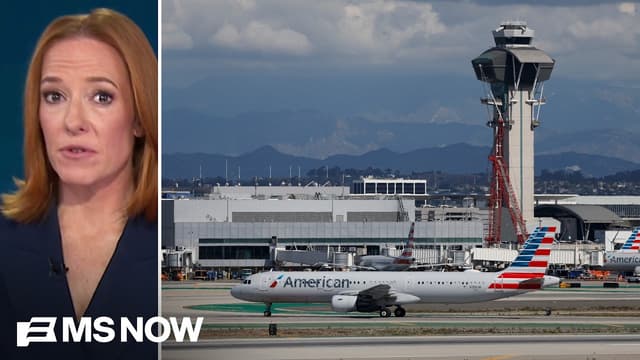
Statements in the video

0:00A small aircraft was flipped over by jet blast from a commercial airliner at John Wayne Airport.This is how CBS LA presents the footage, which a flight school shared with the station.
0:20A Boeing powered up to move onto the runway while the training aircraft was taxiing nearby.This is the account of the flight school.
0:20Construction at the airport forced the training aircraft too close to the Boeing.This is what the flight school says. The video does not give an official cause.
PREPARE FOR SELECTIONPreparing for an Airline Selection?
Academy · Alongside your ground school

Practise All 14 Subjects

ATPL theory (EASA) · a practice set per subject, then timed final exams
KNOWLEDGE BASEAsk the knowledge baseAnswers on training, selections and careers, with sourcesUP NEXT
9:33
Citation CJ3 jet job: Emma Elizabeth's pay and scheduleEmma Elizabeth · 9:33

More Like This

Jet blast flips small plane at John Wayne Airport | PilotinQ