Australia: A350-1000ULR for Qantas flies 12,503 NM non-stop for a Guinness record

An Airbus test flight from Melbourne to Toulouse took 24 hours 24 minutes on 27 and 28 July. What the record covers, how it compares with the 777-200LR and SQ23/24, and what a 22-hour sector means for crewing, fuel and ETOPS.

PQ
By the PilotinQ editorial team · based on 15 sources
Published 12 Nov 2026, 01:10 UTC6 min read
The Airbus A350-1000ULR test aircraft F-WULR in beige test colours with Qantas Project Sunrise titles, under tow on the apron at Melbourne Airport
A350-1000ULR test aircraft F-WULR (MSN 707) at Melbourne Airport on 24 July 2026, three days before the record flight to Toulouse. Mitchul Hope via Wikimedia Commons · CC BY-SA 4.0
IN SHORT
  • Guinness recognises 23,155.6 km (12,503 NM) from Melbourne to Toulouse on 27 and 28 July 2026, flown in 24 hours 24 minutes, as the farthest flight by a commercial aircraft.2
  • It was an Airbus test flight with 13 people on board and no passengers, flown east over the Pacific and North America, so the distance is far longer than the 16,900 km great circle.1
  • The longest scheduled service remains Singapore Airlines New York JFK to Singapore at 15,332 km. Qantas starts non-stop Sydney to London flights of up to 22 hours in October 2027.58

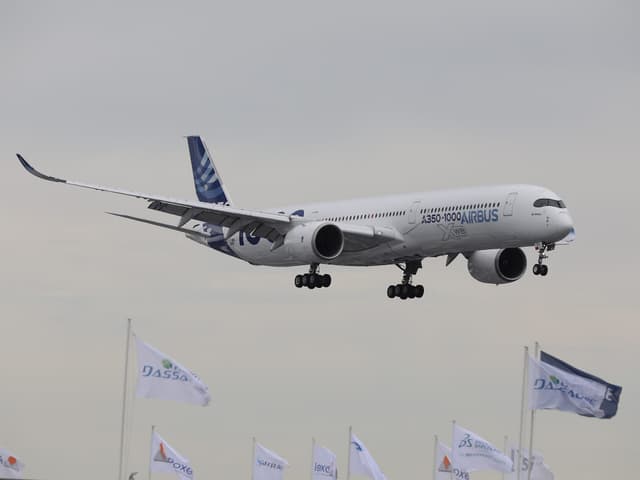
An Airbus A350-1000ULR built for Qantas's Project Sunrise now holds the Guinness World Records title for the farthest flight by a commercial aircraft. It flew 23,155.6 km, or 12,503 nautical miles, from Melbourne to Toulouse on 27 and 28 July 2026, in 24 hours and 24 minutes2. Airbus announced the recognition on 9 November1. The flight was an Airbus development test flight under the call sign AIB35LR, with 13 people on board and no passengers1. It was not a Qantas service. Qantas's own non-stop flights between Sydney and London start in October 20278.

What exactly was recognised

The wording matters. Guinness lists Airbus Commercial Aircraft as the holder, the A350-1000ULR as the aircraft and 12,503 NM as the distance flown2. Airbus says the aircraft data was independently validated by the Fédération Aéronautique Internationale (FAI) and Flightradar24, and that an FAI representative was among the 13 on board1. The others were three Airbus test pilots, two Qantas pilots, five Airbus flight test engineers and two Airbus design engineers1.

It is a record for distance flown, not for the length of a route. The shortest great circle from Melbourne to Toulouse runs west over the Indian Ocean and is about 16,900 km (9,120 NM) by our calculation. The test aircraft went east instead: over Sydney, across the Pacific towards Los Angeles, over North America and the Atlantic and past London1. The long way round the globe between the two airports is about 23,100 km, close to what was flown. Airbus's own account of the flight in July gave 12,460 NM3. The figure Guinness certified is 12,503 NM2.

Boeing used the same trick in 2005. Its 777-200LR flew from Hong Kong to London eastbound, over the North Pacific, North America and the mid North Atlantic, covering 11,664 NM (21,601 km) in 22 hours 42 minutes4. The A350-1000ULR went 839 NM further, roughly 965 statute miles, as InsideFlyer noted15. Boeing noted at the time that a 1997 flight of the 777-200ER still stood as a record because that aircraft flew in a lighter weight category4. Distance records are kept per class, so the headline title and the specialist records are not the same thing.

Test flight, scheduled service or delivery flight

Three different kinds of flight tend to get the label "longest". The longest scheduled passenger service by great circle distance is still Singapore Airlines between New York JFK and Singapore: 15,332 km and about 18 hours 40 minutes on average, according to OAG, flown with the A350-9005. Singapore Airlines opened the JFK route in November 20206. Its A350-900ULR variant, first delivered in 2018, was configured for ultra long haul with 67 business and 94 premium economy seats and no economy cabin7.

Delivery flights are another category. On 17 August 1989 the Qantas 747-400 VH-OJA flew from London Heathrow to Sydney non-stop in 20 hours 9 minutes as part of its delivery from Seattle14. Qantas used a special high density fuel, removed galley equipment and most life rafts to save weight, and cruised at 45,000 ft, with 21 passengers on board, mostly staff, engineers and media14. Neither a delivery flight nor a repatriation or charter flight appears in the scheduled route rankings. The Melbourne to Toulouse flight is a fourth type again: a manufacturer's test sortie flown to prove a capability, with the record as a by-product.

Why Airbus needed a 23-hour block

Qantas will fly Project Sunrise as QF1 and QF2, non-stop between Sydney and London from October 2027, with flights of up to 22 hours8. Each aircraft has 238 seats in four cabins, and the first is due for delivery in April 20278. Airbus says the Sunrise routes need 21 hours 40 minutes of flight time plus holding, diversion and taxi time3. That is why the test campaign had to demonstrate a block time of 23 hours, measured from releasing the parking brake at departure to setting it on the arrival stand3.

The main change from a standard A350-1000 is a rear centre tank integrated into the structure. Airbus quotes 20,000 litres in its June briefing and 20,900 litres in its flight test report, adding about 1,000 NM of range93. The ULR also has a higher maximum take-off weight, for which Airbus has not published a figure, and a new galley air cooling system that saves about 300 kg and will become standard across the A350 family9. The engines are the same Rolls-Royce Trent XWB-973.

Crewing a 22-hour sector

European rules show how far outside normal limits this is. Under CS FTL.1.205, the maximum flight duty period with two additional flight crew members and a class 1 rest facility, a bunk separated from the flight deck and the cabin, is 17 hours. With one additional pilot it is 16 hours10. Each crew member must get at least 90 consecutive minutes of in-flight rest, and the pilots at the controls for landing at least two consecutive hours10. A 22-hour flight cannot fit in that table, so it depends on a fatigue risk management system approved by the regulator.

For Qantas that regulator is CASA. When CASA approved the Qantas pilot FRMS in February 2020, it said the approval covered current operations and that Sunrise flights "will require changes to the new fatigue risk management system and require CASA approval prior to commencement"11. Qantas has not yet published how many pilots it will roster per Sunrise flight. We looked at the training side in our report on the 360 pilots Qantas is training for the A350-1000ULR.

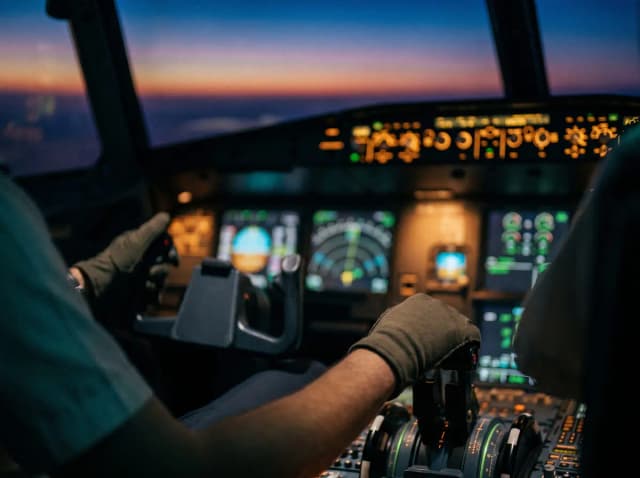
The record flight gives a first look at the rhythm. Pilots worked four-hour shifts and rotated every two hours, giving a two-hour overlap for handovers3. When a Qantas pilot was flying, an Airbus test pilot was always in the other seat3. The ULR has a new twin flight crew rest compartment with two separate sections and entrances, but on this flight it was full of ventilation measuring equipment, so the crew slept in the eight-berth cabin crew rest compartment at the rear3. How relief duties are split is covered in our guide to captain, first officer and second officer roles.

Fuel, routing and diversion time

The rear tank was filled to validate the fuel system, including pumps, gauges, pressure systems and transfer sequencing through the Fuel Quantity Management System39. On the Atlantic crossing the crew planned a northerly track south of Greenland, to stay clear of the published organised tracks that might not have been updated by take-off time3. Along the way the crew saw two sunsets and two sunrises13.

Diversion capability is the other half of ultra long haul planning. EASA approved the A350-900 in October 2014 for ETOPS beyond 180 minutes, with an option for a maximum diversion time of up to 370 minutes, the first new airliner approved for that before entry into service12. Which diversion time Qantas will use on the Sunrise routes, and with which en route alternates, has not been published. Brush up on the theory behind it with ATPL Operational Procedures and on fatigue with ATPL Human Performance. More on the airline is on our Qantas page, and on the current long-haul leader on our Singapore Airlines page.

About:AirlinesAirbusQantasGuinness World RecordsAirbus A350-1000ULR
KEEP READINGNEWSQantas to train more than 360 pilots for 12 A350-1000ULRsANSWERCaptain, first officer and second officer rolesAIRLINEQantasAIRLINESingapore AirlinesPRACTICEATPL Operational ProceduresPRACTICEATPL Human PerformanceAsk your own pilot question

Sources

  1. 1Airbus · Airbus A350-1000ULR for Qantas breaks world distance record9 Nov 2026
  2. 2Guinness World Records · Farthest flight by a commercial aircraft28 Jul 2026
  3. 3Airbus · Extending the horizon: inside the A350-1000ULR's longest development flight28 Jul 2026
  4. 4Boeing · Boeing 777-200LR Sets New World Record for Distance10 Nov 2005
  5. 5OAG · Exploring the world's 10 longest non-stop airline routes14 Apr 2026
  6. 6Singapore Airlines · Singapore Airlines To Begin Non-Stop Services To New York's JFK International Airport20 Oct 2020
  7. 7Singapore Airlines · Singapore Airlines Takes Delivery Of World's First Airbus A350-900ULR22 Sep 2018
  8. 8Qantas · QF1 is going non-stop9 Nov 2026
  9. 9Airbus · Countdown to the world's longest commercial flights: the Airbus A350-1000ULR3 Jun 2026
  10. 10UK CAA Regulatory Library (EASA Air Ops) · CS FTL.1.205 Flight duty period (FDP)12 Nov 2026
  11. 11AirlineRatings · New Qantas fatigue system sets stage for Sunrise27 Feb 2020
  12. 12EASA · EASA certifies Airbus A350 XWB for up to 370 minute ETOPS15 Oct 2014
  13. 13Australian Aviation · Qantas' Project Sunrise jet breaks Guinness World Record10 Nov 2026
  14. 14Airways Magazine · Qantas Operates Longest Nonstop Delivery Flight17 Aug 2024
  15. 15InsideFlyer · Airbus A350 sets commercial airliner distance record11 Nov 2026
CHANGES12 Nov 2026, 01:10 UTC · PublishedSpotted an error? Tell us, corrections are noted under the article.Every fact is checked against the sources listed above. How we work

Australia: A350-1000ULR for Qantas flies 12,503 NM non-stop for a Guinness record

An Airbus test flight from Melbourne to Toulouse took 24 hours 24 minutes on 27 and 28 July. What the record covers, how it compares with the 777-200LR and SQ23/24, and what a 22-hour sector means for crewing, fuel and ETOPS.

PQ
By the PilotinQ editorial team · based on 15 sources
Published 12 Nov 2026, 01:10 UTC6 min read
The Airbus A350-1000ULR test aircraft F-WULR in beige test colours with Qantas Project Sunrise titles, under tow on the apron at Melbourne Airport
A350-1000ULR test aircraft F-WULR (MSN 707) at Melbourne Airport on 24 July 2026, three days before the record flight to Toulouse. Mitchul Hope via Wikimedia Commons · CC BY-SA 4.0
IN SHORT
  • Guinness recognises 23,155.6 km (12,503 NM) from Melbourne to Toulouse on 27 and 28 July 2026, flown in 24 hours 24 minutes, as the farthest flight by a commercial aircraft.2
  • It was an Airbus test flight with 13 people on board and no passengers, flown east over the Pacific and North America, so the distance is far longer than the 16,900 km great circle.1
  • The longest scheduled service remains Singapore Airlines New York JFK to Singapore at 15,332 km. Qantas starts non-stop Sydney to London flights of up to 22 hours in October 2027.58

An Airbus A350-1000ULR built for Qantas's Project Sunrise now holds the Guinness World Records title for the farthest flight by a commercial aircraft. It flew 23,155.6 km, or 12,503 nautical miles, from Melbourne to Toulouse on 27 and 28 July 2026, in 24 hours and 24 minutes2. Airbus announced the recognition on 9 November1. The flight was an Airbus development test flight under the call sign AIB35LR, with 13 people on board and no passengers1. It was not a Qantas service. Qantas's own non-stop flights between Sydney and London start in October 20278.

What exactly was recognised

The wording matters. Guinness lists Airbus Commercial Aircraft as the holder, the A350-1000ULR as the aircraft and 12,503 NM as the distance flown2. Airbus says the aircraft data was independently validated by the Fédération Aéronautique Internationale (FAI) and Flightradar24, and that an FAI representative was among the 13 on board1. The others were three Airbus test pilots, two Qantas pilots, five Airbus flight test engineers and two Airbus design engineers1.

Academy · Alongside your ground school

Practise All 14 Subjects

ATPL theory (EASA) · a practice set per subject, then timed final exams

It is a record for distance flown, not for the length of a route. The shortest great circle from Melbourne to Toulouse runs west over the Indian Ocean and is about 16,900 km (9,120 NM) by our calculation. The test aircraft went east instead: over Sydney, across the Pacific towards Los Angeles, over North America and the Atlantic and past London1. The long way round the globe between the two airports is about 23,100 km, close to what was flown. Airbus's own account of the flight in July gave 12,460 NM3. The figure Guinness certified is 12,503 NM2.

Boeing used the same trick in 2005. Its 777-200LR flew from Hong Kong to London eastbound, over the North Pacific, North America and the mid North Atlantic, covering 11,664 NM (21,601 km) in 22 hours 42 minutes4. The A350-1000ULR went 839 NM further, roughly 965 statute miles, as InsideFlyer noted15. Boeing noted at the time that a 1997 flight of the 777-200ER still stood as a record because that aircraft flew in a lighter weight category4. Distance records are kept per class, so the headline title and the specialist records are not the same thing.

Test flight, scheduled service or delivery flight

Three different kinds of flight tend to get the label "longest". The longest scheduled passenger service by great circle distance is still Singapore Airlines between New York JFK and Singapore: 15,332 km and about 18 hours 40 minutes on average, according to OAG, flown with the A350-9005. Singapore Airlines opened the JFK route in November 20206. Its A350-900ULR variant, first delivered in 2018, was configured for ultra long haul with 67 business and 94 premium economy seats and no economy cabin7.

Delivery flights are another category. On 17 August 1989 the Qantas 747-400 VH-OJA flew from London Heathrow to Sydney non-stop in 20 hours 9 minutes as part of its delivery from Seattle14. Qantas used a special high density fuel, removed galley equipment and most life rafts to save weight, and cruised at 45,000 ft, with 21 passengers on board, mostly staff, engineers and media14. Neither a delivery flight nor a repatriation or charter flight appears in the scheduled route rankings. The Melbourne to Toulouse flight is a fourth type again: a manufacturer's test sortie flown to prove a capability, with the record as a by-product.

Why Airbus needed a 23-hour block

Qantas will fly Project Sunrise as QF1 and QF2, non-stop between Sydney and London from October 2027, with flights of up to 22 hours8. Each aircraft has 238 seats in four cabins, and the first is due for delivery in April 20278. Airbus says the Sunrise routes need 21 hours 40 minutes of flight time plus holding, diversion and taxi time3. That is why the test campaign had to demonstrate a block time of 23 hours, measured from releasing the parking brake at departure to setting it on the arrival stand3.

The main change from a standard A350-1000 is a rear centre tank integrated into the structure. Airbus quotes 20,000 litres in its June briefing and 20,900 litres in its flight test report, adding about 1,000 NM of range93. The ULR also has a higher maximum take-off weight, for which Airbus has not published a figure, and a new galley air cooling system that saves about 300 kg and will become standard across the A350 family9. The engines are the same Rolls-Royce Trent XWB-973.

Crewing a 22-hour sector

European rules show how far outside normal limits this is. Under CS FTL.1.205, the maximum flight duty period with two additional flight crew members and a class 1 rest facility, a bunk separated from the flight deck and the cabin, is 17 hours. With one additional pilot it is 16 hours10. Each crew member must get at least 90 consecutive minutes of in-flight rest, and the pilots at the controls for landing at least two consecutive hours10. A 22-hour flight cannot fit in that table, so it depends on a fatigue risk management system approved by the regulator.

For Qantas that regulator is CASA. When CASA approved the Qantas pilot FRMS in February 2020, it said the approval covered current operations and that Sunrise flights "will require changes to the new fatigue risk management system and require CASA approval prior to commencement"11. Qantas has not yet published how many pilots it will roster per Sunrise flight. We looked at the training side in our report on the 360 pilots Qantas is training for the A350-1000ULR.

The record flight gives a first look at the rhythm. Pilots worked four-hour shifts and rotated every two hours, giving a two-hour overlap for handovers3. When a Qantas pilot was flying, an Airbus test pilot was always in the other seat3. The ULR has a new twin flight crew rest compartment with two separate sections and entrances, but on this flight it was full of ventilation measuring equipment, so the crew slept in the eight-berth cabin crew rest compartment at the rear3. How relief duties are split is covered in our guide to captain, first officer and second officer roles.

Fuel, routing and diversion time

The rear tank was filled to validate the fuel system, including pumps, gauges, pressure systems and transfer sequencing through the Fuel Quantity Management System39. On the Atlantic crossing the crew planned a northerly track south of Greenland, to stay clear of the published organised tracks that might not have been updated by take-off time3. Along the way the crew saw two sunsets and two sunrises13.

Diversion capability is the other half of ultra long haul planning. EASA approved the A350-900 in October 2014 for ETOPS beyond 180 minutes, with an option for a maximum diversion time of up to 370 minutes, the first new airliner approved for that before entry into service12. Which diversion time Qantas will use on the Sunrise routes, and with which en route alternates, has not been published. Brush up on the theory behind it with ATPL Operational Procedures and on fatigue with ATPL Human Performance. More on the airline is on our Qantas page, and on the current long-haul leader on our Singapore Airlines page.

About:AirlinesAirbusQantasGuinness World RecordsAirbus A350-1000ULR
KEEP READINGNEWSQantas to train more than 360 pilots for 12 A350-1000ULRsANSWERCaptain, first officer and second officer rolesAIRLINEQantasAIRLINESingapore AirlinesPRACTICEATPL Operational ProceduresPRACTICEATPL Human PerformanceAsk your own pilot question

Prepare for selection

Sources

  1. 1Airbus · Airbus A350-1000ULR for Qantas breaks world distance record9 Nov 2026
  2. 2Guinness World Records · Farthest flight by a commercial aircraft28 Jul 2026
  3. 3Airbus · Extending the horizon: inside the A350-1000ULR's longest development flight28 Jul 2026
  4. 4Boeing · Boeing 777-200LR Sets New World Record for Distance10 Nov 2005
  5. 5OAG · Exploring the world's 10 longest non-stop airline routes14 Apr 2026
  6. 6Singapore Airlines · Singapore Airlines To Begin Non-Stop Services To New York's JFK International Airport20 Oct 2020
  7. 7Singapore Airlines · Singapore Airlines Takes Delivery Of World's First Airbus A350-900ULR22 Sep 2018
  8. 8Qantas · QF1 is going non-stop9 Nov 2026
  9. 9Airbus · Countdown to the world's longest commercial flights: the Airbus A350-1000ULR3 Jun 2026
  10. 10UK CAA Regulatory Library (EASA Air Ops) · CS FTL.1.205 Flight duty period (FDP)12 Nov 2026
  11. 11AirlineRatings · New Qantas fatigue system sets stage for Sunrise27 Feb 2020
  12. 12EASA · EASA certifies Airbus A350 XWB for up to 370 minute ETOPS15 Oct 2014
  13. 13Australian Aviation · Qantas' Project Sunrise jet breaks Guinness World Record10 Nov 2026
  14. 14Airways Magazine · Qantas Operates Longest Nonstop Delivery Flight17 Aug 2024
  15. 15InsideFlyer · Airbus A350 sets commercial airliner distance record11 Nov 2026
CHANGES12 Nov 2026, 01:10 UTC · PublishedSpotted an error? Tell us, corrections are noted under the article.Every fact is checked against the sources listed above. How we work
Keep reading

More on Airlines