What is the cockpit hierarchy?
As an aspiring pilot, it is important to understand the structure in the cockpit. Aviation has a clear hierarchy, visible in the number of stripes on the shoulders. The flight crew works in a fixed hierarchy designed for safety. From the captain, who carries final responsibility, to the supporting second officer, each crew member has specific tasks and authority. The captain sits on the left in the cockpit and takes all critical operational decisions, including the go/no-go decision.
An airliner always has at least a commander and a co-pilot. The airline designates one pilot as commander, called pilot-in-command or commander in the European rules and Captain in practice. The commander is responsible for the safety of crew, passengers and cargo from the moment he or she boards until the aircraft is left after the flight, and for the operation and safety of the aircraft. Everyone on board must follow his or her lawful safety commands. The European licensing rules, Part-FCL, define the pilot-in-command as the pilot designated as commander and responsible for the safe conduct of the flight. easyJet describes the Captain as the pilot in the left-hand seat who makes the decisions that keep the flight safe and smooth and who supports the crew.
The other pilot flies as co-pilot, called First Officer at most airlines. Under Part-FCL, a co-pilot is a pilot who does not fly as commander on an aircraft that requires more than one pilot, and a pilot who is on board only to receive instruction for a licence or rating does not count. The First Officer is a fully trained pilot in the right-hand seat. A senior first officer is an experienced co-pilot, not a separate licence.
Pilot flying and pilot monitoring are tasks, not ranks, and both a commander and a co-pilot must have made at least 3 take-offs, approaches and landings as pilot flying in the preceding 90 days to carry passengers. In practice, the Captain and First Officer alternate the roles of pilot flying and pilot monitoring per flight, and the Captain remains ultimately responsible even as pilot monitoring. If pilots are assigned the roles of pilot flying and pilot monitoring, EASA requires them to be assessed in both roles during the line check. In the EASA template for stall recovery, the division of tasks is as follows: the pilot flying controls the aircraft, while the pilot monitoring watches speed and attitude and calls out deviations.
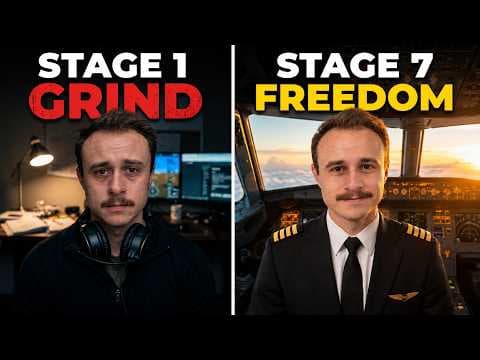
You can see the rank on the uniform: a Captain wears four stripes, a First Officer three and a second officer two. Stripes are an airline custom and do not appear in the European licensing rules, Part-FCL, or the air operations rules, where only the roles of commander, co-pilot and cruise relief co-pilot count.1345