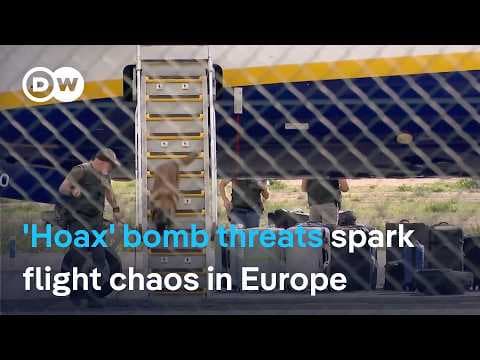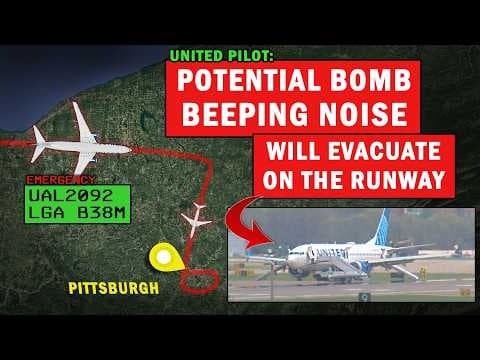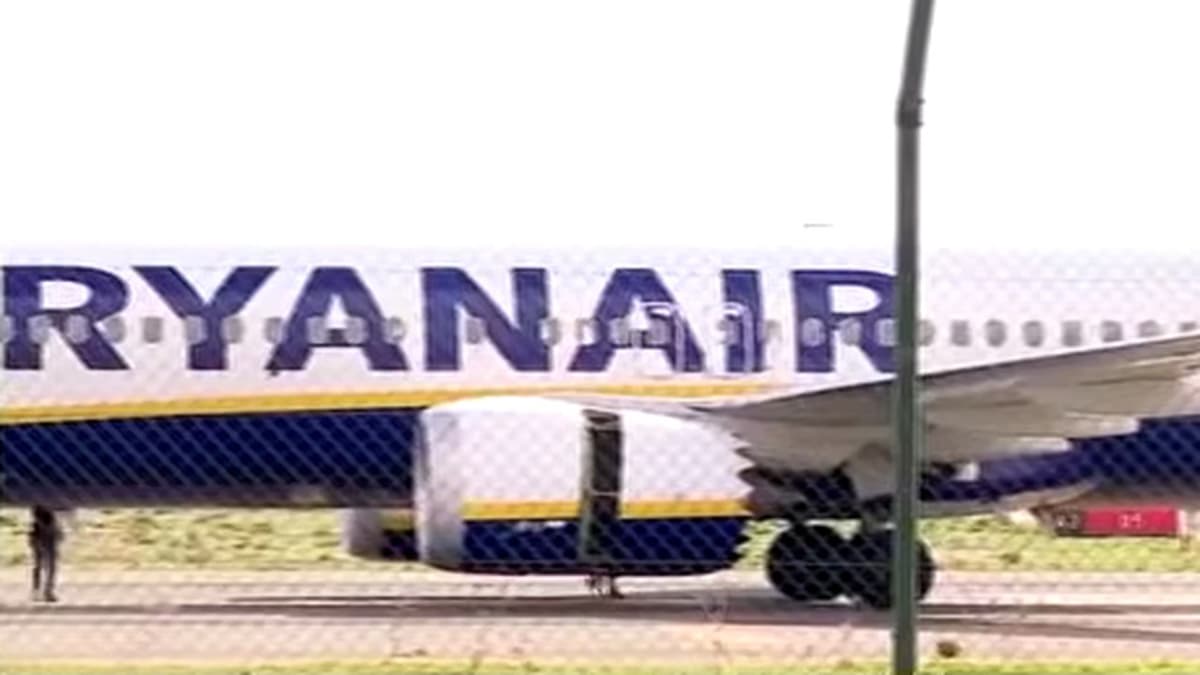
Al Jazeera reports from London on the hoax bomb threats that hit flights to Warsaw, Rome, Murcia and Sofia on 3 November 2026.
What the video covers
Written in our own words. It only describes what the video shows and says.In this short Al Jazeera English report from London, correspondent Charlie Angela sums up a day on which hoax bomb threats disrupted passenger flights across Europe. The news desk opens with the main facts: several European flights were targeted, the threats set off alerts at airports across the continent, and some of the flights had taken off from airports in the United Kingdom.
The British response
The British government told Al Jazeera that its security system is well tested and can handle any potential threat. Angela adds that this department will be one of those involved in any investigation that follows. No explosives were found on board any of the aircraft. Even so, the threats led to large security operations, fighter jet deployments, airport closures and diversions, which shows how much a single false message can set in motion.
One flight after another
Poland came first. A flight from London Heathrow to Warsaw received a threat and was quickly diverted to a smaller airport, where it landed safely. The aircraft was searched and nothing was found. According to the report, the same pattern continued during the day. An SAS flight from Copenhagen, also bound for Warsaw, was next, followed by a flight from Manchester to Murcia in Spain and two flights to Rome, one of which was escorted by fighter jets. Two more flights, from Bergamo and Dublin, landed safely in Bulgaria. The report does not name the airlines of every flight, and it gives no passenger numbers.
Email threats and the investigation
Angela says the threats did not all arrive in the same way. Some were apparently received by email, others came as anonymous tips, and she calls that difference a key point for investigators. They want to establish whether the incidents stand alone or form part of a coordinated campaign. She also points out that making a false bomb threat can lead to a prison sentence of up to seven years under UK law. The threats come at a time when European governments are warning of a raised security threat, including possible sabotage and cyber attacks. The report stresses that, so far, no connection to those wider threats has been made.