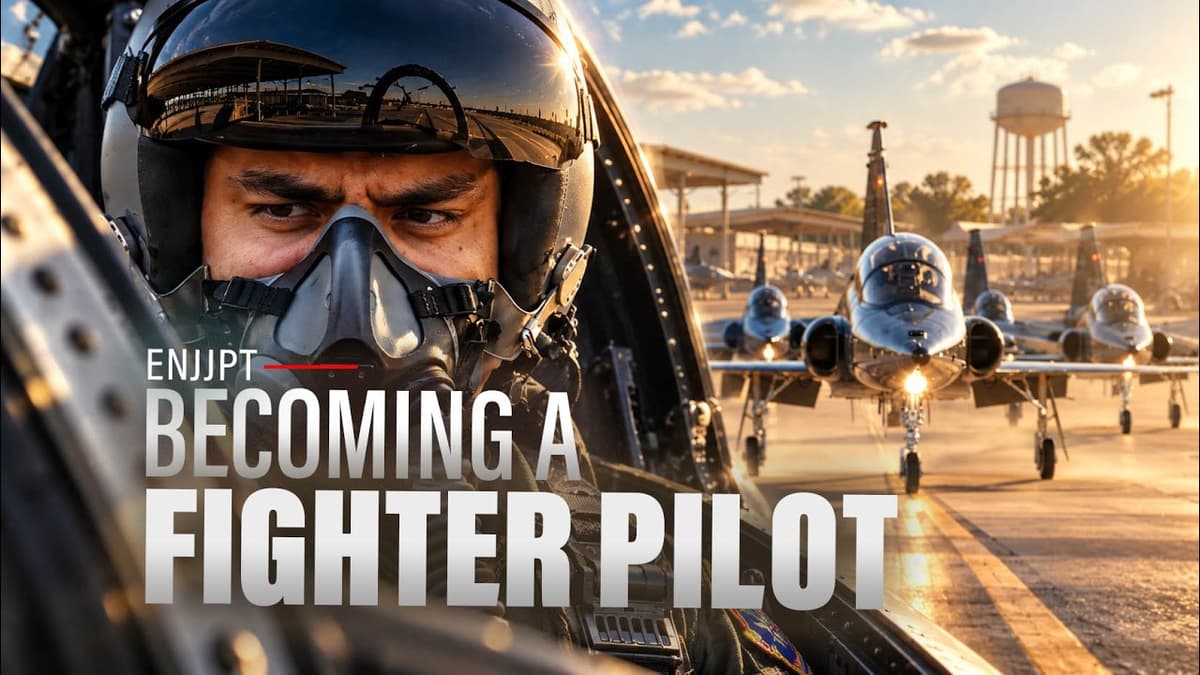
Instructors and students discuss the EuroNATO Joint Jet Pilot Training programme. The video details the rigorous phases required to become a fighter pilot.
What the video covers
Written in our own words. It only describes what the video shows and says.The foundation of international pilot training
The video features instructors and students detailing the EuroNATO Joint Jet Pilot Training programme at Sheppard Air Force Base. According to the presenters, the facility serves as a factory for jet pilots and represents the largest training establishment of its kind. The programme traces its roots back to 1966 when the German and United States governments decided to train future fighter pilots together. Over the decades, it evolved into an international endeavour. An instructor notes that the base accommodates around 12,000 people and operates more than 150 aircraft. Germany alone contributes roughly 50 personnel to help produce approximately 250 future pilots annually. The narrator explains that the international environment allows students from 14 different nations to learn from various perspectives and prepare for future coalition operations.
Aircraft and progression through the phases
The instructors outline the rigorous progression students face, starting with a three-month academic phase. Following this, students transition to the T-6 Texan, a two-seat turboprop aircraft used to teach basic take-offs, landings and formation flying in various weather conditions. After about six months, the training moves to the T-38 Talon. The presenters describe the T-38 as a supersonic jet trainer originally built in the 1960s and updated in the early 2000s. Because the T-38 relies on manual flight controls without a fly-by-wire system, it forces students to constantly trim the aircraft and manage environmental influences. A pilot explains that this manual flying contrasts sharply with the Eurofighter Typhoon, which features carefree handling and automated systems like automatic flaps. Once students master the T-38 over a 55-week period, they receive their wings and discover their aircraft assignments during a drop night.
Daily routines and the path to graduation
The video highlights the demanding daily schedule required to succeed in the programme. Students typically face a 12-hour duty day that begins as early as half past five in the morning. The routine includes extensive weather briefings, flight preparation with instructors, debriefings and independent study. Instructors emphasise that students must learn to overcome failure, as they are graded on every flight and often told when their performance is below average. Following graduation, pilots enter a fourth phase known as Introduction to Fighter Fundamentals. During this stage, they learn basic fighter manoeuvres and weapon employment. The video concludes with instructors noting the emotional weight of the graduation ceremony, where students finally earn their wings and become rated military aviators.