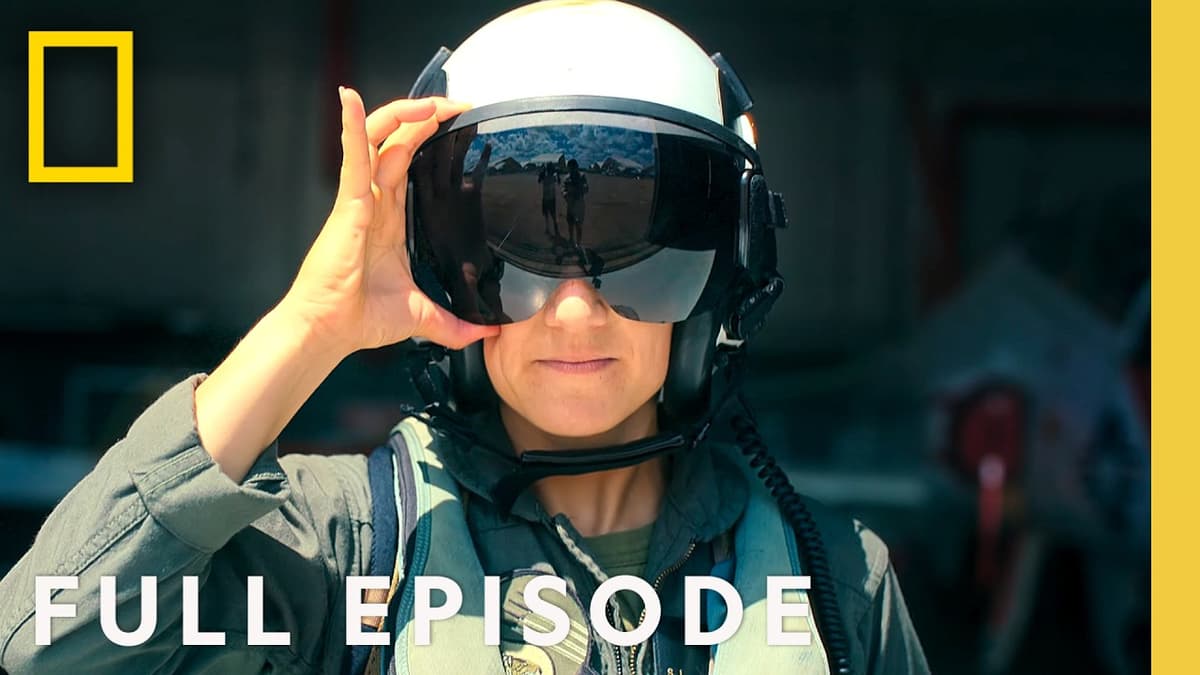
United States Navy students undergo the advanced stage of fighter pilot training. Instructors and trainees discuss carrier landing qualifications.
What the video covers
Written in our own words. It only describes what the video shows and says.Carrier landing training
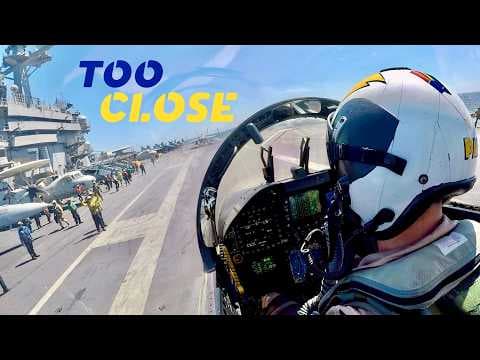
The United States Navy requires all its pilots to land on aircraft carriers. The margin of error is incredibly small, as approaching too low risks a collision with the stern of the ship, while coming in too high means the pilot must go around and try again. To prepare for the dangers of landing at sea, students practise field carrier landings on a runway in Meridian. The runway features a painted box representing the small landing area of an aircraft carrier. Pilots must land violently to catch an arresting wire with their tailhook. Because a missed wire leaves less than 500 feet of runway to get airborne again, students practise touch-and-go landings, accelerating immediately after touchdown. To pass this stage, students must show improvement over 13 flights, each consisting of six touch-and-go landings. Student pilot Carissa failed her first attempt at carrier qualification and is resitting the 13 flights. Landing signal officers monitor the students, using a system of green lights and an amber light called the ball to indicate the correct glide slope.
History and discipline
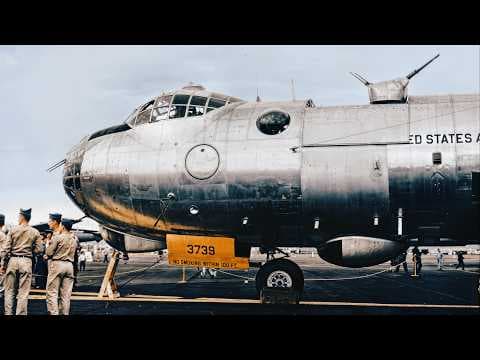
Aircraft carriers have been central to American military strategy since the conflict in the Pacific during World War II. The narrator notes that in 1942, the Battle of Midway saw United States naval aircraft sink four Japanese carriers, turning the tide of the war. Today, the Navy deploys at least three aircraft carriers at any given time to project power and deescalate conflicts. Operating these multimillion-dollar aircraft requires strict discipline, which is tested when student pilot Andrew breaches Navy protocols. During a routine flight back to base, Andrew approaches at over 440 knots instead of the standard 350 knots. His commanding officer grounds him for this misconduct, assigning him to desk duty. The instructors emphasise that putting an aircraft in an unsafe position is grounds for dismissal, as such behaviour would be catastrophic on an actual aircraft carrier.
Final exams and coping mechanisms
The intense pressure of the training programme leads students to find different ways to cope. Captain Stephanie Harris leads yoga sessions for her classmates and instructors, using postures and breath work to help them focus and manage fear. The final carrier landing exams face a temporary delay due to the approach of Tropical Storm Francine along the Louisiana coast, forcing the base in Mississippi to chain down and cover the jets. Once the weather clears, Carissa and Stephanie undertake their final flights. Stephanie completes her landings smoothly. Carissa struggles initially, coming in too fast and using too much power, resulting in several failed passes. With only two attempts remaining, she manages to stabilise her glide slope and successfully completes her final touch-and-go landings. The landing signal officers confirm that both students have passed their carrier qualifications and are cleared to proceed to the next phase of training, which involves dogfighting.