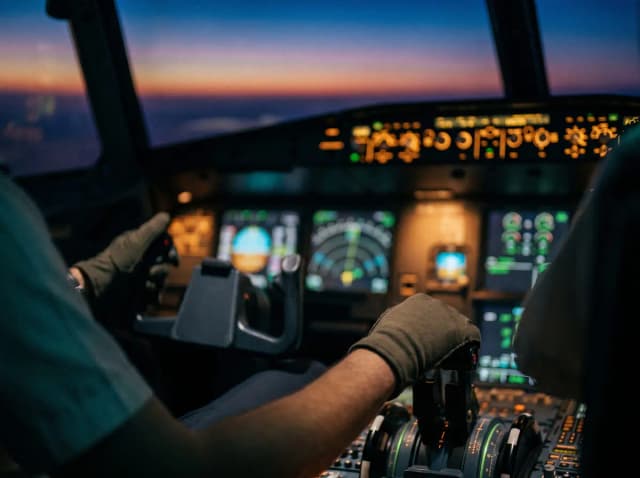
Network planners at GOL and Transavia expect AI to test far more route scenarios, but say people will still choose the routes. Further down the chain, AI tools from KLM and BCG and from Jeppesen ForeFlight already support aircraft assignment, disruption recovery, crew schedules and long-term crew plans.

- Network planners at GOL and Transavia expect AI to help test more route scenarios; the final choice of routes stays with people.1
- Wizz Air links AI to faster capacity redeployment and, eventually, better aircraft utilisation.2
- KLM and BCG tools cover aircraft assignment and disruption recovery for flight and crew schedules, plus long-term crew plans including hiring.3
- Jeppesen ForeFlight's first Airflow agents target crew scheduling and disruption management, with humans responsible for decisions.6
Artificial intelligence is moving into the planning departments that decide where airlines fly, how their aircraft are used and how crews are scheduled. At the Routes World 2026 event in Frankfurt in October, network planners from GOL and Transavia said they expect AI to help them test far more route scenarios, while the final choice of which city pairs to connect stays with people1. Other tools built by airlines and suppliers already reach further down the chain, into aircraft assignment, disruption management, crew schedules and long-term crew plans that include hiring and training36.
Route planners want more scenarios, not automatic decisions
GOL's network planning manager said even experienced teams cannot always use all the information available to them. He expects AI to let the Brazilian airline's analysts test more combinations of routes, for example whether a route would still make sense if fuel prices rose or a competitor started flying it1. Transavia's network planning manager said the airline currently uses Microsoft AI for quick research and analysis, including to probe its network strategy for weaknesses1. In two to three years, he hopes to ask AI to run 1,000 scenarios through the airline's own models. Deciding which of those scenarios to plan for would remain with his team. "It's called Copilot because it's the copilot," he said. "You're still the pilot"1.
Wizz Air links AI to aircraft utilisation
At Routes Europe 2026 in Rimini in May, planners from Wizz Air, SAS, airBaltic and Binter described a similar balance2. A Wizz Air network officer said AI and data had been instrumental when the airline had to redeploy capacity quickly after disruption linked to the war in Ukraine and instability in the Middle East2. He said AI could eventually play a larger role in aircraft utilisation and schedule efficiency, particularly for ultra low-cost carriers whose business model depends on getting the most out of each aircraft2. The head of network management at airBaltic said a first analysis of weak flights that would have taken about half a day took ten minutes with AI. He added that the airline had never launched a route solely on AI output2.
From aircraft assignment to crew schedules
Once a schedule exists, AI tools are already used to decide which aircraft flies which rotation and how to recover from disruption. KLM and the consultancy BCG have developed a suite of AI-based tools since 20183. According to KLM, Pathfinder optimises fleet and tail assignment in the days before operations, while Sentry and Runway resolve operational disruptions for flight and crew schedules on the day itself3. Another tool, CrewVision, is described by KLM as a long-term planning tool for cockpit and cabin crew that calculates a future crew plan including hiring, training and attrition3. KLM says the partnership now serves airlines of different sizes and business models3.
Cathay Pacific used Pathfinder and Sentry to rebuild its Integrated Operations Centre with BCG and KLM. According to BCG, the underlying decision model weighs factors such as passenger connections, cargo, crew logistics and environmental impact4. Singapore Airlines announced in 2024 that it would adopt Pathfinder to optimise the assignment of aircraft to routes5. Aerospace Global News reports that at Cathay Pacific, AI also helps teams model which flights to cancel and how to get the schedule back on track after bad weather1.
Crew scheduling agents with a human in the loop
Suppliers are building AI specifically for crew planning. In October, Jeppesen ForeFlight launched its first AI agents for its Airflow platform, aimed mainly at crew scheduling and disruption management rather than tools used directly by pilots6. Trip Trading helps crews exchange trips, Target Mastery helps planners build crew schedules and Augmented Ops Control evaluates possible responses to aircraft or crew disruptions6. According to the company, the system can take into account fatigue, reserve coverage, cost and crew connections6. It provides the reasoning behind its recommendations, human operators remain responsible for acting on them and the system is meant to work within existing Safety Management System processes6. The company is looking for commercial operators to join a development phase before a broader rollout expected early next year6.
US duty limits under Part 117
In the United States, the flight and duty limits for airline pilots are set out in 14 CFR Part 117. The rule prohibits an airline from scheduling a pilot for more than 100 hours of flight time in any 672 consecutive hours or 1,000 hours in any 365 consecutive days7. Flight duty periods are capped at 60 hours in any 168 consecutive hours and 190 hours in any 672 consecutive hours7. Before any reserve or flight duty period, a pilot must have had at least 30 consecutive hours free from all duty within the past 168 hours7. Each reserve or flight duty period must also be preceded by at least 10 consecutive hours of rest that include a minimum of 8 uninterrupted hours of sleep opportunity7.
Gut feel still has a place in network decisions
The planners on the Rimini panel agreed that network planning still depends heavily on human intuition and experience, especially in emerging markets or during unusual geopolitical developments2. An SAS network strategy manager cautioned that AI systems are not yet reliable enough for fully automated network planning2. "There's always a little bit of this gut feel," the airBaltic network head said2.
Timeline
- 2018KLM and BCG start their partnership on AI tools for airline operations.3
- 23 Jul 2024KLM and BCG extend the partnership again.3
- 18 Sep 2024Singapore Airlines announces it will adopt Pathfinder.5
- 19 May 2026Planners at Routes Europe 2026 in Rimini discuss AI in route planning.2
- 6 Oct 2026Jeppesen ForeFlight launches its first Airflow agents for crew scheduling and disruption.6
- 19 Nov 2026GOL and Transavia planners' Routes World 2026 comments on AI are published.1
Sources
- 1Aerospace Global News · How airlines are using AI to test new routes and decide where to fly19 Nov 2026
- 2Aviation Week · European Carriers Take Cautious Approach To AI In Route Planning19 May 2026
- 3KLM · KLM Royal Dutch Airlines and BCG Extend Partnership for Digital Airline Operations23 Jul 2024
- 4BCG · Cathay Pacific: Transforming Airline Operations with AI
- 5Consultancy.asia · Singapore Airlines adopts AI solution from KLM-BCG partnership18 Sep 2024
- 6AVweb · Jeppesen ForeFlight Expands AI Into Airline Operations6 Oct 2026
- 7Electronic Code of Federal Regulations · 14 CFR Part 117: Flight and Duty Limitations and Rest Requirements: Flightcrew Members
More on Airlines
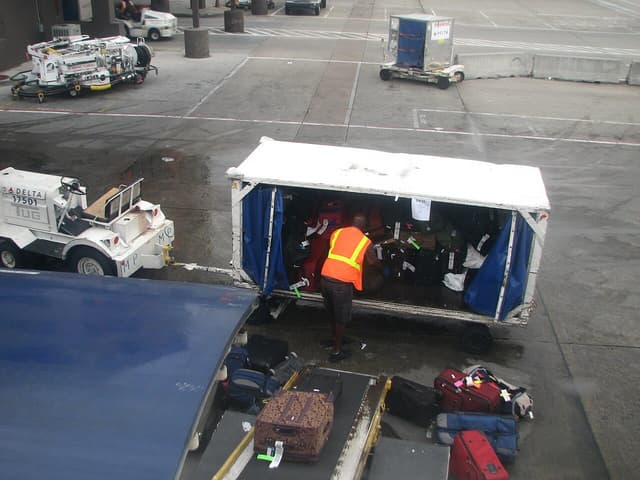
United States: Delta weight and balance outage shows why no load data means no departure
A failure of the system Delta Air Lines uses to calculate aircraft weight and balance delayed hundreds of flights on Sunday and led the FAA to hold Atlanta-bound Delta flights. Why the load manifest is a hard requirement, how the ground delay programme spread the backlog and what a long wait at the gate does to a pilot's duty day.
US Airlines and Credit Cards: What Loyalty Money Means for Pilot Careers
Delta, American and United collect billions a year from co-branded credit cards, money that has helped them borrow and stay in the air through difficult years. Spirit, with little card income, stopped flying in May 2026. Why that matters when you choose an airline.
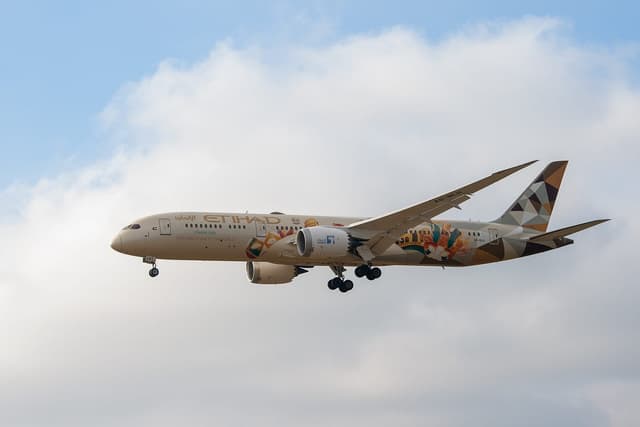
Morocco: Etihad cuts Casablanca to five weekly flights for four weeks in 2027
Schedule data shows Etihad Airways dropping its Tuesday and Sunday flights between Abu Dhabi and Casablanca from 8 February to 8 March 2027, with the Boeing 787-9 on the route. The airline has not given a reason.