VideosCAREERS
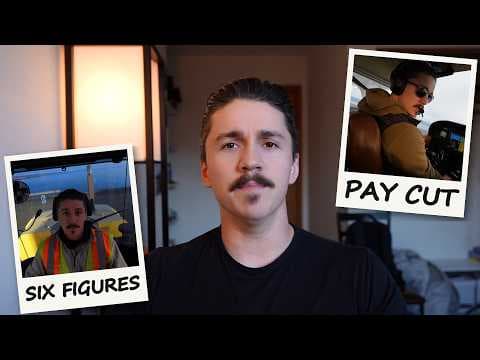
Why Jeremy Willyerd left freight logistics to become a pilot
Original title: The main reason I gave up everything to become a pilot
Jeremy Willyerd · 9:07 · 28 Oct 2026 · Watch on YouTube

Jeremy Willyerd explains why he left freight logistics to pursue pilot training. He describes the time and growth limits he faced.

What the video covers

Written in our own words. It only describes what the video shows and says.

Jeremy Willyerd opens by saying he gave up his job, house and lifestyle when he decided to change careers. He says he had the feeling of wanting to be in the sky, but he ties the decision to the job he was in. He says if he had fully enjoyed his job, not woken up wishing he was doing something else and liked where he would be in five years, he might have moved more slowly instead of dropping everything and starting again.

Freight logistics and long hours

He describes working in freight transportation, loading Boeing 777s and 767s and later C-130s or their civilian variant, then loading barges with larger and heavier cargo. He says the industry is tied to location because cargo must be moved by machines and people must be present. He also says the market can make long hours attractive for workers who want more money without changing jobs, because one person working fourteen hours can be cheaper than two people working seven hours each, even with overtime. He says this left little room to study for a pilot licence during busy summer periods.

Skills, growth and pay limits

He says his previous work made him a better equipment operator but did not improve him in a transferable way. He describes building lumber loads on ISO containers, which he says are forty feet long and eight feet wide, banding them and sending them to Western Alaska. He says that skill did not transfer easily to higher pay, and that staying in the job meant small cost of living raises rather than real growth. He says he was almost capped out in his previous job and had almost no further hourly pay available.

Pilot training and quality of life

He says pilot training offers a sequence of ratings and certificates, including private, instrument, commercial, CFI, CFII, multi-engine, MEI, tailwheel and airline transport certificate, along with building hours. He says he wants eventually to be a corporate pilot, a captain on a Gulfstream or an airline captain at a larger airline, naming Alaska Airlines, FedEx, Delta and United. He says he accepted a large pay cut and expects to move through CFI, another job, possibly a regional airline and possibly a major to return to his previous income. He says he is willing to answer questions from people who have not started or have not flown yet.

Statements in the video

0:56Jeremy Willyerd says he worked in freight transportation for a while and loaded Boeing 777s, 767s and C-130s or their civilian variant.He says this while describing his previous work around aircraft and cargo.
2:00Jeremy Willyerd says one person working 14 hours can be cheaper than two people working seven hours each, even if that one person is paid overtime.He says this while explaining why freight transportation tends to involve long hours.
6:47Jeremy Willyerd says he was almost capped out in his previous job, with almost no more money he could make per hour.He says this while explaining why he moved from freight logistics to flying.

Moments from the video

0:00“Good morning. I gave up pretty much everything, my job, my house, and the entire lifestyle that I was in at the time of making this decision. And this could be another one of those videos where I talk about, ah, when I was a kid, I used to look at the sky…”0:56“I had been in the logistics freight transportation industry for a while. I loaded airplanes. I loaded triple sevens, seven six sevens. I actually ended up loading the C-130s or the civilian variant, which those are super cool as well. So I've been around…”2:00“naturally ends up meaning that you're going to work long hours because if you have one guy and you make him work for 14 hours versus grabbing two guys and then they each work for seven hours the one guy is cheaper even if you're paying him overtime the one…”2:18“that works out for people who want to get more hours and make more money without having to go to college or do anything to like change their job they just want to work some more to make more money that works out fantastic but in what i wanted to do after…”3:58“becoming a better equipment operator. I was pretty good at building lumber loads on flats, as we call them, which is just like the bottom of one of those international standardization organization containers, the ISO containers.”5:57“There's always something new to work on. Private, instrument, commercial, CFI. And when you're done with that, there's CFI, sorry, CFII and multi-engine, MEI and get your tailwheel. And then all of those smaller ratings. And then obviously you're working…”6:47“freight logistics transportation to piloting because yes i loved it i love flying but the practical consideration is that now i am working on things that are going to pay me more eventually versus working on something that is the skill isn't really…”8:12“what I'm doing on a day-to-day basis and then eventually be able to give myself some more time to work on the things that will also improve me as well. So there's my reason for the day. I'm sure that if you ask me tomorrow, I would also have another…”

More videos

All
Sign in
CAREERS

Why Jeremy Willyerd left freight logistics to become a pilot

Original title: The main reason I gave up everything to become a pilot
Jeremy Willyerd · 9:07 · 28 Oct 2026 · Watch on YouTube

Jeremy Willyerd explains why he left freight logistics to pursue pilot training. He describes the time and growth limits he faced.

IN THIS VIDEO
  1. 0:00Leaving a familiar life
  2. 0:56Freight logistics work
  3. 2:18Little time for training
  4. 3:58Limited skill transfer
  5. 5:57Pilot ratings and hours
  6. 8:12Questions and experience

What the video covers

Written in our own words. It only describes what the video shows and says.

Jeremy Willyerd opens by saying he gave up his job, house and lifestyle when he decided to change careers. He says he had the feeling of wanting to be in the sky, but he ties the decision to the job he was in. He says if he had fully enjoyed his job, not woken up wishing he was doing something else and liked where he would be in five years, he might have moved more slowly instead of dropping everything and starting again.

Freight logistics and long hours

He describes working in freight transportation, loading Boeing 777s and 767s and later C-130s or their civilian variant, then loading barges with larger and heavier cargo. He says the industry is tied to location because cargo must be moved by machines and people must be present. He also says the market can make long hours attractive for workers who want more money without changing jobs, because one person working fourteen hours can be cheaper than two people working seven hours each, even with overtime. He says this left little room to study for a pilot licence during busy summer periods.

Skills, growth and pay limits

He says his previous work made him a better equipment operator but did not improve him in a transferable way. He describes building lumber loads on ISO containers, which he says are forty feet long and eight feet wide, banding them and sending them to Western Alaska. He says that skill did not transfer easily to higher pay, and that staying in the job meant small cost of living raises rather than real growth. He says he was almost capped out in his previous job and had almost no further hourly pay available.

Pilot training and quality of life

He says pilot training offers a sequence of ratings and certificates, including private, instrument, commercial, CFI, CFII, multi-engine, MEI, tailwheel and airline transport certificate, along with building hours. He says he wants eventually to be a corporate pilot, a captain on a Gulfstream or an airline captain at a larger airline, naming Alaska Airlines, FedEx, Delta and United. He says he accepted a large pay cut and expects to move through CFI, another job, possibly a regional airline and possibly a major to return to his previous income. He says he is willing to answer questions from people who have not started or have not flown yet.
Statements in the video

0:56Jeremy Willyerd says he worked in freight transportation for a while and loaded Boeing 777s, 767s and C-130s or their civilian variant.He says this while describing his previous work around aircraft and cargo.
2:00Jeremy Willyerd says one person working 14 hours can be cheaper than two people working seven hours each, even if that one person is paid overtime.He says this while explaining why freight transportation tends to involve long hours.
6:47Jeremy Willyerd says he was almost capped out in his previous job, with almost no more money he could make per hour.He says this while explaining why he moved from freight logistics to flying.

Moments from the video

0:00“Good morning. I gave up pretty much everything, my job, my house, and the entire lifestyle that I was in at the time of making this decision. And this could be another one of those videos where I talk about, ah, when I was a kid, I used to look at the sky…”0:56“I had been in the logistics freight transportation industry for a while. I loaded airplanes. I loaded triple sevens, seven six sevens. I actually ended up loading the C-130s or the civilian variant, which those are super cool as well. So I've been around…”2:00“naturally ends up meaning that you're going to work long hours because if you have one guy and you make him work for 14 hours versus grabbing two guys and then they each work for seven hours the one guy is cheaper even if you're paying him overtime the one…”2:18“that works out for people who want to get more hours and make more money without having to go to college or do anything to like change their job they just want to work some more to make more money that works out fantastic but in what i wanted to do after…”3:58“becoming a better equipment operator. I was pretty good at building lumber loads on flats, as we call them, which is just like the bottom of one of those international standardization organization containers, the ISO containers.”5:57“There's always something new to work on. Private, instrument, commercial, CFI. And when you're done with that, there's CFI, sorry, CFII and multi-engine, MEI and get your tailwheel. And then all of those smaller ratings. And then obviously you're working…”6:47“freight logistics transportation to piloting because yes i loved it i love flying but the practical consideration is that now i am working on things that are going to pay me more eventually versus working on something that is the skill isn't really…”8:12“what I'm doing on a day-to-day basis and then eventually be able to give myself some more time to work on the things that will also improve me as well. So there's my reason for the day. I'm sure that if you ask me tomorrow, I would also have another…”
READ MORE ON PILOTINQ
How to become a pilot: routes, requirements and selectionPilot work schedule and lifestyle: what to expectFirst job after pilot training: phases, requirements and chances
Practise for your exams and airline selectionStart for free

More videos

Why Jeremy Willyerd left freight logistics to become… | PilotinQ