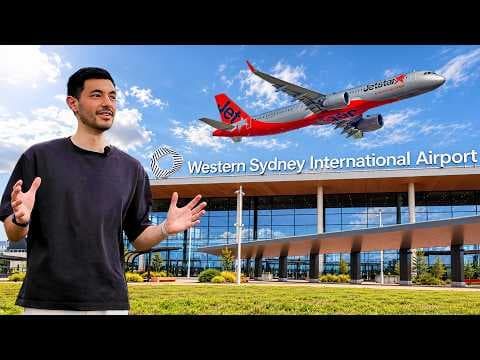
Flight Formula flies all three flights on opening day at Western Sydney International Airport and traces why the airport took decades.
What the video covers
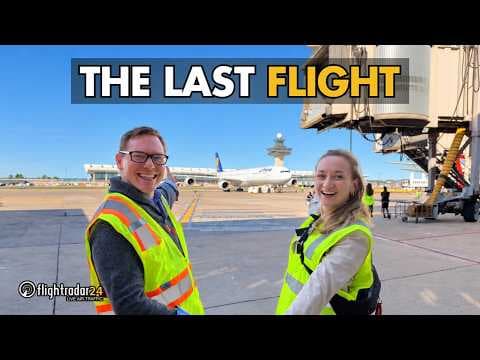
Written in our own words. It only describes what the video shows and says.Simon Dean of Flight Formula spends 25 October, opening day at Western Sydney International Airport, taking all three flights of the day: to the Gold Coast, back to Western Sydney and home to Melbourne. Between the flights he explains why Sydney's second airport took so long and whether it can compete with Sydney Airport at Mascot.
Opening day at Badgerys Creek
He reaches the airport by bus from St Marys station in about 25 minutes and finds the terminal much bigger than he expected, with a surprising number of outlets open for only three flights. His criticism is security, where only two lanes were open, and the lack of places to refill a water bottle. The first Jetstar flight to the Gold Coast is the most cheerful one he has been on, with a chase helicopter and passengers clapping on take off. The return flight is quieter, and his flight home to Melbourne leaves late, which he calls the first delayed departure from the new airport.
Why the second airport took decades
He calls the airport the ultimate NIMBY project: almost everyone agreed Sydney needed a second airport, but nobody wanted aircraft over their house. A 1964 study for the New South Wales government said a second airport was needed soon. In 1986 aviation minister Peter Morris chose Badgerys Creek and the government bought about 1,700 hectares, but cabinet later picked a cheaper third runway at Mascot instead. That runway opened in 1994, and the noise led to the No Aircraft Noise party, the 1995 curfew at Mascot and, in 1997, a cap of 80 aircraft movements per hour. Both rules still apply. In 2002 the government leased Sydney Airport for 99 years for around 5.5 billion dollars, with a right of first refusal on any second major airport within 100 kilometres. When the offer finally came, Sydney Airport declined in May 2017, and a week later the budget put 5.3 billion dollars into a government owned airport company.
Airlines, rules and long term plans
On the departures board he sees a cautious start: a handful of Jetstar flights, QantasLink from March with 94-seat Embraers, Air New Zealand to Auckland three times a week, Singapore Airlines daily from late November, Vietjet from January and Fiji Airways from March. The airport says about 3 million people live within an hour, and the rail link is due in late 2027 or 2028. Master plans to 2045 give Sydney Airport 72 million passengers a year and Western Sydney about 19 million, while Western Sydney also plans a second runway around 2050 and around 82 million passengers by 2063. He points out that the federal government owns the new airport and regulates the old one: extra flying rights for Qatar and the UAE can only be used at Western Sydney, and overnight freighters lose their Mascot curfew exemption from 1 November. He compares the likely outcome with London and Tokyo, where a second airport takes the traffic the first one cannot.