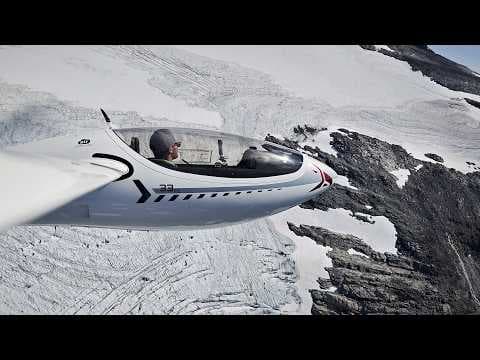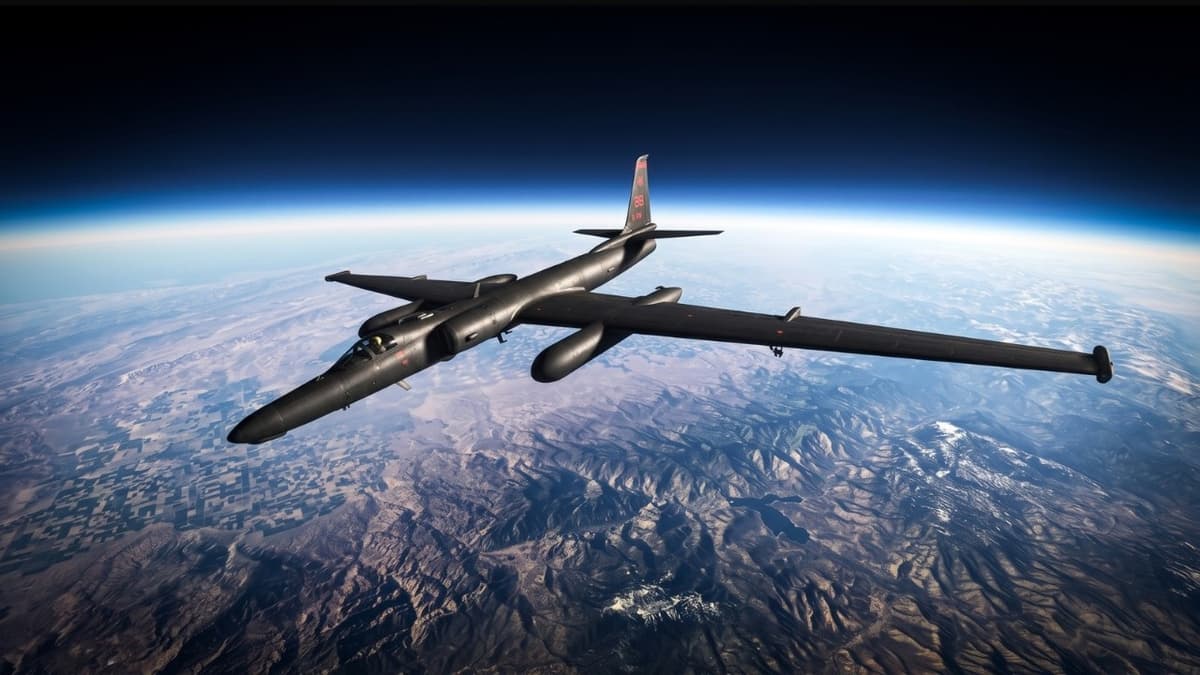
Swiss001 describes the U-2 Dragon Lady and its flight characteristics. He flies it in a flight simulator add-on.
What the video covers
Written in our own words. It only describes what the video shows and says.Swiss001 introduces the U-2 Dragon Lady as a high-altitude reconnaissance aircraft that has continued to be flown since its introduction in the 1950s. He says its only weapon was altitude and that it flew at 70,000 feet. Swiss001 flies it in a new add-on for Microsoft Flight Simulator 2024, so everything shown in the video is simulated.
Preparation and ground support
Before the flight, Swiss001 removes covers, tags and chocks, but leaves the pogo supports attached. The aircraft has only a main landing gear and a nose landing gear, so it needs those supports to stand upright. He notes that the cockpit holds one person and that the simulator also covers other U-2 variants. The pre-flight is described as similar to a pre-space flight. Pilots breathe pure oxygen for about an hour before the flight to clear nitrogen from their blood and avoid bends. They wear a spacesuit that is uncomfortable and hard to move in. The simulated cockpit contains water, energy drinks, food and a heater; he says missions usually last nine to twelve hours. Starting the aircraft requires external electricity and an air start unit. Swiss001 turns on several computers and displays, including the BCDU, standby flight instrument, avionics processor, upfront control display and inertial navigation system. He also describes a mobile chase car with a U-2 pilot nearby to help during taxi and take-off.
Climb and high-altitude limits
In the simulator, the pogo supports fall away after take-off and the aircraft climbs quickly. Swiss001 gives an ascent rate of 7,000 to 11,000 feet per minute and compares the wings to glider wings. He reaches 10,000 feet within two minutes and then 50,000 feet, where the climb slows because the air is thinner. At that height he notes an indicated airspeed of 130 knots and Mach 0.5. The main problem at high altitude is coffin corner. Within about 20 knots, the aircraft can either stall if too slow or begin to vibrate if too fast. Turns take a long time, and altitude can be lost during manoeuvres. Swiss001 uses the autopilot to climb toward 60,000 feet, then demonstrates the simulated camera systems, including an ASARS radar and an electro-optical infrared camera with gimbal limits and hand controls.
Landing and ground recovery
Swiss001 says the landing is harder than cruise because the aircraft is difficult to control at lower altitude and lower speed. He says the wings continue to generate lift, so the aircraft will not really land normally and must be crashed onto the runway. The cockpit view is limited, and the aircraft stalls easily. In real life, a mobile car would wait beyond the runway threshold to report altitude and follow the aircraft during the landing. The simulator shows the aircraft touching down on its bicycle-like landing gear, with wingtips made of titanium that can contact the ground. After landing, ground crew level the wings and refit the pogo stabilisers.