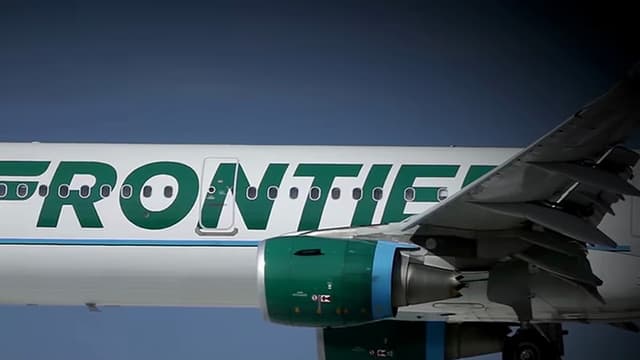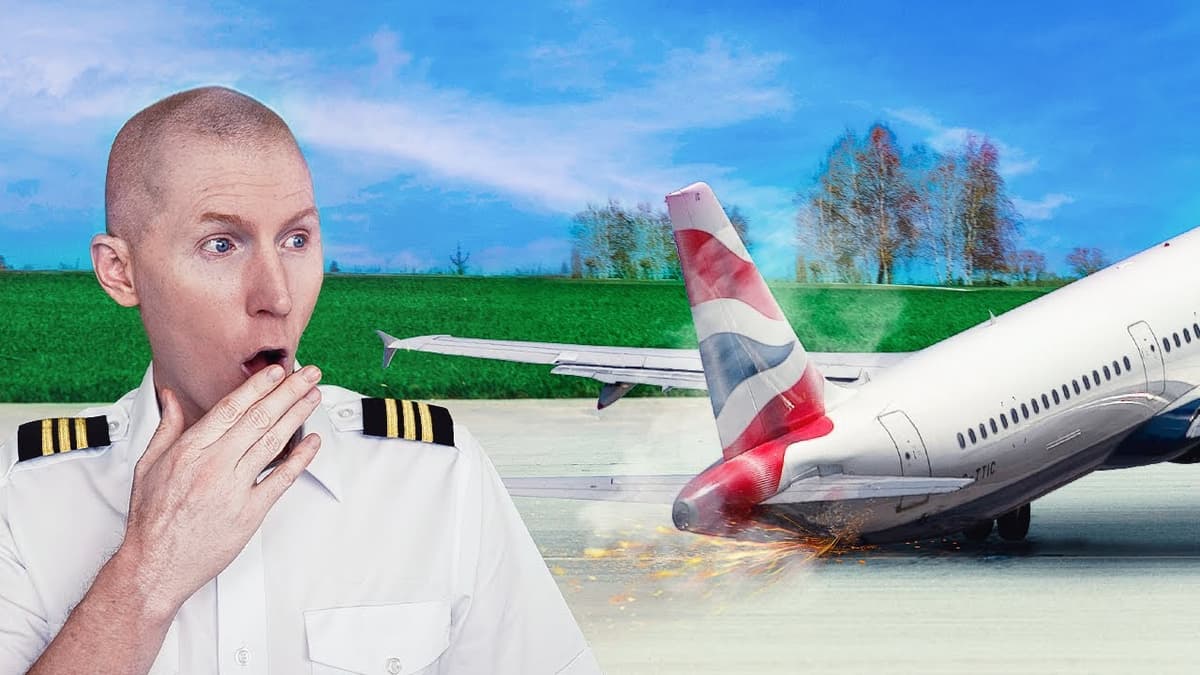
Kelsey, a 747 pilot, debriefs tail strikes in takeoff, landing and go around clips. He uses radio calls and handbook guidance.
What the video covers
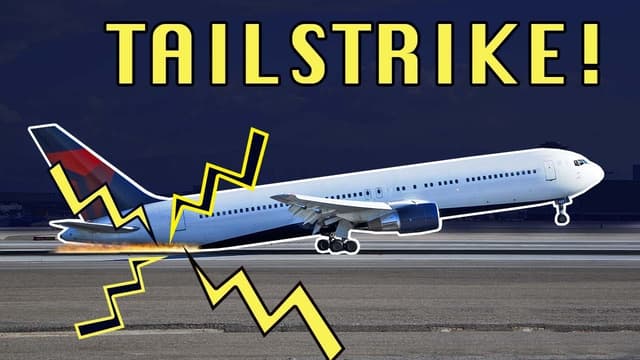
Written in our own words. It only describes what the video shows and says.Kelsey, a 747 pilot, opens with clips of tail strikes and says the video is mostly about tail strikes. The first clip shows a takeoff where a puff of dust appears as the tail contacts the ground. Kelsey explains that one of the most common causes is that the pilot pulls back on the yoke too hard. Wind can also affect the event, but the pilots are responsible for safely getting the aircraft off the ground. Kelsey notes that some aircraft can rotate to 14 or 15 degrees nose up, while others may only reach 3, 4 or 5 degrees before leaving the ground. Kelsey says manufacturers test how much pitch up occurs before the tail starts dragging, and that incorrect trim or rotating too early can also contribute. Kelsey compares the tail strike angle of two 747 variants and says the difference is slight.
Causes and pitch angles
The video includes air traffic control audio addressed to callsign 1328. Air traffic control says that on rotation it saw a puff of smoke or dust from the tail and asks 1328 to confirm a tail strike. The pilot replies that there is no sign. Air traffic control then instructs 1328 to contact Tokyo Departure 124.2 and report any further comment to the department. Kelsey uses this exchange to discuss how a tail strike may be identified. Kelsey lists a noticeable bump or jolt, a scraping noise from the tail, or a momentary stop in pitch rate. Kelsey notes that on a 747 the scraping may be hard to hear over engine noise, and that cabin crew may be the ones who hear it. Kelsey says that, despite the sterile environment below 10,000 feet, a cabin crew member who hears a dragging sound during rotation should report it before the 10,000 feet call. Kelsey then shows a page from the QRH, the quick reference handbook used for emergencies. The page states that continued pressurisation of the airplane can cause further structural damage. Kelsey discusses pilots who continued across the ocean after a tail strike and says the checklist says to go back to the airport.
Identifying a tail strike and following the QRH
Kelsey says that a tail strike during landing can be more impactful and possibly more dangerous than one during takeoff. Kelsey explains that an aircraft can sink quickly on approach, and a pilot may flare more to prevent the aircraft from slamming into the ground. That pull back can push the tail down faster than the aircraft is sinking. Kelsey mentions that some airlines keep extra speed on approach to reduce rapid settling. Kelsey refers to a manufacturer note that says do not hold the airplane off in attempt to make an excessively smooth landing. Kelsey recalls a similar personal experience in a regional jet, where adding power helped stop the sinking and allowed a hard landing. The final clip shows a landing that becomes a go around. Kelsey notes that the wing rose high enough to push the other wing close to the ground, causing the go around. Kelsey explains that the pilot touched one wheel early, landed hard, then let the wing rise. Kelsey says that at landing speed the wing still wants to fly, so a gust can lift it if the aileron is not kept into the wind. The crew then initiated a go around, but over rotated, and the nose came back down as they corrected.