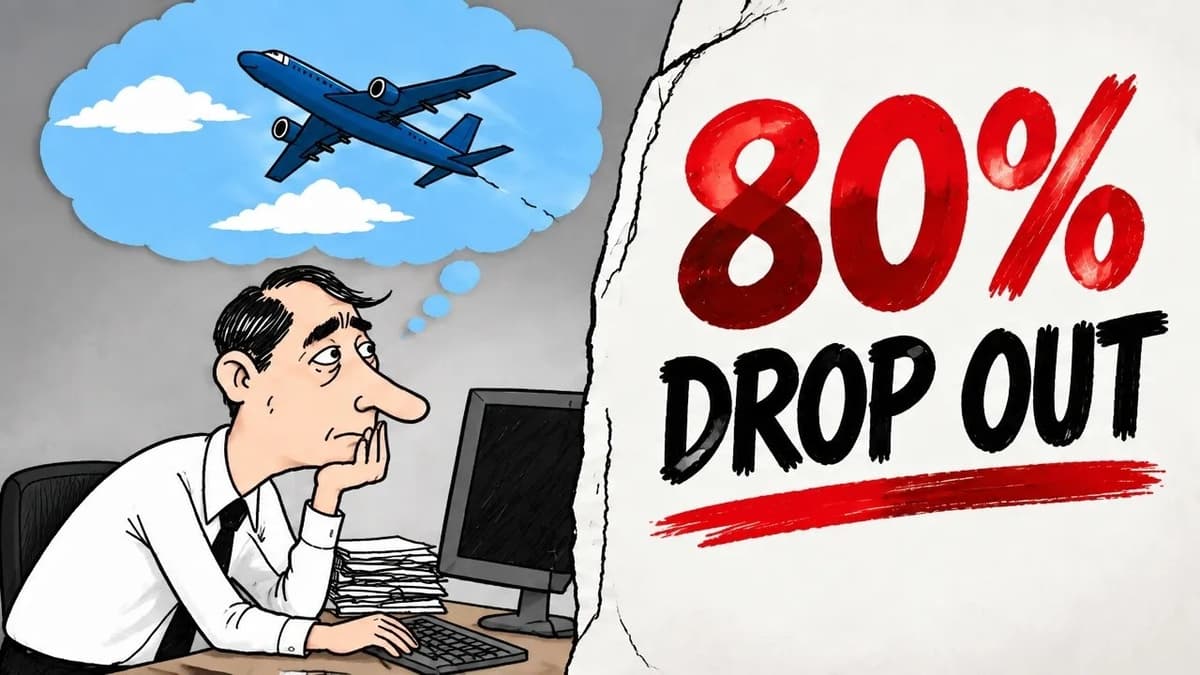
The narrator outlines the barriers to becoming an airline pilot. The video details the financial and professional steps needed to reach the flight deck.
What the video covers
Written in our own words. It only describes what the video shows and says.The appeal and financial barriers
The narrator begins by outlining the significant appeal of becoming an airline pilot. According to the U.S. Bureau of Labor Statistics, the median annual wage for airline pilots in May 2024 was $226,600. The presenter notes that senior captains flying wide-body aircraft at major airlines can earn up to $500,000 annually when factoring in profit sharing. Furthermore, first officers at competitive regional airlines can see first-year compensation packages reaching $100,000. However, the narrator explains that the financial barrier to entry is substantial. The journey from having no experience to holding a commercial pilot licence typically costs between $80,000 and $130,000 at accelerated academies or university programmes. This includes the private pilot licence, which requires a minimum of 40 flight hours but usually takes 60 to 75 hours to achieve proficiency. Additional costs include an instrument rating, which adds up to $18,000, and a commercial pilot licence requiring 250 flight hours. The narrator points out that part-time students often face a relearning tax, where infrequent flying leads to forgotten skills and increased training costs.
Medical requirements and flight hours
Before commencing flight training, the Federal Aviation Administration requires candidates to pass a medical examination. The narrator states that a first-class medical certificate is necessary for an airline career. This strict evaluation checks for disqualifying conditions such as cardiovascular issues, epilepsy, psychosis or bipolar disorder. The presenter mentions that pilots aged 40 and over must undergo an annual EKG, and vision must be correctable to 20-20. Once candidates secure their medical clearance and commercial certificates, they face the challenge of building flight hours. The narrator explains that most airlines require an airline transport pilot certificate, which mandates 1,500 total flight hours. This leaves a gap of 1,250 hours for new commercial pilots. To bridge this gap, many become a certified flight instructor. The presenter notes that instructor ratings cost up to $12,000, and instructors typically earn between $35,000 and $60,000 a year while teaching students to build their own flight time. Other options mentioned include banner towing and aerial survey work.
The seniority system and career strategies
Upon reaching an airline, pilots encounter the seniority system. The narrator describes this as a structure where a pilot's date of hire dictates their quality of life. Seniority determines aircraft assignments, upgrades to captain, routes, schedules and vacation time. Junior pilots are often placed on reserve, meaning they remain on call and frequently fly less desirable routes. The presenter explains that successful candidates approach their career with a solid financial plan to avoid training delays. Some choose the military route, where the government funds training and pilots can qualify for a restricted airline transport pilot certificate at 750 hours in exchange for a service commitment. Civilians may attend university aviation programmes to qualify at 1,000 or 1,250 hours. The narrator details how successful candidates secure their medical certificates early and accept the demanding early years as a necessary step in their aviation career.