VideosTRAINING
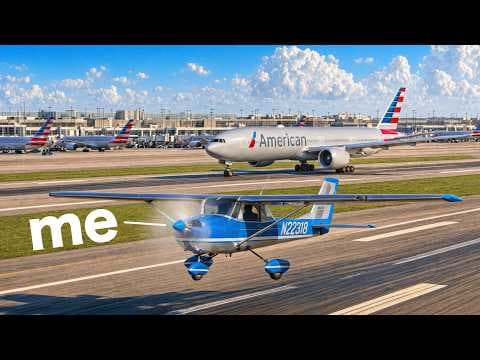
1968 Cessna 150: landing at Charlotte International
Original title: I Landed My Tiny Plane at a Major Airport
Fly Me to the Fun™ · 12:14 · 31 Oct 2026 · Watch on YouTube

A pilot flies a 1968 Cessna 150 to Charlotte International. The presenter records the planning, approach, landing, and fees.

What the video covers

Written in our own words. It only describes what the video shows and says.

The presenter begins by contrasting Charlotte International, described as the second largest American Airlines hub in the United States and the seventh busiest airport in the world, with his 1968 Cessna 150, a two seat aircraft with a 100 horsepower engine and a maximum speed of 88 knots. He says that after landing at LaGuardia, he became more open to taking a small plane into large airports, provided the arrival does not disturb other traffic. The stated aim is to fly from home to Charlotte, North Carolina, ask air traffic control whether a full stop landing at Charlotte International is possible, and learn what the ground visit and landing fees are like.

Planning the Charlotte arrival

At the departure airport, the presenter receives taxi instructions for Cessna 22318 and later a takeoff clearance for runway 3 right. He explains that Charlotte International is a public use airport, but controllers can deny a landing request if the arrival stream is busy. To improve the chance of acceptance, he telephoned the Charlotte TRACON earlier that morning and asked for a suitable arrival time. The controller suggested 1230 to 1. The plan is to fly to a small airport outside Charlotte, stage there, and contact Charlotte Approach before the suggested window. On the way he cruises at 5,500 feet, noting strong wind and that Interstate 85 is below the aircraft. He lands at Shelby and later departs from there.

Approaching Charlotte International

Before entering the Charlotte area, the presenter flies low to remain underneath and outside the Class Bravo airspace until cleared to enter. He obtains information Alpha and calls Charlotte Approach as Cessna 22318, six miles east of Shelby at 2,500 feet, asking whether a full stop at Charlotte is possible. The controller asks whether Douglas means Charlotte, assigns squawk 0326, and establishes radar contact five miles east of Shelby while instructing the aircraft to maintain VFR. He describes Charlotte International as having three parallel runways and 6,000 acres, with airline gates on the north end and a private FBO on the east side. He expects runway 36, which he states is 8,676 feet long.

Landing and ground costs

Charlotte Approach cleared Cessna 22318 into the Charlotte Class Bravo and instructed it to maintain VFR at or below 3,000 feet. Cessna 22318 was then told to contact approach on 126.15 and to expect left base for runway 36. Charlotte Tower cleared Cessna 22318 to land on runway 36. After landing, the presenter is told to turn right at Delta 4 and proceed to the FBO. On the ground, he meets a person named Drew, orders 20 gallons of fuel, and says this amount is enough to waive a 50 dollar facility fee. He states that the remaining charges are a 15 dollar infrastructure fee and 20 gallons at 10 dollars a gallon plus tax, giving a total of 213.11 dollars for the visit.
Statements in the video

0:00Charlotte International is the second largest American Airlines hub in the United States and the seventh busiest airport in the world.The presenter states this while introducing the airport.
6:16Charlotte International operates three parallel runways and covers 6,000 acres.The presenter states this while describing the airport layout.
11:28The visit cost $213.11, with a $15 infrastructure fee and 20 gallons of fuel at $10 a gallon plus tax, and 20 gallons was enough to waive a $50 facility fee.The presenter states this after ordering fuel at the FBO.

Moments from the video

0:00“This is the second largest American Airlines hub in the United States, Charlotte International, where hundreds of airliners carrying 50 million passengers a year take off and land every single day, making it the seventh busiest airport in the world. And…”1:06“Okay, so technically CLT is a public use airport, but ATC can always deny my request to land if they're too busy or can't find a spot for me in the line of jets flowing into the airport. So to maximize our chance of this working and minimize our chance of…”3:17“Okay, it's 11.57 a.m. We're going to head back out to the plane, pre-flight, get started up, taxi out, take off, climb up, and then by about 11 or 12.15, we'll contact Charlotte Approach and ask if we can go full stop at CLT. I think the timing should work…”6:16“Charlotte International operates three parallel runways, and at 6,000 acres, it is absolutely massive. The airline gates are up on the north end, and we'll be parking at the private FBO on the east side of the airport. Because of that, I'm expecting ATC to…”9:12“After a few more turns from ATC to fit us into the traffic flow, we got the call we've been waiting for.”11:28“I gotta say, being nervous about flying into such a big airport and then being greeted by such cool people has immediately made me feel more welcome and a little less out of place. Even though we are definitely still out of place. We walked in and I placed…”

More videos

All
15:57
TRAININGFlying a Cessna 182 into the Maasai Mara in KenyaFly Me to the Fun™
Sign in
TRAINING

1968 Cessna 150: landing at Charlotte International

Original title: I Landed My Tiny Plane at a Major Airport
Fly Me to the Fun™ · 12:14 · 31 Oct 2026 · Watch on YouTube

A pilot flies a 1968 Cessna 150 to Charlotte International. The presenter records the planning, approach, landing, and fees.

IN THIS VIDEO
  1. 0:00A small Cessna and a major hub
  2. 1:06Planning the Charlotte arrival
  3. 3:17Waiting at Shelby
  4. 6:16Entering Charlotte airspace
  5. 9:12Landing at Charlotte
  6. 11:28Ground visit and fees

What the video covers

Written in our own words. It only describes what the video shows and says.

The presenter begins by contrasting Charlotte International, described as the second largest American Airlines hub in the United States and the seventh busiest airport in the world, with his 1968 Cessna 150, a two seat aircraft with a 100 horsepower engine and a maximum speed of 88 knots. He says that after landing at LaGuardia, he became more open to taking a small plane into large airports, provided the arrival does not disturb other traffic. The stated aim is to fly from home to Charlotte, North Carolina, ask air traffic control whether a full stop landing at Charlotte International is possible, and learn what the ground visit and landing fees are like.

Planning the Charlotte arrival

At the departure airport, the presenter receives taxi instructions for Cessna 22318 and later a takeoff clearance for runway 3 right. He explains that Charlotte International is a public use airport, but controllers can deny a landing request if the arrival stream is busy. To improve the chance of acceptance, he telephoned the Charlotte TRACON earlier that morning and asked for a suitable arrival time. The controller suggested 1230 to 1. The plan is to fly to a small airport outside Charlotte, stage there, and contact Charlotte Approach before the suggested window. On the way he cruises at 5,500 feet, noting strong wind and that Interstate 85 is below the aircraft. He lands at Shelby and later departs from there.

Approaching Charlotte International

Before entering the Charlotte area, the presenter flies low to remain underneath and outside the Class Bravo airspace until cleared to enter. He obtains information Alpha and calls Charlotte Approach as Cessna 22318, six miles east of Shelby at 2,500 feet, asking whether a full stop at Charlotte is possible. The controller asks whether Douglas means Charlotte, assigns squawk 0326, and establishes radar contact five miles east of Shelby while instructing the aircraft to maintain VFR. He describes Charlotte International as having three parallel runways and 6,000 acres, with airline gates on the north end and a private FBO on the east side. He expects runway 36, which he states is 8,676 feet long.

Landing and ground costs

Charlotte Approach cleared Cessna 22318 into the Charlotte Class Bravo and instructed it to maintain VFR at or below 3,000 feet. Cessna 22318 was then told to contact approach on 126.15 and to expect left base for runway 36. Charlotte Tower cleared Cessna 22318 to land on runway 36. After landing, the presenter is told to turn right at Delta 4 and proceed to the FBO. On the ground, he meets a person named Drew, orders 20 gallons of fuel, and says this amount is enough to waive a 50 dollar facility fee. He states that the remaining charges are a 15 dollar infrastructure fee and 20 gallons at 10 dollars a gallon plus tax, giving a total of 213.11 dollars for the visit.
Statements in the video

0:00Charlotte International is the second largest American Airlines hub in the United States and the seventh busiest airport in the world.The presenter states this while introducing the airport.
6:16Charlotte International operates three parallel runways and covers 6,000 acres.The presenter states this while describing the airport layout.
11:28The visit cost $213.11, with a $15 infrastructure fee and 20 gallons of fuel at $10 a gallon plus tax, and 20 gallons was enough to waive a $50 facility fee.The presenter states this after ordering fuel at the FBO.

Moments from the video

0:00“This is the second largest American Airlines hub in the United States, Charlotte International, where hundreds of airliners carrying 50 million passengers a year take off and land every single day, making it the seventh busiest airport in the world. And…”1:06“Okay, so technically CLT is a public use airport, but ATC can always deny my request to land if they're too busy or can't find a spot for me in the line of jets flowing into the airport. So to maximize our chance of this working and minimize our chance of…”3:17“Okay, it's 11.57 a.m. We're going to head back out to the plane, pre-flight, get started up, taxi out, take off, climb up, and then by about 11 or 12.15, we'll contact Charlotte Approach and ask if we can go full stop at CLT. I think the timing should work…”6:16“Charlotte International operates three parallel runways, and at 6,000 acres, it is absolutely massive. The airline gates are up on the north end, and we'll be parking at the private FBO on the east side of the airport. Because of that, I'm expecting ATC to…”9:12“After a few more turns from ATC to fit us into the traffic flow, we got the call we've been waiting for.”11:28“I gotta say, being nervous about flying into such a big airport and then being greeted by such cool people has immediately made me feel more welcome and a little less out of place. Even though we are definitely still out of place. We walked in and I placed…”
Practise for your exams and airline selectionStart for free

More videos

1968 Cessna 150: landing at Charlotte International | PilotinQ