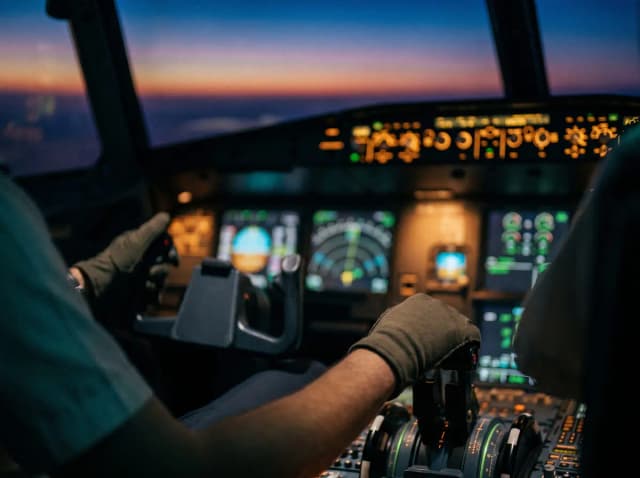
A Cessna 172 flying from Spain to Verona crashed near Lonato del Garda on 18 November, killing the pilot. Hashish was found in the wreck. What is known, how the EU safety investigation stays separate from the criminal case and what happens next.

- A French-registered Cessna 172 crashed near Lonato del Garda on 18 November; the pilot, the only person on board, died.12
- Italy's ANSV opened a safety investigation the same day and sent an investigator to the site.1
- Hashish was found in and around the wreck; an anti-mafia prosecutor in Brescia leads the criminal inquiry with Europol.23
- Under EU rules the safety investigation does not apportion blame and aims for a final report within 12 months.68
A Cessna 172 crashed near Lonato del Garda in northern Italy on Wednesday 18 November, killing the pilot. Italy's air accident investigation authority, the ANSV, opened a safety investigation the same day and sent an investigator to the site1. On the information available so far, the pilot was the only person on board1. Italian media report that he was 29 years old3. Investigators found a cargo of hashish in and around the wreck35. A criminal inquiry into the cargo is under way as well2. Under EU rules the safety investigation runs separately from it6.
What is known so far
The aircraft was French-registered, with the marks F-BJLK12. It took off from Llançà on Spain's Costa Brava and was heading for Verona Boscomantico2. About an hour after departure it lost height over the southern Lake Garda area, which was covered in dense fog that day2. Firefighters found little fuel in the aircraft4. According to Il Giorno, the fuel on board was not enough to reach Verona2. The cause of the crash has not been established45.
Between roughly 40 and 50 kilograms of hashish was found, partly inside the fuselage and partly outside it235. The case is with an anti-mafia prosecutor in Brescia, who is working with Europol and the Spanish and French authorities to trace who organised the transport2.
Two investigations, two different questions
Under EU Regulation 996/2010, a safety investigation is never concerned with blame or liability. It is independent of any judicial proceedings and separate from them6. Prosecutors want to establish on whose behalf the pilot was flying and who supplied and was meant to receive the cargo2. The ANSV report, by contrast, has the prevention of future accidents as its sole objective8.
The two still have to work together. When a judicial investigation is also opened, the investigator in charge must be told. That investigator keeps custody of flight recorders and physical evidence. If a judicial authority seizes evidence, the safety investigator must have immediate and unlimited access to it7.
EU rules let investigators skip some light aircraft accidents. That option covers manned aircraft with a maximum take-off mass of 2,250 kg or less. Even then, it applies only when nobody was killed or seriously injured6.
What happens next
The investigation ends with a report whose sole objective is preventing future accidents8. The report has to protect the anonymity of anyone involved8. Investigators must publish it as soon as possible, if possible within 12 months of the accident. If that is not possible, they must release an interim statement at least on each anniversary, setting out progress and any safety issues raised8.
Low fuel and the fog have been mentioned in Italian coverage, but neither has been confirmed as a factor24. The ANSV has not yet said what caused the crash.
Sources
- 1ANSV (Italian safety investigation authority) · ANSV (Italian safety investigation authority)18 Nov 2026
- 2Il Giorno · Il Giorno22 Nov 2026
- 3L'Unione Sarda · L'Unione Sarda
- 4Libero Quotidiano · Libero Quotidiano
- 5Il24ore · Il24ore
- 6Regulation (EU) No 996/2010 (via legislation.gov.uk) · Article 5: Obligation to investigate
- 7Regulation (EU) No 996/2010 (via legislation.gov.uk) · Article 12: Coordination of investigations
- 8Regulation (EU) No 996/2010 (via legislation.gov.uk) · Article 16: Investigation report
More on Safety
Russian An-12 crash kills 19: military commission and criminal case lead the inquiry
A Russian military An-12 crashed near Kemerovo on 17 November, killing all 19 on board. An Aerospace Forces commission and military criminal investigators are now leading the inquiry.
US indicts Irish national over C-130H destroyed at Shannon: the timeline and legal route
A US indictment says an intruder breached the perimeter of Shannon Airport at about 4:39 a.m. and was still on a parked Air National Guard C-130H when the crew returned at about 9:40 a.m. US law lets the case be tried in New York although the alleged offence took place abroad.
Knife found in a wheelchair at East Midlands: what crews must know about mobility aids
Passengers on a Tenerife-bound flight had to disembark after a knife fell out of a motorised wheelchair being loaded into the hold. Police found no offence. We explain why powered mobility aids get special handling and what authority a commander has over people and cargo.