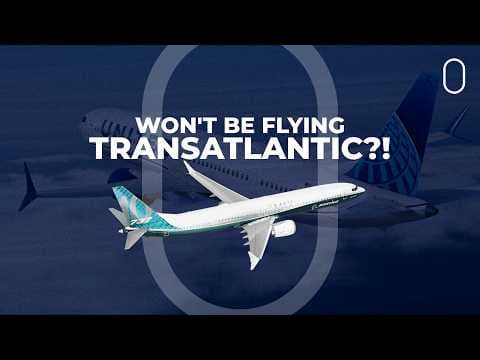
The video compares the Boeing 737 MAX 10 with the Airbus A321XLR. It explains why the MAX 10 may never be deployed transatlantic.
What the video covers
Written in our own words. It only describes what the video shows and says.Range and design differences
The video compares the Boeing 737 MAX 10 with the Airbus A321XLR. It says the MAX 10 is arriving in a market Airbus has reshaped around a different kind of narrowbody. The MAX 10 is described as optimised for capacity, seat economics, and high frequency domestic or regional flying. The A321XLR is described as engineered to add fuel and structural capability for flights lasting up to about 11 hours. Airbus gives the XLR a range of 4,700 nautical miles, while Boeing lists the MAX 10 at 3,100 nautical miles. The video says the MAX 10 is a slightly longer stretch of the MAX 9, retains the MAX wing and fuel capacity, and uses specialised landing gear to preserve commonality. It can carry up to 230 passengers, but the video says it lacks the fuel and structural margin to match the A321XLR.
Network role and economics
The video says the longer fuselage increases weight, and more passengers in that longer fuselage increase weight. If fuel volume is not increased accordingly, range is reduced. Boeing describes the MAX 10 as offering the best per seat economics of any single aisle aircraft. The video says the inherited geometry explains why the MAX 10 should not be judged solely by a nominal range comparison. The video says comparing the MAX 10 with the A321neo's longest range variant is a bit like comparing apples to oranges. Airbus says the A321XLR can operate flights of up to 11 hours and identifies transatlantic routes among the missions enabled by the aircraft. The MAX 10 can replace smaller aircraft with more seats while preserving commonality across a fleet. The video says that can be useful at airports where gates, runway capacity, and departure slots constrain the number of flights an airline can operate. According to the video, economics can matter more than headline range, and an airline may prefer more seats and lower cost per seat rather than paying for capacity it rarely uses. It adds that MAX commonality can reduce complexity for operators already committed to the family. Boeing has repeatedly positioned the MAX 10 around high capacity, high demand markets rather than long haul specialisation.
Future narrowbody requirements
The video says the question now moves beyond the 737 variant. It says airlines increasingly want aircraft that can combine narrowbody economics with long range flexibility. It says Boeing will eventually need a successor architecture rather than another stretch of the 737. A future clean sheet aircraft could address the range, payload, cabin, and airport requirements that the MAX 10 cannot reconcile within its inherited structure. Until then, the video says the A321XLR will occupy the long range end of the narrowbody market, while the value of the MAX will depend on how effectively airlines fill its additional seats on routes that do not require the extra fuel.
Footage: Simple Flying via YouTube.