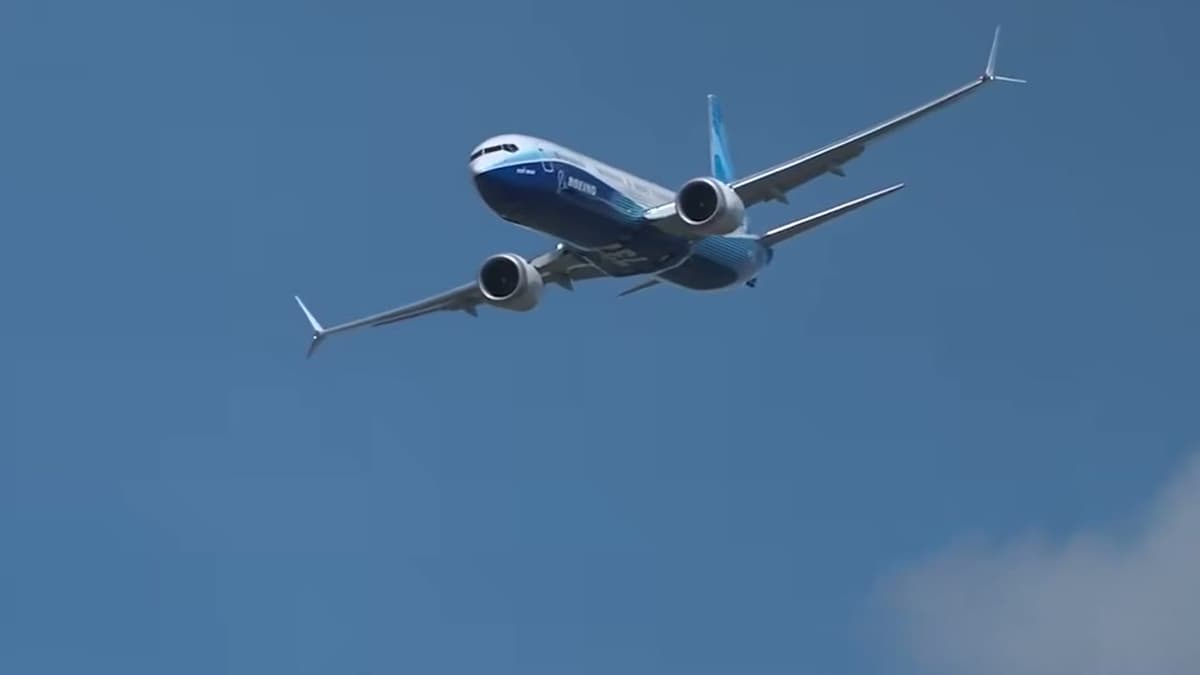
Ben Watts of Mentour Now looks at the FAA approval of the Boeing 737 MAX 10 and at the production race with the Airbus A321neo.
What the video covers
Written in our own words. It only describes what the video shows and says.In this Mentour Now episode, Ben Watts looks at the certification of the Boeing 737 MAX 10. He starts with the news that the FAA approved the MAX 10 for airline service on 20 October 2026, after a certification campaign that took years. Customers had already ordered more than 1,500 of the type. Watts then asks whether Boeing can build and deliver enough of them to win back ground from the Airbus A321neo.
A stretched 737 and a long road to approval
Watts goes back to 2017, when Boeing launched the MAX 10 at the Paris Air Show. Boeing stretched the MAX 9 by another 1.7 metres for up to 230 passengers in an all economy layout, while keeping commonality with the rest of the 737 family. Because the 737 sits low to the ground, the longer fuselage raised the risk of tail strikes. Boeing answered with a semi-levered main landing gear that gives extra height on takeoff and shortens again before retraction. The aircraft was meant to enter service in 2020. After the two fatal MAX accidents in 2018 and 2019, Watts says, the FAA changed how it oversees manufacturers. The MAX 10 faced closer scrutiny of its flight controls and software, a new synthetic angle of attack indicator, flight management software issues and engine anti-ice issues. By certification Boeing had flown more than 2,000 test hours.
Production and the Airbus backlog
Watts notes that Boeing built only a handful of MAX 10s for testing, so few aircraft are ready to hand over. Airlines still need to train crews and prepare their cabins. Regulators outside the United States still have to validate the type. He says WestJet is expected to receive the first MAX 10 in early 2027, followed by United Airlines and Ryanair. Boeing opened a fourth MAX final assembly line in Everett in July 2026 and is working towards about 52 aircraft per month across the MAX family by 2027. Airbus targets 70 to 75 A320 family aircraft per month by the end of 2027 and had a reported backlog of almost 5,700 A321neos at the end of August 2026.
Larger narrowbodies and the range question
Watts explains that airlines increasingly choose larger narrowbodies, because 230 seats cost little more to operate than 180, especially at slot limited airports. By August 2026 about three out of four A320neo family orders were for the A321neo. Boeing advertises up to 230 seats for the MAX 10 against 244 for the A321neo. Boeing quotes a range of about 3,100 nautical miles for the MAX 10. The standard A321neo reaches about 4,000 nautical miles and the A321XLR about 4,700. Watts adds that most narrowbody flights do not need that range, so commonality with an existing 737 fleet can weigh more for many airlines. He closes with the 777X certification that Boeing now faces and the question of whether Renton and Everett can raise output.